

Image of 1930 Stutz Model Mb, Note: These illustrations use artistic license and may differ from actual historical models.
Performance Metrics
Fundamental Metrics
Emotional Appeal
MMP Rating
| Engine Specifications | |
|---|---|
| Engine: | Inline 8 |
| Displacement: | 322 cu in (5.3 L) |
| Horsepower: | Estimated 113 hp |
| Torque: | Not available |
| Compression Ratio: | Not available |
| Ignition System: | Battery and coil |
| Cooling System: | Water-cooled |
| Performance Specifications | |
| 0-60 Time: | Not available |
| 1/4 Mile Time: | Not available |
| Top Speed: | 80 mph |
| Transmission and Drive | |
| Drive Type: | Rear-wheel drive |
| Transmission Type: | 3-speed manual |
| Fuel and Efficiency | |
| Fuel System Type: | Carburetor |
| MPG: | Not available |
| Dimensions and Brakes | |
| Brakes: | 4-wheel drum brakes |
| Wheelbase: | 134 in (3,400 mm) |
| Weight: | Estimated 4,500 lbs |
Note: Specifications for classic cars are given to the best of our ability, considering the limited and variant data available.
1930 Stutz Model MB: Indianapolis-Bred American Luxury
The 1930 Stutz Model MB brought the power and sporting reputation of an Indianapolis automaker to the world of custom-bodied luxury cars. Built by the Stutz Motor Car Company of America, it combined a sophisticated straight-eight engine with substantial coachwork and the kind of road presence that made no attempt to be discreet.
Stutz began in Indianapolis in 1911 under engineer and entrepreneur Harry C. Stutz. Its early reputation was forged in competition, most famously with the Bearcat, before the company moved toward increasingly refined high-performance automobiles. By 1930, the MB belonged to that later era: still engineered with speed in mind, but offered in a range of formal and sporting body styles for affluent buyers.
The timing was challenging. The Model MB arrived as the Great Depression began to squeeze the market for expensive cars. Yet Stutz continued to build machines that could compete with the best American luxury marques. The marque’s racing credentials were more than marketing: a Stutz finished second at the 1928 24 Hours of Le Mans, a remarkable result for an American entrant in a demanding European endurance race.
Long Hood, Coachbuilt Character
The MB’s proportions announced its intentions from a distance. A tall, upright radiator stood at the front, followed by a long hood that emphasized the straight-eight engine beneath it. Sweeping fenders, running boards, wire wheels and a broad passenger compartment gave the car a formal, imposing profile. Depending on the body, the rear could be a compact rumble seat or a long, enclosed passenger cabin.
Stutz chassis were dressed in bodies from a variety of coachbuilders, so there is no single exterior shape that represents every Model MB. Buyers could choose from open touring and phaeton bodies, roadsters and coupes, as well as sedans and other enclosed configurations. Open sporting bodies and elegant town-car-style designs offered very different interpretations of the same powerful chassis. The most iconic examples today are often the rakish roadsters and phaetons, though surviving examples vary considerably.
Interiors were finished to suit the body and buyer. Fine leather upholstery was common in open cars, while closed models could feature cloth or broadcloth. Polished wood trim, quality carpeting, substantial door panels and carefully fitted hardware helped create a handcrafted feel. These were not mass-market interiors with one fixed specification: trim, seating arrangements and appointments could be tailored to the original purchaser.
Color choices also depended on the body, coachbuilder and customer. Dark blue, maroon, black and deep green are natural fits for surviving examples and the period’s luxury tastes, with tasteful two-tone schemes possible on some bodies. It is safer to think of the Model MB’s palette as a matter of custom specification rather than a short, uniform factory color list.
Stutz Engineering and Innovation
The standard Model MB is generally associated with Stutz’s 322-cubic-inch, or approximately 5.3-liter, straight-eight engine. It used a single overhead camshaft and a 16-valve layout, an advanced arrangement for an American production car of the period. Published power figures are commonly around 115 horsepower, although specifications can vary by source and by the exact engine fitted.
A three-speed manual transmission sent power to the rear wheels. Four-wheel braking was another important part of the package, giving a large, fast car a more capable stopping system than the rear-wheel-only brakes found on many earlier automobiles. As with any prewar car, details should be checked against the individual chassis and its history, since specifications and later modifications can differ.
Stutz’s engineering identity was not simply about a large engine. The company aimed to pair high speed with road manners and durability, and its racing efforts helped give that ambition credibility. Some high-performance Stutz models and related configurations used the more exotic DV-32 engine, with dual overhead camshafts and 32 valves. That specification should not be assumed for every 1930 MB: the engine in a particular car needs to be verified by its records and physical features.
Why the Model MB Mattered
The MB captures a turning point in American luxury motoring. By 1930, buyers could choose from powerful, well-equipped cars from several established manufacturers, and Stutz needed a clear identity. Its answer was to combine coachbuilt elegance with engineering that still carried a sporting edge.
That combination set the MB apart from cars focused solely on chauffeur-driven comfort. Its straight-eight and advanced valve gear reflected a performance-minded approach, while its range of bodies made it suitable for touring, formal use or personal driving. Stutz’s competition history, including its Le Mans result, gave the brand a story that many luxury rivals could not match.
The Model MB did not create the coachbuilt luxury-car formula, but it helped preserve a distinct American version of it: powerful, substantial and engineered for fast road travel. Its lasting appeal comes from that blend of craftsmanship and mechanical ambition, rather than from mass production or a single standardized body design.
Performance and Road Manners
Exact performance depended on body weight, gearing, engine condition and the road surface. A sound standard MB is generally estimated to have been capable of roughly 80 to 90 mph, with acceleration from 0 to 60 mph likely taking around 20 to 25 seconds. Those are period-appropriate estimates, not guaranteed figures for every surviving car. A heavier limousine would be slower than a lighter open-bodied model, and a car with a different engine specification could perform differently.
On the road, the MB would feel substantial rather than nimble by modern standards. Its long wheelbase and weight helped it settle into a steady touring rhythm, while its narrow tires, tall seating position and unassisted steering demanded attention. Broken pavement could produce noticeable movement through the chassis, especially compared with a modern car, but the long wheelbase helped smooth out gentler undulations.
On winding roads, the driver would need to plan ahead. The car’s size and period suspension favor measured inputs over quick direction changes, and braking distances are much longer than those of a contemporary vehicle. The experience is tactile: a firm shift through the manual gearbox, a large steering wheel in the hands and the steady mechanical note of a straight-eight building as the car gathers speed. It is best enjoyed as a fast vintage tourer, not driven as if it were a modern sports sedan.
Living With a 1930 Stutz
Today, a Model MB is most likely to be used for collector touring, club events, concours displays or private collections. Regular daily use is possible only in a limited, period-minded sense. Traffic, modern highway speeds, weather exposure and the value of an original car make frequent everyday driving impractical for most owners.
Maintenance calls for patience and specialist knowledge. The engine, ignition, fuel system, brakes and chassis need regular inspection, and parts may require sourcing through marque specialists, vintage-car networks or custom fabrication. The mechanical layout is not impossible to understand, but it is not an easy first restoration project. Coachwork, trim and body-specific components can be especially difficult and costly to reproduce.
Reliability depends heavily on condition and upkeep. A properly restored and carefully maintained MB can tour reliably at appropriate speeds, but an old car that has sat unused may need extensive recommissioning before it is safe to drive. Owners should budget for skilled labor and avoid treating a prewar luxury car as a low-maintenance collectible.
Stutz Model MB Facts and Myths
The MB’s most intriguing historical connection is the broader Stutz racing legacy. The company’s second-place finish at the 1928 Le Mans 24 Hours demonstrated that American engineering could be competitive on a demanding international stage. That achievement belongs to Stutz’s racing history, not to every Model MB individually, but it helps explain why the road cars carried such a sporting reputation.
There is no widely recognized single-record claim, such as a production-car speed record, that defines the 1930 MB. Stutz did pursue speed and endurance competition, but buyers should be cautious about claims that attach a famous racing result or record directly to an ordinary road car without documentation. Likewise, celebrity ownership should be verified through credible provenance rather than repeated as fact based only on an old sales description.
A common criticism of the MB is its sheer size and cost of ownership. It is also less familiar to many collectors than a Duesenberg or Cadillac of the same era, which can make parts and expert help harder to find. Those drawbacks are part of the bargain: the Stutz offers a less predictable, more individual alternative to the best-known names of American classic motoring.
Rarity, Values and Collector Demand
Stutz did not produce the Model MB in anything like modern volume, and the variety of body styles makes a precise model-by-model production count difficult to establish. A reasonable working estimate is that several hundred to around 1,000 Model MB cars may have been built, but that is an informed estimate rather than a definitive factory total. The number of surviving cars is smaller, and examples with documented history, original coachwork or exceptional restoration are particularly scarce.
As a broad 2026 collector-market estimate, a project or incomplete car might fall around $50,000 to $100,000, while a sound, presentable example could bring roughly $100,000 to $250,000. A top-quality restoration, especially with desirable coachwork and strong provenance, may reach $250,000 to $400,000 or more. Exceptional cars and rarer specifications can exceed that range, while condition, originality, body style and engine details have a major effect on value. These figures are estimates, not a substitute for a current appraisal or comparable recent sales.
Values for significant prewar cars tend to reward quality and documentation, but they do not rise in a straight line. Restoration costs can exceed the market value of an ordinary example, and buyer demand is strongest for complete, usable cars with known histories. Over the long term, the Model MB’s rarity and engineering appeal support collector interest, while its specialist maintenance needs and relatively narrow market can limit quick resale.
The Model MB’s Enduring Appeal
The 1930 Stutz Model MB combined a sophisticated straight-eight, coachbuilt variety and a genuine competition heritage in one imposing American automobile. It was equally at home as an open touring car or a formal luxury machine, and its engineering gave it more than visual presence.
For collectors, the MB is a reminder that American luxury motoring once meant more than comfort and size. It could also mean advanced mechanical ideas, long-distance ambition and a direct link to the racetrack. A well-preserved Stutz does not merely recall a vanished era of coachbuilding. It carries that era’s ambition forward, one measured turn of the crankshaft at a time.
1930 Stutz Model Mb Catalog of Parts
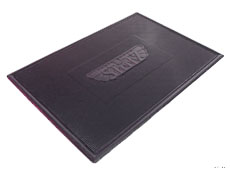 1930 Stutz Model MB Accessory Floor Mat - 12"X17"-AC 41Accessory Floor Mat - made of high quality black rubber with molded original emblem. Also designed to be sewn into new carpets. 12"X17", Each
Why Choose Metro?
For over 100 years, Metro Moulded Parts has been the pinnacle of quality in classic car restoration parts. Our commitment to precision and authenticity in every component ensures a perfect fit and an OEM-level appearance.
- Expert Craftsmanship & Quality: Each part is a testament to our dedication to reliability and perfection, crafted from original designs and thoroughly tested.
- Advanced Technology: We use cutting-edge techniques to create flawless, long-lasting parts that surpass others in performance.
- SuperSoft Sponge – The Ultimate Door Seal: Not only are our door seals 30% softer than competitors', but they're also guaranteed to never leak. They effectively reduce wind and road noise, enhancing your classic car's comfort and driving experience.
- Proudly American: Our parts are a product of American craftsmanship, made in the USA with a spirit of excellence and heritage.
- Unrivaled Warranty: We back our products with a 30-year industry-leading warranty, a testament to our confidence in their quality.
Join us in preserving the legacy of classic cars with parts that are crafted for perfection, not just made.