

Image of 1931 Stutz Model La, Note: These illustrations use artistic license and may differ from actual historical models.
Performance Metrics
Fundamental Metrics
Emotional Appeal
MMP Rating
| Engine Specifications | |
|---|---|
| Engine Options: | Straight-8 |
| Displacement Range: | 322 cu in (5.3 L) |
| Horsepower Range: | Estimated 113-156 hp |
| Torque: | Not available |
| Compression Ratio: | Not available |
| Ignition System: | Battery and coil |
| Cooling System: | Water-cooled |
| Performance Specifications | |
| 0-60 Time: | Not available |
| 1/4 Mile Time: | Not available |
| Top Speed: | 80-90 mph |
| Transmission and Drive | |
| Drive Type: | Rear-wheel drive |
| Transmission Type: | 3-speed manual |
| Fuel and Efficiency | |
| Fuel System Type: | Carburetor |
| MPG: | Not available |
| Dimensions and Brakes | |
| Brakes: | 4-wheel drum brakes |
| Wheelbase: | 134.5 in (3416 mm) |
| Weight: | Estimated 4,500 lbs |
Note: Specifications for classic cars are given to the best of our ability, considering the limited and variant data available.
1931 Stutz Model LA: Indianapolis Luxury With a Sporting Edge
The 1931 Stutz Model LA was built for drivers who wanted more than a grand-looking automobile: it paired imposing coachbuilt style with the strong, smooth pull of a straight-eight engine. It came from the Stutz Motor Car Company of Indianapolis, a maker whose reputation had been forged in early American racing and carried into the luxury-car market.
Stutz began in 1911 under founder Harry C. Stutz, first as the Ideal Motor Car Company. Its early racing success helped establish the brand’s sporting image, and by the late 1920s the company was producing expensive, finely finished cars for well-heeled buyers. The Model LA arrived as the Great Depression was putting pressure on the luxury market. Its very existence is a reminder that Stutz continued to pursue ambitious engineering and elegant coachwork even as the market for costly cars contracted.
One intriguing detail is that the LA shared its era and engine displacement with the much more exotic Stutz DV-32, but it was a different proposition. The DV-32 had a sophisticated double-overhead-camshaft engine; the LA used a more conventional, less complex straight-eight. That distinction matters when assessing the car’s performance, maintenance needs, and collector value.
Stutz Model LA Design and Coachwork
The Model LA had the confident proportions typical of a premium American car of the early 1930s. Its long hood announced the straight-eight beneath it, while a tall, upright radiator shell and substantial fenders gave the front end a formal, almost architectural presence. Running boards connected the front and rear fenders, and the overall silhouette balanced luxury-car dignity with a hint of sporting intent.
Exact styling depended on the body fitted to the chassis. Stutz buyers could choose from several configurations, including sedans, limousines, coupes, roadsters, and open touring or phaeton-style bodies. Custom coachwork and trim could make two Model LAs look noticeably different. Closed sedans and limousines suited formal use, while open bodies and sporting coupes made the car’s performance image more visible. As with many high-end cars of the period, there was no single body style that defines every surviving LA.
Inside, the emphasis was on comfort and craftsmanship. Depending on the body and specification, owners could expect broad upholstered seating, quality leather or fabric trim, polished wood appointments, and carefully finished metal fittings. A chauffeur-oriented limousine might prioritize rear-seat room and privacy, while a coupe or roadster could have a more driver-focused cabin. Materials and details varied, so the car’s original build record is especially useful when evaluating an individual example.
Paint choices also depended on the buyer and coachbuilder. Dark, dignified colors such as black, deep blue, maroon, and dark green suited formal sedans, while contrasting or two-tone schemes could emphasize the flowing fenders and body lines of an open car. There is no single paint color that can be called the universal Model LA favorite. On a restored car, period photographs, factory records, and surviving paint layers are better evidence than assumptions based on general 1930s fashion.
Engine, Chassis, and Period Technology
The Model LA is generally associated with a 322-cubic-inch, or approximately 5.3-liter, inline-eight engine. Published specifications commonly place output at about 100 horsepower, though exact figures can vary by source and specification. The engine’s long crankshaft and eight-cylinder layout were well suited to the smooth, unhurried power delivery expected in a luxury car.
Power went through a manual transmission, generally described as a three-speed unit, to the rear wheels. The chassis was substantial and designed to carry a range of body styles. Four-wheel braking and conventional suspension hardware reflected the technology of the day, with details varying by individual car. This was not a modern, lightweight sports car: its engineering priorities were a strong chassis, composed road manners, and the ability to cover distance in comfort.
The LA’s simpler engine layout is an important contrast with Stutz’s advanced DV-32. The DV-32 used dual overhead camshafts and four valves per cylinder, an unusually sophisticated arrangement for a production car of its time. The LA did not have that elaborate valve gear, but its straight-eight still delivered the smooth, flexible character buyers expected from an upper-tier automobile.
Why the 1931 Stutz LA Matters
The Model LA represents Stutz’s attempt to balance prestige, performance, and practicality at a difficult moment for the American luxury-car business. It carried the sporting identity established by the marque’s earlier competition cars into a more refined road car. That combination helped distinguish Stutz from manufacturers whose luxury offerings focused almost entirely on size and formality.
Stutz’s racing reputation was not just advertising. The marque competed at the Indianapolis 500 and in international events. In the 1928 24 Hours of Le Mans, a Stutz Black Hawk finished second overall, a notable result for an American manufacturer racing against formidable European rivals. That achievement belongs to the broader Stutz story rather than to the Model LA itself, but it helps explain why the brand’s road cars were marketed with a sporting edge.
The LA’s lasting significance is less about a single revolutionary feature than about the way it represents the prewar American luxury formula: powerful multi-cylinder engines, substantial construction, customizable coachwork, and a direct link to competition. It also illustrates the limits of that formula. Even a respected marque with a strong engineering identity could not escape the economic consequences of the Depression.
Performance and Driving Feel
Reliable, model-specific acceleration testing from 1931 is scarce, and surviving cars differ in body weight, gearing, condition, and engine tune. As a practical estimate, a sound Model LA might reach 60 mph in roughly 20 to 25 seconds. A lighter body could be quicker, while a limousine or heavily equipped sedan would likely take longer. That figure should be treated as an informed period-car estimate, not a factory-certified measurement.
Top speed is similarly dependent on the car’s configuration and condition. A healthy LA could plausibly reach around 80 to 90 mph under favorable conditions, with some examples potentially varying from that range. Its real strength was not repeated high-speed running by modern standards, but the ability to cruise with a smooth, steady delivery on open roads.
Behind the wheel, the straight-eight would be expected to produce a low, even mechanical hum rather than the sharp bark of a high-revving sports engine. The long hood, upright seating position, and large steering wheel give the driver a commanding view of the road. Steering and braking effort are heavier than in a modern car, and a prewar manual gearbox rewards deliberate, well-timed shifts.
On rough pavement, the LA’s mass and period suspension provide a more substantial ride than a small contemporary car, but modern expectations of isolation and control do not apply. On a winding road, the driver must plan ahead. The car’s size, high-profile tires, and period steering geometry call for smooth inputs, measured cornering, and generous braking distance. It is most rewarding when driven at a relaxed pace rather than pushed like a modern sports sedan.
Owning and Maintaining a Stutz LA
Today, a Model LA is best suited to touring, concours events, historic-car gatherings, and carefully planned weekend drives. It is not a realistic daily driver for most owners. Traffic, modern highway speeds, limited parts availability, and the value of an increasingly rare car all favor selective use.
Maintenance is manageable for a skilled specialist, but it is not necessarily easy for the average owner. Basic work such as lubrication, ignition service, and routine adjustments follows familiar mechanical principles. The challenges are sourcing correct parts, finding knowledgeable help, and preserving a chassis and body that may have been altered or restored many decades ago. Before purchase, a buyer should inspect the engine, transmission, brakes, steering, electrical system, wood framing where applicable, and the authenticity of the body and trim.
Condition and provenance matter more than a simple odometer reading. A car with well-documented restoration work, correct components, and a known ownership history is generally more desirable than one that merely looks freshly polished. A pre-purchase inspection by a mechanic experienced with prewar American cars is strongly recommended.
Stutz LA Facts and Common Misconceptions
The most useful distinction for shoppers is between the Model LA and the Stutz DV-32. Both belong to Stutz’s early-1930s luxury-car story, and both are associated with a 322-cubic-inch straight-eight, but the DV-32’s advanced 32-valve engine makes it a substantially different and generally more coveted model. A seller’s description should be checked against chassis and engine documentation rather than accepted at face value.
Model-specific production totals are not consistently documented in readily available sources. A reasonable working estimate is that a few hundred Model LA chassis were built, perhaps in the range of 300 to 500, but that is an estimate rather than a confirmed factory total. The number of surviving cars is smaller, and the count depends on how researchers classify re-bodied or heavily modified examples.
A common criticism of prewar Stutz cars is that their size, complexity, and rarity can make ownership demanding. The LA is also sometimes overshadowed by the more technically dramatic DV-32. Yet that relative simplicity can be an advantage for an owner seeking a prestigious Stutz with a more conventional straight-eight engine. There is no widely recognized speed or sales record specific to the Model LA itself; its appeal rests on its marque history, craftsmanship, and scarcity.
Collector Value and Market Outlook
Prices vary widely with body style, originality, restoration quality, documentation, and mechanical condition. As a broad estimate, a Model LA needing substantial work might fall around $75,000 to $150,000. A sound, well-presented example could land in the $150,000 to $300,000 range, while an exceptional, correctly restored car with desirable coachwork and strong provenance could exceed that range. These figures are estimates, not a substitute for recent comparable sales or a professional appraisal.
The LA is rare on the open market. It may take considerable time to find one, and a prospective buyer may need to work through marque specialists, major classic-car auctions, or private networks. Values for significant prewar cars have generally become more selective: exceptional examples remain desirable, while cars requiring costly restoration can be harder to sell. The Model LA’s long-term appeal is supported by Stutz’s name and limited availability, but appreciation is not guaranteed. Restoration costs can also exceed the market value of a lesser example.
A Grand Stutz From a Turning Point
The 1931 Stutz Model LA combines a smooth straight-eight, imposing American proportions, and the possibility of distinctive coachbuilt bodywork. It captures a moment when Stutz was still drawing on its racing reputation while building refined road cars for a shrinking luxury market. Its performance is best enjoyed at a measured pace, and its ownership rewards careful preservation and specialist knowledge.
For collectors, the Model LA is more than a rare prewar automobile. It is a rolling piece of Stutz history, carrying the marque’s competitive spirit into an era of craftsmanship, ambition, and economic upheaval.
1931 Stutz Model La Catalog of Parts
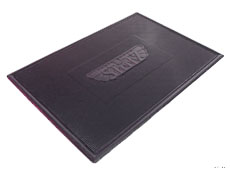 1931 Stutz Model LA Accessory Floor Mat - 12"X17"-AC 41Accessory Floor Mat - made of high quality black rubber with molded original emblem. Also designed to be sewn into new carpets. 12"X17", Each
Why Choose Metro?
For over 100 years, Metro Moulded Parts has been the pinnacle of quality in classic car restoration parts. Our commitment to precision and authenticity in every component ensures a perfect fit and an OEM-level appearance.
- Expert Craftsmanship & Quality: Each part is a testament to our dedication to reliability and perfection, crafted from original designs and thoroughly tested.
- Advanced Technology: We use cutting-edge techniques to create flawless, long-lasting parts that surpass others in performance.
- SuperSoft Sponge – The Ultimate Door Seal: Not only are our door seals 30% softer than competitors', but they're also guaranteed to never leak. They effectively reduce wind and road noise, enhancing your classic car's comfort and driving experience.
- Proudly American: Our parts are a product of American craftsmanship, made in the USA with a spirit of excellence and heritage.
- Unrivaled Warranty: We back our products with a 30-year industry-leading warranty, a testament to our confidence in their quality.
Join us in preserving the legacy of classic cars with parts that are crafted for perfection, not just made.