

Image of 1932 Stutz Model Laa, Note: These illustrations use artistic license and may differ from actual historical models.
Performance Metrics
Fundamental Metrics
Emotional Appeal
MMP Rating
| Engine Specifications | |
|---|---|
| Engine Options: | Straight 8 |
| Displacement Range: | 322 cu in (5.3 L) |
| Horsepower Range: | Estimated 156 hp |
| Torque: | Not available |
| Compression Ratio: | Not available |
| Ignition System: | Battery and coil |
| Cooling System: | Water-cooled |
| Performance Specifications | |
| 0-60 Time: | Not available |
| 1/4 Mile Time: | Not available |
| Top Speed: | Estimated 80 mph |
| Transmission and Drive | |
| Drive Type: | Rear-wheel drive |
| Transmission Type: | 3-speed manual |
| Fuel and Efficiency | |
| Fuel System Type: | Carburetor |
| MPG: | Not available |
| Dimensions and Brakes | |
| Brakes: | Mechanical drum brakes |
| Wheelbase: | 145 in (3,683 mm) |
| Weight: | Estimated 4,600 lbs |
Note: Specifications for classic cars are given to the best of our ability, considering the limited and variant data available.
1932 Stutz Model LAA: The Last Great Indianapolis Eight
The 1932 Stutz Model LAA was built for an era when a luxury car was expected to do more than arrive in style: it had to make speed, engineering and craftsmanship part of the same statement. Produced by the Stutz Motor Car Company of Indianapolis, Indiana, the LAA paired imposing coachbuilt bodywork with the remarkable Stutz DV-32 straight-eight engine. It was among the company’s final-generation automobiles, created as the Great Depression made expensive, hand-built cars increasingly difficult to sell.
Stutz had made its name with fast, competition-minded cars, most famously the Bearcat. By the early 1930s, however, the company was concentrating on sophisticated luxury models rather than stripped-down sporting machines. The LAA’s standout feature was its 32-valve engine, an unusually advanced design for a production car of its time. The car was not simply a grand touring machine with a famous badge; it represented Stutz’s effort to keep engineering ambition alive during one of the bleakest periods in the American luxury-car business.
Long Hood, Custom Coachwork
The LAA wore the classic proportions of a high-end American car from the early 1930s: a long hood, tall radiator, sweeping fenders and a passenger compartment set well back from the front axle. Its upright grille and headlamps gave it a formal presence, while running boards, wire wheels and externally mounted spare tires added both practicality and visual drama. Depending on the body, a Stutz could look stately and conservative or distinctly sporting.
As with other luxury chassis of the period, the finished appearance depended heavily on the body fitted to it. Stutz customers could choose from different factory-listed and custom coachbuilt styles, with work associated with respected firms such as LeBaron, Rollston and Weymann. Open touring bodies, roadsters, cabriolets, coupes, sedans and limousine-style configurations were among the forms available across the Stutz range. The most eye-catching examples today are often the open cars and sharply tailored coupes, though formal sedans better express the LAA’s role as a luxury automobile.
Color was typically a matter of customer specification and body-builder choice rather than a short, fixed list of mass-production shades. Deep maroon, dark green, black, navy and other rich colors suited the car’s formal character, while two-tone combinations could emphasize the contours of the fenders and body. Original paint specifications vary from car to car, so claims about a single “standard” LAA color should be treated cautiously.
A Hand-Finished Cabin
Inside, the LAA was designed around comfort and craftsmanship. Depending on the body style and original specification, occupants could find leather or high-quality broadcloth upholstery, carefully finished wood trim, a large steering wheel, substantial instruments and generous seating. Closed-body cars offered privacy and shelter, while open models brought passengers closer to the engine’s sounds and the air around them.
These were not interchangeable interiors produced on a modern assembly line. Trim materials and details could vary with the coachbuilder and the first owner’s choices. That individuality is part of the car’s appeal, but it also means that restorers need to study period photographs and surviving documentation before assuming that a particular interior treatment is correct.
The DV-32: Four Valves per Cylinder
The LAA’s defining technology was the Stutz DV-32 inline eight. Its 32 valves worked out to four valves per cylinder, an advanced arrangement for a road car in 1932. The engine displaced about 322 cubic inches, or 5.3 liters, and is commonly credited with approximately 156 horsepower. Its breathing and high-performance design helped Stutz deliver power that set the LAA apart from many conventional luxury cars of the period.
The DV-32 was paired with a manual transmission and traditional rear-wheel drive. The car also used large mechanical components appropriate to its weight and performance, including substantial drum brakes. These systems were sophisticated for their era, but they still required regular adjustment and attentive maintenance. The LAA was advanced, not maintenance-free.
Why the Stutz LAA Mattered
In the early 1930s, many prestigious manufacturers competed through size, finish and smoothness. Stutz added serious engine engineering to that contest. The DV-32’s four-valve layout gave the company a compelling technical distinction, while the chassis and coachbuilt body options let buyers combine high performance with individual luxury.
The LAA also carried forward Stutz’s sporting reputation at a time when the company needed to appeal to affluent road-car buyers. Its connection to the marque’s earlier competition heritage was part of its identity, even though an LAA should not automatically be described as a race car. It was a fast, luxurious road automobile built by a company that valued speed and engineering from its earliest days.
Stutz’s story gives the LAA added historical weight. The Depression sharply reduced demand for expensive automobiles, and Stutz ceased automobile production in 1935. The LAA therefore belongs to the marque’s final chapter, when a small independent manufacturer was still attempting to compete with much larger luxury-car makers through distinctive engineering and bespoke construction.
Performance on the Road
Period performance figures are not uniform across surviving references, and results depend on body style, gearing, condition and equipment. The DV-32 is generally associated with a top speed around 100 mph, an impressive figure for a large luxury car of 1932. A modern estimate for 0-to-60 mph is roughly 15 to 20 seconds, but this is not a dependable factory specification for every LAA. Body weight and the mechanical condition of an individual car make a meaningful difference.
Behind the wheel, the LAA would feel substantial rather than nimble by modern standards. Its long wheelbase and heavy chassis help it settle into a steady highway rhythm, while its size and period suspension mean sharp bumps are felt more directly than in a contemporary luxury sedan. On winding roads, the driver has to plan ahead: steering effort, drum-brake response and body movement all reward smooth inputs rather than hurried corrections.
The straight-eight’s character is a major part of the experience. At a relaxed pace, it delivers the measured, purposeful sound associated with a large prewar engine. Under acceleration, the exhaust note becomes more urgent, reminding the driver that the LAA was engineered for more than ceremonial cruising. The tall seating position, large steering wheel and manual controls also make driving an active, hands-on experience rather than a detached one.
Living with an LAA
Today, a 1932 Stutz LAA is best suited to touring, concours events, marque gatherings and carefully planned pleasure drives. It is not a sensible daily driver. Its age, value, size and specialized components make routine commuting impractical, while its rarity means many owners prefer to limit unnecessary mileage.
Maintenance requires patience and access to specialists familiar with prewar Stutz engineering. The DV-32’s multi-valve design is a source of pride, but it is also more complex than a basic side-valve engine. Parts may need to be sourced through specialist networks or made to order, and major engine work can be expensive. A well-maintained example can be rewarding and dependable for appropriate touring, but reliability depends heavily on restoration quality, correct setup and regular servicing.
For an average owner without mechanical experience, repairs are not especially easy. Routine tasks may be manageable for a capable vintage-car enthusiast, but engine, brake and chassis work call for period-car knowledge. Before purchase, a thorough inspection by a Stutz or prewar luxury-car specialist is essential.
Rare Details and Stutz Trivia
The LAA is notable for arriving near the end of Stutz’s independent manufacturing life. Its advanced 32-valve straight-eight is the feature most likely to surprise people who know the marque mainly through the earlier Bearcat. The LAA combined that technical ambition with custom bodywork, meaning two cars from the same model family may look strikingly different.
Stutz’s competition reputation is part of the company’s larger history, but it is important to separate marque heritage from an individual car’s record. Unless supported by documentation, an LAA should not be credited with a specific race result, speed record or famous-owner story. Likewise, surviving cars may have changed bodies, equipment or finishes over the decades, making provenance especially valuable.
The chief criticism of the LAA is not a lack of performance or craftsmanship. It is the practical cost of owning such a complex and rare automobile. Parts, specialist labor, restoration and storage can all be demanding. Its size and period braking and steering also make it less forgiving than a modern car, especially in heavy traffic.
Collector Values and Availability
The LAA is extremely scarce on today’s market. A precise production total is difficult to establish from commonly available information, and surviving cars represent only a portion of the original output. A reasonable working estimate is that production was in the low hundreds or fewer, with the exact number depending on how model and chassis records are counted. Individual body styles and coachbuilder combinations can be rarer still.
As a broad collector-market estimate, a project or substantially compromised example might fall around $150,000 to $300,000. A sound, correctly restored car could bring roughly $300,000 to $700,000, while an exceptional, highly documented example with desirable coachwork may exceed that range and potentially reach seven figures. These are guide estimates rather than guaranteed sale prices. Condition, originality, provenance, body style and the quality of any restoration have an outsized effect on value.
Over the long term, significant prewar American luxury cars have benefited from their rarity and historical importance, but prices do not rise steadily. The market for large prewar automobiles is selective, and restoration costs can exceed the value added by the work. The strongest examples tend to hold the most collector interest, while cars needing major mechanical or coachwork restoration can be difficult to sell at a price that reflects their potential.
A Fitting Final Chapter
The 1932 Stutz Model LAA brought together a remarkable 32-valve engine, imposing coachbuilt styling and the individuality of a hand-finished luxury car. It was powerful for its day, distinctive among its contemporaries and closely tied to the final years of one of America’s most ambitious independent manufacturers.
More than a rare collectible, the LAA is a reminder that even in the Depression, Stutz continued to build cars with serious engineering and unmistakable presence. Its long hood may announce its power, but its lasting appeal lies in the audacity beneath it: a small American company’s attempt to make one of the most advanced luxury cars of its age.
1932 Stutz Model Laa Catalog of Parts
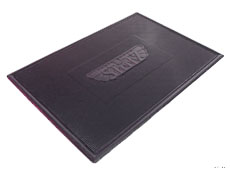 1932 Stutz Model LAA Accessory Floor Mat - 12"X17"-AC 41Accessory Floor Mat - made of high quality black rubber with molded original emblem. Also designed to be sewn into new carpets. 12"X17", Each
Why Choose Metro?
For over 100 years, Metro Moulded Parts has been the pinnacle of quality in classic car restoration parts. Our commitment to precision and authenticity in every component ensures a perfect fit and an OEM-level appearance.
- Expert Craftsmanship & Quality: Each part is a testament to our dedication to reliability and perfection, crafted from original designs and thoroughly tested.
- Advanced Technology: We use cutting-edge techniques to create flawless, long-lasting parts that surpass others in performance.
- SuperSoft Sponge – The Ultimate Door Seal: Not only are our door seals 30% softer than competitors', but they're also guaranteed to never leak. They effectively reduce wind and road noise, enhancing your classic car's comfort and driving experience.
- Proudly American: Our parts are a product of American craftsmanship, made in the USA with a spirit of excellence and heritage.
- Unrivaled Warranty: We back our products with a 30-year industry-leading warranty, a testament to our confidence in their quality.
Join us in preserving the legacy of classic cars with parts that are crafted for perfection, not just made.