

Image of 1935 Stutz Model Sv-16, Note: These illustrations use artistic license and may differ from actual historical models.
Performance Metrics
Fundamental Metrics
Emotional Appeal
MMP Rating
| Engine Specifications | |
|---|---|
| Engine: | SV-16 |
| Displacement: | 322 cu in (5.3 L) |
| Horsepower: | Estimated 113-156 hp |
| Torque: | Not available |
| Compression Ratio: | Not available |
| Ignition System: | Battery and coil |
| Cooling System: | Water-cooled |
| Performance Specifications | |
| 0-60 Time: | Not available |
| 1/4 Mile Time: | Not available |
| Top Speed: | Estimated 80-100 mph |
| Transmission and Drive | |
| Drive Type: | Rear-wheel drive |
| Transmission Type: | 3-speed manual |
| Fuel and Efficiency | |
| Fuel System Type: | Carburetor |
| MPG: | Not available |
| Dimensions and Brakes | |
| Brakes: | 4-wheel hydraulic drum brakes |
| Wheelbase: | 145 in (3,683 mm) |
| Weight: | Estimated 4,500 lbs |
Note: Specifications for classic cars are given to the best of our ability, considering the limited and variant data available.
1935 Stutz SV-16: A Rare American Luxury Car
The 1935 Stutz Model SV-16 was a hand-built American luxury car from a marque that had once challenged the world’s most prestigious automakers. Built by the Stutz Motor Car Company in Indianapolis, Indiana, it combined a powerful straight-eight engine with coachbuilt styling and the quiet confidence of a car made in very small numbers. Its story has an intriguing final chapter: 1935 was the year Stutz production came to an end, making the SV-16 one of the last expressions of the company’s prewar ambition.
Stutz had earned its reputation through both road cars and competition. Founded by Harry C. Stutz in 1911, the company became famous for its early racing success, including a strong showing at the 1911 Indianapolis 500. By the 1930s, the firm was building expensive, low-volume cars for buyers who wanted something more individual than a mass-produced luxury automobile. The SV-16 sat below Stutz’s more elaborate multivalve offerings, but it was still a substantial, carefully engineered car.
Classic Stutz Styling and Coachbuilt Detail
The SV-16’s appearance depended heavily on its individual body, but its basic proportions were unmistakably formal: a long hood, upright radiator, sweeping front fenders and a substantial passenger compartment. The grille and hood gave the car a purposeful face, while exposed or partially skirted fenders, running boards and large headlamps emphasized its imposing scale. Depending on the body, the roofline could be dignified and boxy or more flowing and sporting.
Interiors were finished to luxury-car standards of the period. Buyers could expect quality upholstery, polished wood or metal trim, deep carpeting and carefully arranged instruments. Exact materials and details varied by body and order, so there was no single universal SV-16 cabin. That variation is part of the appeal today: surviving cars can differ substantially in their trim, fittings and coachwork.
Paint was generally a matter of specification rather than a fixed, widely advertised palette. Conservative dark shades such as black, deep blue and maroon suited the formal sedan bodies, while brighter or contrasting colors could accentuate a sporting or open car. Since individual orders and later restorations affect what survives, a claimed “factory color” should be checked against the specific car’s history.
Stutz offered the SV-16 chassis with a range of body types, including closed sedans and coupes as well as more sporting open configurations. Coachbuilders and body suppliers could give the same mechanical package very different personalities. There is no single body style that can confidently be called the definitive 1935 SV-16 without reference to the particular car. The most striking examples are often the custom-bodied cars, where the long hood and sweeping fenders create a dramatic profile.
Engineering Behind the SV-16 Name
The SV-16 used a 322-cubic-inch (about 5.3-liter) straight-eight engine with a side-valve layout and 16 valves. Period specifications commonly put output at roughly 125 horsepower, although ratings and figures can vary by source. Power was delivered through a conventional manual transmission, with a three-speed gearbox associated with the model.
In an era when many American luxury cars relied on large engines and imposing dimensions, the SV-16 offered a refined alternative to Stutz’s more complex multivalve engines. Its straight-eight layout was valued for smoothness, and the car’s substantial chassis was designed for composed, high-speed touring. The SV-16 was not a technological revolution on the scale of some earlier Stutz innovations. Its distinction lay in bringing the marque’s engineering and custom-car approach together in a relatively straightforward luxury package.
Stutz’s wider legacy included its racing heritage and its willingness to experiment with chassis design and high-performance engineering. By the mid-1930s, however, the market for costly, low-volume automobiles had contracted sharply. The Depression had weakened demand, while large manufacturers could spread development and production costs across far more cars. The SV-16 arrived in that difficult environment, near the end of the company’s life.
Performance and Road Manners
Exact performance figures for individual 1935 SV-16s are difficult to pin down, since body weight, gearing, condition and test methods all matter. A well-maintained example is often estimated to have a top speed in the neighborhood of 85 to 90 mph. A 0-to-60-mph time around 18 to 22 seconds is a reasonable modern estimate, not a definitive factory-tested figure for every body style.
On the road, the straight-eight’s main impression is likely to be smooth, steady power rather than modern-style acceleration. The engine’s low, even mechanical note builds into a measured growl when working hard. A heavy chassis and period suspension give the car a substantial, cushioned feel over ordinary road imperfections, though it will not isolate occupants as effectively as a modern luxury car. On winding roads, its size and weight call for anticipation and deliberate steering rather than quick changes of direction.
Driving one is an active experience. The driver must manage a manual gearbox, read the road well ahead and allow extra room for braking compared with a contemporary vehicle. Steering effort, braking performance and ride quality will vary with the car’s setup and restoration. A properly sorted SV-16 can be a relaxed touring car, but it rewards smooth inputs and sensible speeds more than aggressive driving.
Living With a 1935 Stutz
Today, an SV-16 is best suited to touring, concours events, historic-car gatherings and careful collection use. Its rarity and value make daily-driver duty impractical for most owners. It can still cover road miles, but regular use requires thoughtful maintenance and a specialist familiar with prewar American cars.
Routine service includes attention to the engine’s lubrication and cooling systems, ignition, fuel delivery, brakes, tires and mechanical steering components. Age, rather than mileage alone, is a major concern: rubber, wiring, seals and cooling parts may need replacement even on a car that has been driven sparingly. Some repairs are straightforward for an experienced vintage-car mechanic, but finding correct components or rebuilding unique parts can take time and specialist knowledge.
Reliability depends greatly on the quality of the restoration and the availability of correct parts. A well-maintained car can be used for carefully planned tours, but an owner should expect more frequent inspection and hands-on care than with a postwar classic. Before purchase, a marque expert should examine the engine, chassis, body structure, drivetrain and documentation.
Rare Facts and Common Criticisms
The most notable fact about a 1935 SV-16 is its timing: it belongs to Stutz’s final model years, when the company was struggling to survive in a market transformed by the Depression. Stutz ceased automobile production in 1935. That makes the model a tangible link to the end of an ambitious independent American manufacturer.
Stutz’s name is often associated with racing, especially the company’s early Indianapolis history and the later Bearcat. The SV-16, however, should be understood primarily as a luxury touring car, not as a direct racing version of the Bearcat. Its appeal lies in its engineering, craftsmanship and scarcity rather than a specific production-car speed record or a verified celebrity ownership story.
Common criticisms are familiar to owners of many prewar luxury cars: the SV-16 is large, heavy, thirsty by modern standards and more demanding to maintain than a mass-produced car. Its performance figures also cannot be compared directly with modern vehicles. The upside is a distinctive driving character and a level of individuality that is difficult to find in more common classics.
Collector Value and Rarity
Exact production totals for the 1935 SV-16 are not consistently documented, and published figures for Stutz models can vary. A sensible estimate is that only a small number of 1935 SV-16 chassis were built, perhaps in the low dozens, with fewer still surviving in identifiable, substantially original form. That is an estimate, not a confirmed factory count. Body style, provenance and whether a car retains its original chassis and engine all influence its importance to collectors.
As a broad guide, a 1935 SV-16 might sell for roughly $100,000 to $300,000, with exceptional, documented or particularly desirable examples potentially exceeding that range. A project car, a heavily altered example or a car with uncertain history could be worth considerably less. The condition and quality of the bodywork are especially important because custom coachwork can be expensive to restore.
Values for rare prewar luxury cars can be uneven. The SV-16’s scarcity and Stutz heritage support long-term collector interest, but the market is narrower than it is for better-known classics. Well-documented, correctly restored cars are generally better positioned than examples requiring major work. Rather than assuming a steady rise in value, buyers should treat any price as dependent on condition, originality, provenance and the strength of the market at the time of sale.
A Lasting Stutz Statement
The 1935 Stutz SV-16 brought together a smooth straight-eight, substantial American chassis engineering and individually styled coachwork at a time when its maker was nearing the end of the road. It was neither a mass-market car nor simply a racing machine. It was a hand-built luxury automobile shaped by Stutz’s competitive heritage and the realities of a difficult decade.
For collectors, the SV-16 is more than a rare nameplate. It is one of the final chapters in the story of an independent American marque that dared to compete on its own terms, and every surviving example carries a piece of that ambition.
1935 Stutz Model Sv-16 Catalog of Parts
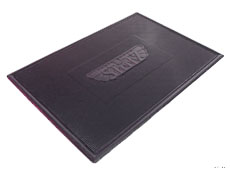 1935 Stutz Model SV-16 Accessory Floor Mat - 12"X17"-AC 41Accessory Floor Mat - made of high quality black rubber with molded original emblem. Also designed to be sewn into new carpets. 12"X17", Each
Why Choose Metro?
For over 100 years, Metro Moulded Parts has been the pinnacle of quality in classic car restoration parts. Our commitment to precision and authenticity in every component ensures a perfect fit and an OEM-level appearance.
- Expert Craftsmanship & Quality: Each part is a testament to our dedication to reliability and perfection, crafted from original designs and thoroughly tested.
- Advanced Technology: We use cutting-edge techniques to create flawless, long-lasting parts that surpass others in performance.
- SuperSoft Sponge – The Ultimate Door Seal: Not only are our door seals 30% softer than competitors', but they're also guaranteed to never leak. They effectively reduce wind and road noise, enhancing your classic car's comfort and driving experience.
- Proudly American: Our parts are a product of American craftsmanship, made in the USA with a spirit of excellence and heritage.
- Unrivaled Warranty: We back our products with a 30-year industry-leading warranty, a testament to our confidence in their quality.
Join us in preserving the legacy of classic cars with parts that are crafted for perfection, not just made.