

Image of 1968 Subaru 360, Note: These illustrations use artistic license and may differ from actual historical models.
Performance Metrics
Fundamental Metrics
Emotional Appeal
MMP Rating
| Engine Specifications | |
|---|---|
| Engine: | Two-stroke, 2-cylinder |
| Displacement: | 356 cc |
| Horsepower: | 16-25 hp |
| Torque: | Estimated at 16.3 lb-ft |
| Compression Ratio: | 6.7:1 |
| Ignition System: | Battery Ignition |
| Cooling System: | Air-cooled |
| Performance Specifications | |
| 0-60 Time: | 37 seconds |
| 1/4 Mile Time: | Not available |
| Top Speed: | 60 mph |
| Transmission and Drive | |
| Drive Type: | Rear-wheel drive |
| Transmission Type: | 3-speed manual |
| Fuel and Efficiency | |
| Fuel System Type: | Carburetor |
| MPG: | 66.3 mpg |
| Dimensions and Brakes | |
| Brakes: | Drum brakes |
| Wheelbase: | 70.9 inches |
| Weight: | 900 lbs |
Note: Specifications for classic cars are given to the best of our ability, considering the limited and variant data available.
1968 Subaru 360: Japan’s Tiny Automotive Trailblazer
The 1968 Subaru 360 packed a whole lot of automotive ambition into a car barely longer than a modern compact’s hood. Nicknamed the “Ladybug” for its rounded shape, this little rear-engined runabout helped put affordable car ownership within reach of Japanese families and introduced Subaru to American drivers.
Built by Fuji Heavy Industries, the company that became Subaru Corporation, the 360 first appeared in Japan in 1958. Its tiny engine was no accident: Japan’s kei-car regulations limited the size and power of qualifying vehicles, encouraging manufacturers to create compact, economical transportation. By 1968, the 360 was an established favorite at home and an unusual new arrival in the United States.
One of its most intriguing chapters came with that American arrival. Entrepreneur Malcolm Bricklin brought the 360 to the U.S. market, where its low price and very small footprint stood out against much larger domestic cars. It became Subaru’s first widely marketed U.S. model, although American reviews soon showed that a car designed for Japanese roads was not necessarily suited to American highway traffic.
Ladybug Styling and Clever Packaging
The 360’s rounded roof, short overhangs, large windows, and compact wheels give it a friendly, almost toy-like appearance. Its bulbous cabin sits above a narrow body, while a small grille and simple bumpers keep the front end tidy. The rear-engine layout also helps explain the car’s distinctive proportions: there is no conventional engine filling the nose, leaving designers free to make the front section short.
Inside, the 360 is strictly practical. The cabin is narrow, the seats are simple, and the dashboard favors function over decoration. Expect basic trim and hard-wearing materials rather than the plush upholstery or elaborate chrome found in larger cars. Its generous glass area helps the small cabin feel brighter and gives the driver useful visibility around town, though the driving position and controls can feel unfamiliar to anyone used to a modern vehicle.
For its time and price, the engineering was more sophisticated than the modest exterior suggests. The 360 used a unitized, or unibody, structure and independent suspension, helping keep weight low while providing a more controlled ride than a simple solid-axle setup. Its air-cooled, two-stroke engine was mounted at the rear and drove the rear wheels. Depending on version and specification, the car had a three- or four-speed manual gearbox.
Subaru offered the 360 in several forms, including the familiar sedan, a convertible, and the roomier Custom wagon. The Young SS sport model added a livelier character and became one of the more distinctive versions. The sedan remains the most recognizable and commonly associated body style. Paint colors varied by market and model year, but period cars appeared in cheerful light and pastel shades as well as more subdued tones. Bright colors suit the 360’s playful shape, though original paint and documented factory specification matter more to collectors than any single color.
Why the 360 Mattered
The Subaru 360 was important because it made thoughtful engineering serve a strict set of limits. Japan’s kei-car rules called for small, low-tax vehicles, and the 360 answered with a compact body, lightweight construction, and a modest engine. It helped establish the formula of economical, space-efficient Japanese transportation at a time when the country’s postwar economy was rapidly expanding.
It also helped define Subaru as a carmaker. The 360 was the company’s first mass-produced passenger car, and its success gave Fuji Heavy Industries a foundation for future models. The company would later become known internationally for practical engineering and, eventually, its distinctive boxer engines and all-wheel-drive cars. The 360 was not the direct blueprint for every later Subaru, but it was the small, consequential first step.
Its biggest difference from many contemporary American cars was its scale and purpose. The 360 was built for crowded streets, modest budgets, and efficient local travel, not for effortless high-speed cruising. That difference became clear when the car crossed the Pacific. Its low purchase price attracted attention, but its tiny size and limited performance made it a controversial choice for U.S. roads.
Performance: Small Engine, Big Personality
A 1968 Subaru 360 uses a 356cc air-cooled, two-stroke two-cylinder engine. Output depends on the particular version and market, but figures are generally in the range of roughly 16 to 25 horsepower. That may sound almost impossibly low today, yet the 360’s very light weight helped it feel more willing around town than its power rating suggests.
Top speed is typically quoted at around 60 to 65 mph under favorable conditions. Reaching 60 mph from a standstill takes a long time, and published estimates vary with engine version, condition, gearing, and test method. A rough figure of about 35 to 40 seconds is often cited, but many examples are better understood as cars that build speed gradually rather than machines suited to timed acceleration runs.
On narrow streets, the 360 feels nimble and easy to place. Its short wheelbase helps it dart through tight turns, while the light steering and small dimensions make parking almost comically simple. The trade-off is that bumps and broken pavement can unsettle the little car more than they would a heavier modern vehicle. Crosswinds and passing trucks are also more noticeable because of its low weight and limited power.
Driving one is an experience you hear as much as feel. The two-stroke engine has a distinctive buzzing, raspy note, and the driver works the manual gearbox to keep the engine in its useful rev range. The ride is direct and lightly insulated, with road texture and engine vibration part of the conversation. It is charming at neighborhood speeds, but it asks for patience and a realistic sense of its limits on fast roads.
Living With a Subaru 360
Today, most 360s are used as show cars, collection pieces, or occasional drivers on quiet local roads. They are best suited to short trips and relaxed outings rather than daily commuting on modern highways. Their compact size makes them a natural fit for car shows, where they tend to attract attention even among far more expensive classics.
Routine maintenance is approachable for an owner who understands older cars, but the two-stroke engine has its own requirements. Fuel and lubrication arrangements depend on the engine and equipment fitted, so owners should follow the correct specification rather than assume every 360 uses the same setup. Carburetor condition, ignition points, fuel delivery, cooling-air passages, and compression all deserve regular attention.
Parts availability is more challenging than for a common Beetle or classic Mini. Specialist suppliers and Subaru 360 clubs can help source service parts, but body panels, trim, and model-specific components may take time to find. Rust is a key inspection point, particularly around the floor, sills, lower body, and suspension mounting areas. A clean, complete car is usually a better starting point than a cheap project missing rare pieces.
Surprising 360 Facts
The 360 is often called the “Ladybug,” a reference to its rounded shape and the Japanese nickname tentomushi. That affectionate image is a sharp contrast to the serious engineering challenge behind the car: making a useful family vehicle within the tight limits of Japan’s kei-car class.
Subaru 360 production ran from 1958 to 1971, with total output commonly reported at about 392,000 cars across the model line. That makes the 360 a significant Japanese automotive success, even though examples are now uncommon in many export markets. Its American story is especially memorable because it helped introduce the Subaru name to U.S. buyers while also attracting pointed criticism from American road testers. Consumer Reports’ negative assessment of the car’s suitability for U.S. driving became a lasting part of its reputation.
That criticism needs context. The 360 was designed as an inexpensive, lightweight city car, not a high-speed interstate cruiser. Its limited acceleration, small tires, light structure, and basic safety equipment are genuine concerns by modern standards. It is also a reminder that a car’s strengths depend on the roads and expectations it was built to meet.
Collector Value and Availability
Subaru 360s are uncommon, particularly outside Japan, and the market is relatively thin. As a broad estimate for the U.S. market, a running but imperfect example might sell for around $8,000 to $15,000. A clean, well-restored, or especially desirable version could bring roughly $18,000 to $30,000 or more. These are estimates, not fixed price-guide figures: location, originality, documentation, rust, mechanical condition, and body style can all move the price substantially.
Values for the best examples have generally benefited from growing interest in early Japanese classics and kei cars. However, the 360 is a niche collectible, so prices can be uneven and a sale may take time. Restoring one can also cost more than expected if scarce trim or body parts are missing. For many buyers, originality and completeness are more valuable than an ambitious restoration with hard-to-source replacement pieces.
There is no dependable public count for how many 1968 examples survive today. Given overall production of approximately 392,000 cars across more than a decade, the model was not rare when new. Today, surviving cars are much scarcer in North America than in Japan, and good, complete examples are the ones collectors should watch for.
A Small Car With a Lasting Footprint
The 1968 Subaru 360 combined a light body, rear-mounted two-stroke engine, and clever packaging to deliver inexpensive transportation in a very small footprint. It helped establish Subaru as a passenger-car manufacturer, became a recognizable symbol of Japan’s kei-car era, and made an unforgettable first impression in the United States.
It is not a fast car, a quiet car, or a sensible modern highway choice. Its appeal lies elsewhere: in its ingenious proportions, unmistakable engine note, and role in automotive history. The Ladybug may be tiny, but its place in Subaru’s story is anything but small.
1968 Subaru 360 Catalog of Parts
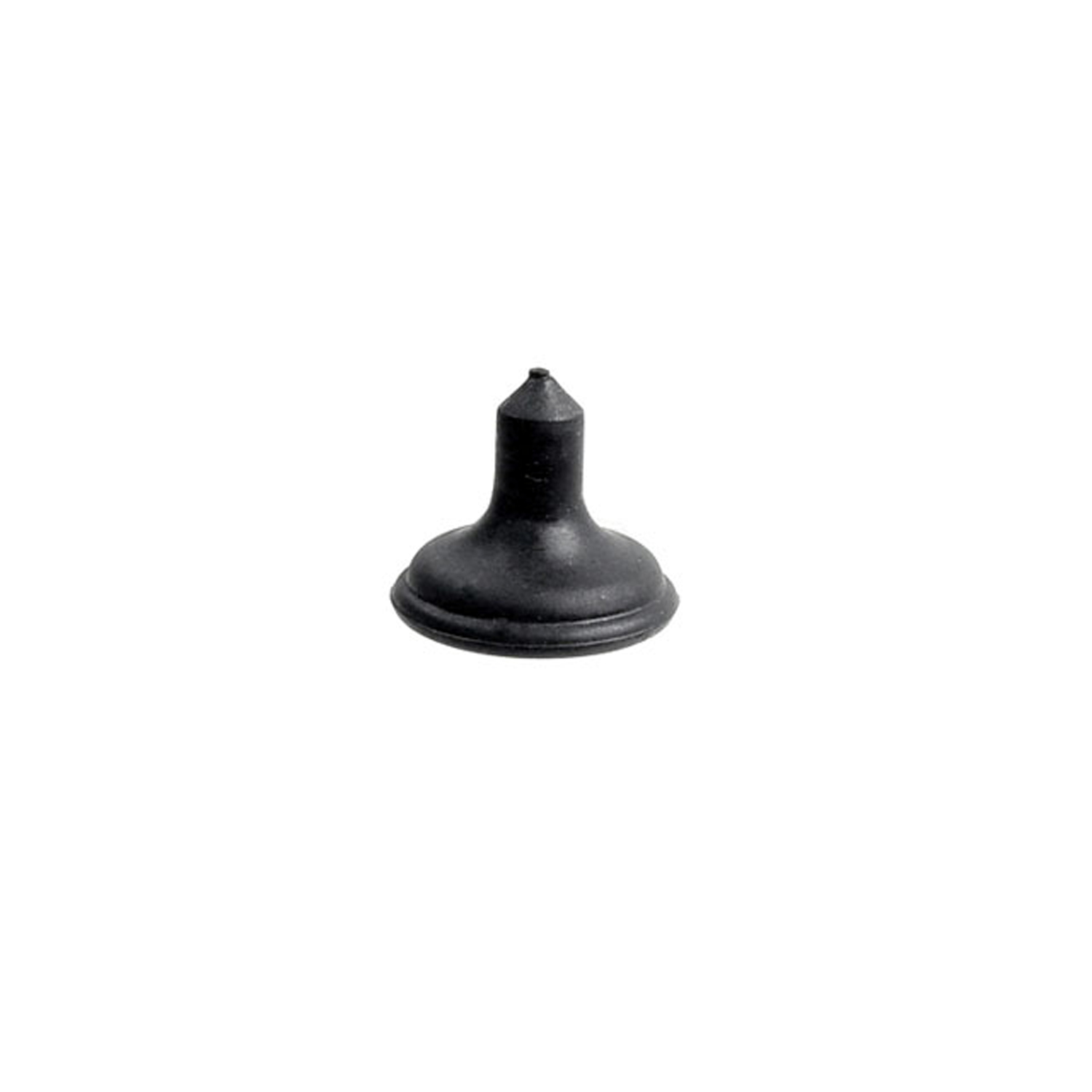 1968 Subaru 360 Fuel Valve Tip. 7/8" O.D., 7/8" high. Each-PL 11Fuel Valve Tip. 7/8" O.D., 7/8" high. Each
Why Choose Metro?
For over 100 years, Metro Moulded Parts has been the pinnacle of quality in classic car restoration parts. Our commitment to precision and authenticity in every component ensures a perfect fit and an OEM-level appearance.
- Expert Craftsmanship & Quality: Each part is a testament to our dedication to reliability and perfection, crafted from original designs and thoroughly tested.
- Advanced Technology: We use cutting-edge techniques to create flawless, long-lasting parts that surpass others in performance.
- SuperSoft Sponge – The Ultimate Door Seal: Not only are our door seals 30% softer than competitors', but they're also guaranteed to never leak. They effectively reduce wind and road noise, enhancing your classic car's comfort and driving experience.
- Proudly American: Our parts are a product of American craftsmanship, made in the USA with a spirit of excellence and heritage.
- Unrivaled Warranty: We back our products with a 30-year industry-leading warranty, a testament to our confidence in their quality.
Join us in preserving the legacy of classic cars with parts that are crafted for perfection, not just made.