

Image of 1926 Sunbeam Three-Litre, Note: These illustrations use artistic license and may differ from actual historical models.
Performance Metrics
Fundamental Metrics
Emotional Appeal
MMP Rating
| Engine Specifications | |
|---|---|
| Engine: | 6-cylinder in-line, overhead valves |
| Displacement: | 3.0 Litres |
| Horsepower: | Estimated 50-60 HP |
| Torque: | Not available |
| Compression Ratio: | Not available |
| Ignition System: | Magneto ignition |
| Cooling System: | Water-cooled |
| Performance Specifications | |
| 0-60 Time: | Not available |
| 1/4 Mile Time: | Not available |
| Top Speed: | 75-80 mph |
| Transmission and Drive | |
| Drive Type: | Rear-wheel drive |
| Transmission Type: | 4-speed manual |
| Fuel and Efficiency | |
| Fuel System Type: | Carburetor |
| MPG: | Not available |
| Dimensions and Brakes | |
| Brakes: | Drum brakes |
| Wheelbase: | 130 inches |
| Weight: | 3000 lbs |
Note: Specifications for classic cars are given to the best of our ability, considering the limited and variant data available.
1926 Sunbeam Three-Litre: A British Sporting Classic
With its long bonnet, polished radiator and purposeful six-cylinder engine, the 1926 Sunbeam Three-Litre brought genuine sporting character to the open road. Built by the Sunbeam Motor Car Company in Wolverhampton, England, it arrived during a period when British manufacturers were combining improved road-car engineering with the style and performance of coachbuilt automobiles.
Sunbeam was already known for both luxury cars and competition success. The company’s racing achievements helped establish its reputation, but the Three-Litre was a road-going model rather than a Grand Prix car. Its appeal lay in offering brisk performance, quality construction and a choice of elegant bodywork in one substantial touring package.
One point worth remembering: the Three-Litre belongs to Sunbeam’s broader sporting story, but it should not be confused with the marque’s dedicated record-breaking and racing machines. It was designed to take its sporting credentials onto public roads.
Elegant Styling and Coachbuilt Character
The Three-Litre’s proportions are classic vintage-car design: a tall, upright radiator at the front, a long bonnet behind it and a separate body mounted on a substantial chassis. Large, exposed headlamps, flowing front wings and slim running boards complete the period look. The result is imposing without being overly ornate, with the engine’s length giving the car a naturally athletic stance.
Many examples were supplied as chassis for specialist coachbuilders to finish, so details could vary. Sporting tourers are among the most evocative body styles, with open cockpits, folding windscreens and room for passengers to enjoy the countryside. Saloon and coupé-style bodies were also possible, depending on the order and coachbuilder. There was no single universal body configuration, though the tourer is the version most strongly associated with the car’s sporting personality.
Interiors were finished to a high standard for the era. Depending on the body and specification, occupants might find leather upholstery, a wood-trimmed dashboard, clear analogue instruments and carefully finished door panels. Even an open car was intended to feel like a quality purchase, not a stripped-down competition special.
Paint choices depended on the original order and coachbuilder rather than a single fixed palette. Dark blues, greens, maroons and black were natural period choices, often paired with contrasting upholstery or coachwork details. Today, restorers may choose historically sympathetic colors, but a car’s original finish is best confirmed through its records and surviving traces.
Six-Cylinder Engineering
At the heart of the Three-Litre was a straight-six engine of about 2,916 cc. It is commonly described as an overhead-camshaft design, an advanced arrangement for a road car of the mid-1920s. Output is generally quoted at around 70 bhp, though published figures and individual specifications can differ. The engine’s smooth six-cylinder layout suited both steady touring and the car’s sporting image.
A manual gearbox and substantial chassis provided the foundation for the driving experience. Four-wheel braking was an important safety feature for a large, quick car, though equipment and details should be checked against the specification of an individual example. As with many coachbuilt cars, exact equipment could vary by year, market and original order.
Why the Sunbeam Three-Litre Mattered
The Three-Litre represented a useful middle ground in the 1920s market. It was more than a basic family car, yet it was intended for road use rather than the expense and compromise of a full racing machine. Its six-cylinder engine, refined mechanical layout and coachbuilt body options reflected the period’s growing appetite for cars that could cover distance quickly and comfortably.
Sunbeam’s competition reputation gave the model extra appeal, but the Three-Litre’s significance is also found in its combination of engineering and craftsmanship. The long bonnet was not merely a styling flourish: it housed a smooth, substantial engine. And because buyers could choose different bodies, the same chassis could be tailored toward open-air touring or more enclosed motoring.
It did not establish a mass-market design formula, and its influence is best understood within the British sporting-car tradition. Its lasting draw is the way it captures that tradition: a capable engine, a proper chassis and a body with unmistakable period presence.
Performance and Road Manners
Exact performance depends on body style, gearing, condition and the car’s state of tune. A sound, correctly maintained example is generally estimated to reach about 65 to 75 mph. A period factory 0-to-60 mph figure is difficult to establish, so a modern estimate of roughly 20 to 25 seconds is more useful as a broad guide than as a definitive specification. A heavier saloon would likely be slower than a lighter tourer.
On the road, the straight-six should feel smooth and relaxed at touring speeds, with a measured mechanical beat that becomes more insistent as revs rise. The gearbox requires deliberate operation by modern standards, and the driver must plan changes and braking well ahead. This is a car to drive with attention, not one to treat like a contemporary sports saloon.
The substantial chassis and tall, narrow tyres give the Three-Litre a distinctly vintage ride. It can absorb ordinary road imperfections, but sharp bumps and rough surfaces demand care. On winding roads, its length and weight reward smooth steering and considered cornering rather than abrupt inputs. In a crosswind, the tall body and open-car screens can make the driver work to hold a steady line. A well-sorted example feels composed for its age, but it will not offer modern levels of grip or braking.
Owning and Maintaining a Vintage Sunbeam
Today, the Three-Litre is best suited to touring, club events, rallies and concours displays. It can cover meaningful distances when properly prepared, but using one as a daily driver would involve compromises in weather protection, traffic safety and maintenance. Its most natural setting is a scenic road or a vintage motoring event where its pace and character can be appreciated.
Routine maintenance is familiar to experienced vintage-car owners: regular lubrication, careful attention to the cooling system, ignition and fuel delivery, and frequent checks of brakes, tyres and steering. The mechanical layout is more approachable than that of a modern car, but that does not make every repair simple. Parts availability, engine work and coachbuilt-body repairs can require specialist knowledge, and restoration costs may be substantial.
Reliability depends heavily on the quality of restoration and ongoing care. A well-maintained car can be a dependable touring companion for its age; an neglected one may need extensive work before it is safe or enjoyable to drive. Prospective buyers should seek marque-expert advice and inspect the chassis, engine, body structure and documentation carefully.
Notable Details and Common Criticisms
The Three-Litre’s strongest claim to fame is its place in a manufacturer with a serious competition pedigree. Sunbeam’s racing and record-setting history is well documented, but those achievements should not automatically be attributed to this road model. There is no widely recognized speed or endurance record specifically associated with the 1926 Three-Litre.
Nor is there a universally cited celebrity owner or single famous event that defines the model. Its story is more representative of the well-made British sporting car of the 1920s than of one headline-grabbing episode. That relative lack of a single famous association can make provenance and originality especially important when comparing cars.
Common criticisms are typical of vintage motoring: limited braking and crash protection by modern standards, a demanding driving technique, and the expense of maintaining a rare coachbuilt car. Its size can also make narrow roads and tight parking less convenient than the handsome exterior might suggest.
Collector Values and Rarity
The 1926 Sunbeam Three-Litre is a rare sight on today’s market, particularly in original or well-documented condition. A precise production total for the model is difficult to state with confidence. As a broad estimate rather than a factory figure, production may have been in the low thousands across the model’s run, with far fewer surviving today. Individual body styles and coachbuilder histories can make one example much rarer than another.
As a general 2026 collector-market estimate, a project or car requiring significant work might fall around US$40,000 to US$70,000. A sound, usable example could be roughly US$70,000 to US$140,000, while a particularly well-restored car with desirable coachwork, strong provenance and excellent condition could exceed that range. These are broad estimates, not a valuation; currency, market location, originality and body style make a substantial difference.
Like many niche pre-war cars, the Three-Litre’s market is driven more by condition and specialist interest than by simple age. Well-restored examples with traceable history are likely to attract the strongest demand. Values may rise over the long term for exceptional cars, but restoration costs and a relatively small buyer pool can make prices uneven rather than steadily upward.
A Lasting Piece of Sunbeam’s Sporting Story
The 1926 Sunbeam Three-Litre combines a smooth six-cylinder engine, substantial vintage chassis and coachbuilt elegance in a package that reflects the ambitions of British motoring between the wars. It is not a modern-speed machine or an effortless daily driver, but its character is precisely the point: every journey asks for involvement, patience and a little mechanical sympathy.
For collectors and enthusiasts, the Three-Litre is more than a handsome survivor. It is a reminder of an era when a sporting car could be both a carefully engineered machine and a piece of individual craftsmanship, built to make the open road feel like an occasion.
1926 Sunbeam Three-Litre Catalog of Parts
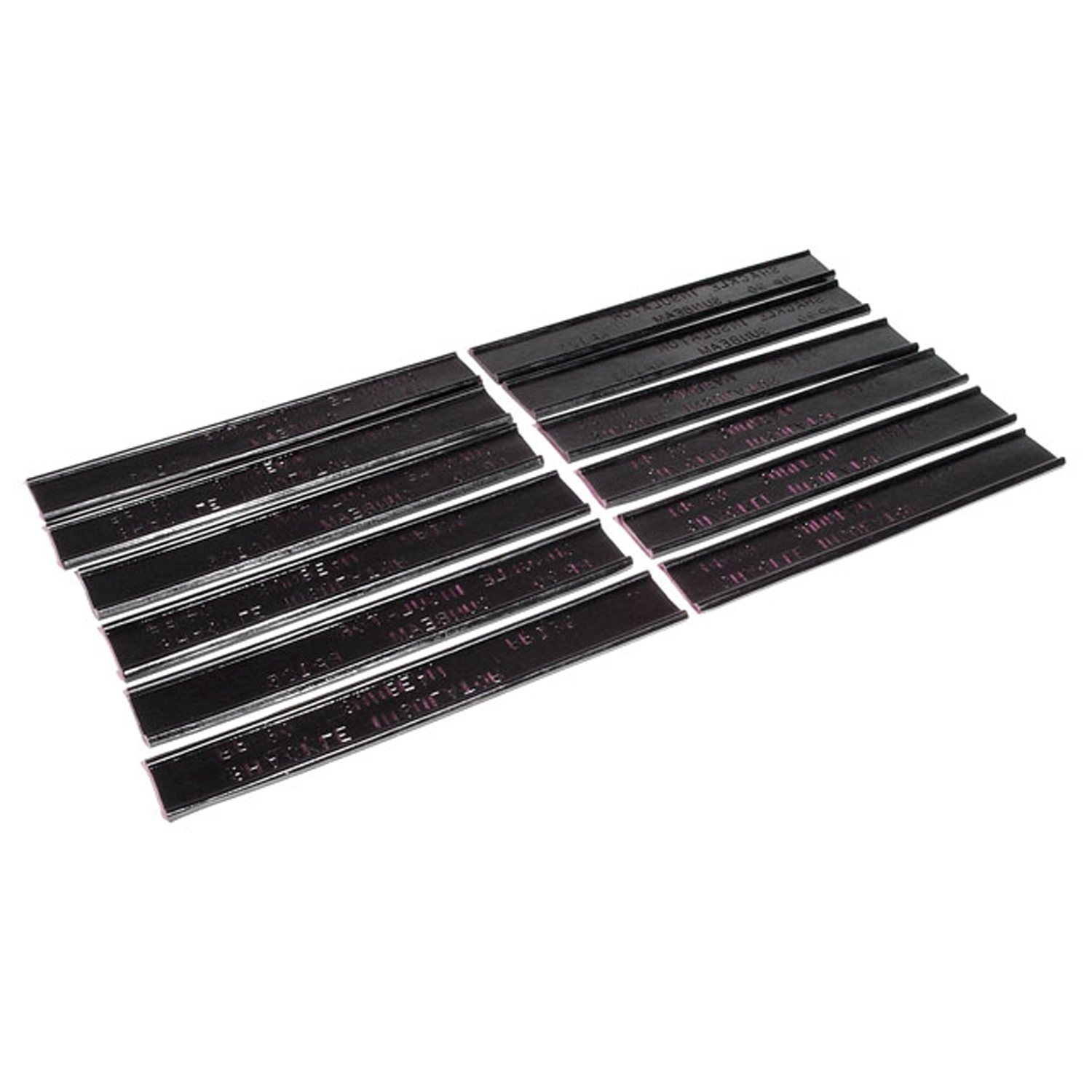 1926 Sunbeam THREE-LITRE Spring Shackle Rubber Insulators-RP 125Spring Shackle Rubber Insulators. 1" wide X 6-3/4" long each. 12-Piece Set
Why Choose Metro?
For over 100 years, Metro Moulded Parts has been the pinnacle of quality in classic car restoration parts. Our commitment to precision and authenticity in every component ensures a perfect fit and an OEM-level appearance.
- Expert Craftsmanship & Quality: Each part is a testament to our dedication to reliability and perfection, crafted from original designs and thoroughly tested.
- Advanced Technology: We use cutting-edge techniques to create flawless, long-lasting parts that surpass others in performance.
- SuperSoft Sponge – The Ultimate Door Seal: Not only are our door seals 30% softer than competitors', but they're also guaranteed to never leak. They effectively reduce wind and road noise, enhancing your classic car's comfort and driving experience.
- Proudly American: Our parts are a product of American craftsmanship, made in the USA with a spirit of excellence and heritage.
- Unrivaled Warranty: We back our products with a 30-year industry-leading warranty, a testament to our confidence in their quality.
Join us in preserving the legacy of classic cars with parts that are crafted for perfection, not just made.