

Image of 1929 Sunbeam Sixteen, Note: These illustrations use artistic license and may differ from actual historical models.
Performance Metrics
Fundamental Metrics
Emotional Appeal
MMP Rating
| Engine Specifications | |
|---|---|
| Engine: | 2.1L I6 |
| Displacement: | 2,118 cc |
| Horsepower: | Estimated 50-60 hp |
| Torque: | Information not available |
| Compression Ratio: | Information not available |
| Ignition System: | Magneto ignition system |
| Cooling System: | Water-cooled |
| Performance Specifications | |
| 0-60 Time: | Information not available |
| 1/4 Mile Time: | Information not available |
| Top Speed: | 70 mph |
| Transmission and Drive | |
| Drive Type: | Rear-wheel drive |
| Transmission Type: | 4-speed manual |
| Fuel and Efficiency | |
| Fuel System Type: | Carburetor |
| MPG: | Information not available |
| Dimensions and Brakes | |
| Brakes: | Drum brakes |
| Wheelbase: | 132 inches |
| Weight: | Estimated 3,000 lbs |
Note: Specifications for classic cars are given to the best of our ability, considering the limited and variant data available.
1929 Sunbeam Sixteen: A Refined British Six
The 1929 Sunbeam Sixteen brought smooth six-cylinder power and coachbuilt elegance to Britain’s growing market for capable, high-quality touring cars. Built by the Sunbeam Motor Car Company of Wolverhampton, the Sixteen sat between modest family cars and larger luxury models, offering a polished alternative for motorists who valued engineering and comfort over outright speed.
“Sixteen” refers to the car’s British tax-horsepower rating, not the engine’s actual output. Under the bonnet was a six-cylinder engine of roughly 2.1 litres. In 1929, Sunbeam was part of the Sunbeam-Talbot-Darracq group, though it retained a distinct identity and a reputation shaped by the company’s earlier engineering and competition successes.
A useful distinction for newcomers: the road-going Sixteen was not one of Sunbeam’s famous land-speed-record cars. Those record breakers shared the Sunbeam name and its engineering culture, but were specialized machines built for very different purposes. The Sixteen’s appeal was quieter: a long-legged, well-finished touring car designed to make everyday miles feel composed.
Elegant Lines and Coachbuilt Choices
The Sixteen had the upright, carefully proportioned look associated with late-1920s British cars. Its tall radiator, separate front wings, prominent headlamps and long bonnet gave it a formal presence, while running boards linked the front and rear fenders into a clean, continuous profile. Wire wheels and a rear-mounted spare were common period details, though exact equipment depended on the body and specification.
Sunbeam offered the chassis with different body styles, and outside coachbuilders could supply further variations. Tourers suited owners who wanted open-air motoring, while saloons provided better weather protection and a more substantial appearance. Limousine-style bodies were also possible, particularly for customers seeking extra rear-seat comfort. The saloon was likely the most practical and enduring choice, while the open tourer remains one of the most visually appealing versions today.
Interiors were finished to the standards expected of a quality British car. Depending on the body and trim level, owners could find leather upholstery, polished wood or carefully finished painted details, and substantial carpeting. The cabin was upright and spacious by the standards of the day, with a clear view over the bonnet and a broad steering wheel that suited the car’s unassisted controls. Materials and trim varied, so surviving examples do not all present the same interior.
There was no single universal color palette for every Sixteen. Paint and trim combinations could be chosen to suit the buyer or coachbuilder. Dark blue, green, maroon and black are all in keeping with the period and look especially convincing on the car, often set off by contrasting wheels or discreet coachline detailing.
Six-Cylinder Engineering for the Road
The Sixteen’s central feature was its approximately 2,116 cc straight-six engine. Its six-cylinder layout delivered smoother running than the smaller four-cylinder engines common in family cars of the period. Contemporary specifications and surviving cars can vary, but the model is generally associated with an overhead-valve design and output in the region of 40 to 50 horsepower.
A manual gearbox, typically with four forward ratios, gave the driver useful flexibility on hills and at touring speeds. Like many cars of its era, the transmission requires considered operation rather than quick, modern-style shifts. A driver may need to pause between gears and use double-declutching when changing down, depending on the individual car’s gearbox and condition.
Four-wheel braking was an important practical feature for a car expected to carry passengers and luggage at speed. Its controls and braking feel are still very different from a modern vehicle, however. Owners should not assume that an almost century-old braking system will perform as originally intended without careful inspection and maintenance.
Place in Sunbeam’s History
The Sixteen was not a mass-market revolution or a design landmark that transformed the industry. Its significance lies instead in how it brought Sunbeam’s engineering character to a more accessible class of car. It offered six-cylinder refinement and a well-developed chassis in a package smaller and less imposing than a large luxury model.
That balance set it apart from many contemporary family cars, which used simpler four-cylinder engines and more modest appointments. The Sixteen was aimed at motorists who wanted a serious touring car with a degree of prestige, but did not need the size or running costs of a top-of-the-range limousine. Its lasting influence is best understood as part of the British tradition of the carefully engineered, coachbuilt sporting tourer, rather than as the origin of a single later technology.
Sunbeam’s wider reputation also added to the car’s appeal. The company had a strong competition heritage, including Grand Prix success and record-breaking projects. That background gave the road cars an appealing aura, even though the Sixteen itself was designed primarily for dependable touring rather than racing.
Road Pace and Driving Character
Performance figures for individual 1929 Sixteens depend on engine specification, body style, gearing, mechanical condition and the quality of any restoration. A sound car could reach roughly 55 to 60 mph, with lighter open bodies generally feeling livelier than heavier saloons. Period sources do not provide a consistent modern 0–60 mph figure, so any number should be treated as an estimate. A reasonable broad estimate is around 30 to 40 seconds, and some examples may struggle to reach 60 mph in ordinary conditions.
The engine’s character is more about smoothness than urgency. At a steady touring pace, a healthy six should feel composed, with a measured mechanical note rather than the sharp, busy sound of a small four-cylinder engine. Acceleration is deliberate, and keeping momentum is more rewarding than demanding rapid bursts of speed.
On rough roads, the separate chassis and period suspension provide a softer, more buoyant ride than a modern car, but the body can move noticeably over deep ruts and broken surfaces. On winding roads, the Sixteen rewards smooth steering inputs and early planning. Its steering is not light by modern standards, and its height, narrow tyres and period braking call for a conservative approach. In return, the driver gets a relaxed, involving experience in which gear choice, engine sound and road surface all matter.
Living With a Sunbeam Sixteen
Today, the Sixteen is most often used for vintage rallies, touring events, club gatherings and shows. It can be driven on suitable roads, but it is not a modern daily driver. Traffic speeds, limited braking performance, older electrical systems and the need for regular mechanical attention make careful route planning part of the ownership experience.
Routine work is approachable for an experienced home mechanic, especially when the car is complete and well documented. Lubrication, ignition service and basic adjustment are familiar tasks, but parts availability is not comparable to that of a mass-produced postwar classic. Engine, gearbox, brake and coachwork repairs may require specialist knowledge, and a rare trim or body component can take time to source or reproduce.
Reliability depends less on the badge than on the car’s history. A properly rebuilt engine and a sound cooling, fuel and electrical system can make for dependable touring. Neglected cars can quickly become expensive projects, particularly if corrosion, poor previous repairs or missing coachwork parts are involved. Before buying, inspect the chassis, body mounts, brakes, steering, cooling system and gearbox, and seek advice from a Sunbeam or prewar-car specialist.
Facts, Myths and Known Drawbacks
The Sixteen is sometimes confused with Sunbeam’s more powerful models or with the company’s record-breaking machines. The name alone can encourage that mix-up, but this was a road-going touring car, not a competition special. Its association with a famous engineering marque is part of its charm, not proof that every Sunbeam was built for speed records.
No widely accepted production total for the 1929 Sixteen is readily established. A reasonable working estimate is that several thousand examples of the model were built across its production run, but that should not be mistaken for a confirmed figure for the 1929 model year. Surviving cars are uncommon, and complete, usable examples are much harder to find than incomplete projects.
Its most common criticisms are practical ones: modest acceleration, period braking and steering, limited parts supply, and the challenge of maintaining coachbuilt bodywork. Those are genuine considerations for an owner, but they are also part of what makes the car feel so different from a modern classic with abundant reproduction parts and familiar mechanicals.
Collector Values and Availability
As an indicative guide for 2026, a Sunbeam Sixteen project or incomplete car might sell for roughly £8,000 to £18,000 in the UK, while a sound, usable example could fall around £20,000 to £40,000. Particularly attractive, well-restored cars with desirable coachwork and strong documentation may exceed that range. In the United States, a broad equivalent might be approximately US$20,000 to US$50,000, with location, import costs and condition making a substantial difference.
These are market estimates, not guaranteed valuations. Prewar cars trade in a small market, and a professional restoration can cost more than the finished car’s resale value. Prices tend to reward completeness, quality of work, provenance and a desirable body style. Over the long term, well-preserved examples have potential to appreciate, but values can be uneven, and the costs of storage, maintenance and restoration should not be overlooked.
Availability is limited rather than nonexistent. A buyer may wait for the right car, and a rare body style can take longer to locate than a conventional saloon. Clubs and marque specialists are often the best route to finding cars and identifying parts or history that may not be obvious from a general auction listing.
Why the Sixteen Still Matters
The 1929 Sunbeam Sixteen combined a smooth six-cylinder engine, formal British styling and coachbuilt comfort in a package intended for real touring. It was neither a record breaker nor a mass-production milestone, but it represented a distinctive middle ground: refined enough to feel special, yet practical enough to cover distance in its own time.
For today’s enthusiast, its appeal is the experience of driving a thoughtful, well-engineered prewar car, complete with the sounds, rhythms and responsibilities that modern motoring has largely erased. The Sunbeam Sixteen is a reminder that automotive significance is not measured only in speed or sales, but also in the character a car brings to the road.
1929 Sunbeam Sixteen Catalog of Parts
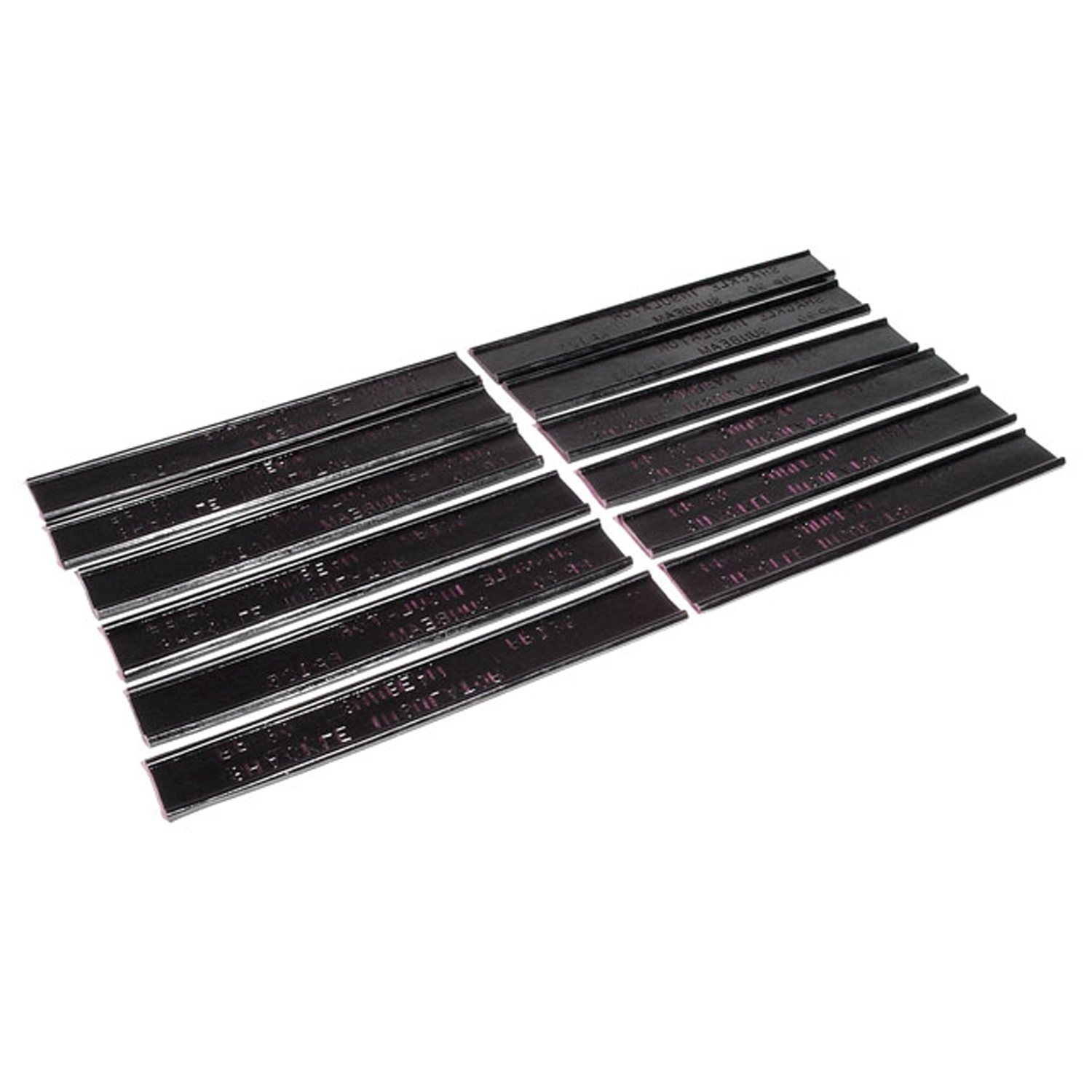 1929 Sunbeam SIXTEEN Spring Shackle Rubber Insulators-RP 125Spring Shackle Rubber Insulators. 1" wide X 6-3/4" long each. 12-Piece Set
Why Choose Metro?
For over 100 years, Metro Moulded Parts has been the pinnacle of quality in classic car restoration parts. Our commitment to precision and authenticity in every component ensures a perfect fit and an OEM-level appearance.
- Expert Craftsmanship & Quality: Each part is a testament to our dedication to reliability and perfection, crafted from original designs and thoroughly tested.
- Advanced Technology: We use cutting-edge techniques to create flawless, long-lasting parts that surpass others in performance.
- SuperSoft Sponge – The Ultimate Door Seal: Not only are our door seals 30% softer than competitors', but they're also guaranteed to never leak. They effectively reduce wind and road noise, enhancing your classic car's comfort and driving experience.
- Proudly American: Our parts are a product of American craftsmanship, made in the USA with a spirit of excellence and heritage.
- Unrivaled Warranty: We back our products with a 30-year industry-leading warranty, a testament to our confidence in their quality.
Join us in preserving the legacy of classic cars with parts that are crafted for perfection, not just made.