

Image of 1929 Sunbeam Three-Litre, Note: These illustrations use artistic license and may differ from actual historical models.
Performance Metrics
Fundamental Metrics
Emotional Appeal
MMP Rating
| Engine Specifications | |
|---|---|
| Engine: | 6-cylinder in-line, side-valve |
| Displacement: | 3.0 Litres |
| Horsepower: | Estimated 50-60 HP |
| Torque: | Not available |
| Compression Ratio: | Not available |
| Ignition System: | Magneto ignition |
| Cooling System: | Water-cooled |
| Performance Specifications | |
| 0-60 Time: | Not available |
| 1/4 Mile Time: | Not available |
| Top Speed: | 75 mph |
| Transmission and Drive | |
| Drive Type: | Rear-wheel drive |
| Transmission Type: | 4-speed manual |
| Fuel and Efficiency | |
| Fuel System Type: | Carburetor |
| MPG: | Not available |
| Dimensions and Brakes | |
| Brakes: | Drum brakes |
| Wheelbase: | 130 inches |
| Weight: | 3500 lbs |
Note: Specifications for classic cars are given to the best of our ability, considering the limited and variant data available.
1929 Sunbeam Three-Litre: A British Six-Cylinder with Quiet Confidence
The 1929 Sunbeam Three-Litre was built for motorists who wanted more than transport: it offered the smoothness of a six-cylinder engine, the craftsmanship of a British luxury car, and the freedom to choose a body shaped around their needs. Made by the Sunbeam Motor Car Company in Wolverhampton, England, it belonged to a period when established manufacturers were turning from the disruption of the First World War toward faster, more comfortable touring cars.
The name can be a little confusing. The Three-Litre is generally associated with Sunbeam’s 20/60 model, whose designation referred to its approximate tax rating and advertised power class. It was a substantial road car, not one of Sunbeam’s purpose-built Grand Prix or land-speed machines. That distinction is part of its appeal: this was sophisticated engineering intended for real roads and long journeys.
A memorable point in Sunbeam history is that the company’s engineering reputation was built both on refined production cars and on spectacular competition projects. The Three-Litre shared the marque’s engineering ambition, but delivered it in a more usable package, with room for passengers and luggage.
Sunbeam Styling, Coachwork and Cabin Craft
The Three-Litre’s long bonnet gives it the confident proportions expected of a large six-cylinder car. Its upright radiator, separate front wings and running boards, and tall, narrow wheels make it unmistakably pre-war. Depending on the body, the rear could be formal and squared-off or more open and sporting. Details such as lamps, windscreens, spare-wheel placement and luggage fittings varied with the coachwork, so no two surviving examples are necessarily identical.
Buyers could find the chassis wearing several body styles, including open tourers, saloons, coupés and more formal limousine-style bodies. The tourer is among the most evocative choices today: it shows off the car’s long bonnet and gives passengers an open-air view of the road. Closed bodies, meanwhile, better suited owners who wanted weather protection and a more imposing, private-car atmosphere. The exact range of bodies depended on the year, market and coachbuilder.
Inside, the experience was traditional and substantial rather than flashy. Leather upholstery, carpeting, polished wood trim and a wood-faced dashboard were common features of cars in this class, though specifications varied by body and individual order. The driving position is upright, with a large steering wheel and clearly presented instruments. These were hand-finished luxury cars, so materials and fittings could differ from one example to another.
There was no single standard color palette that defines every Three-Litre. Paint and trim choices could be specified to suit the buyer or coachwork. Dark blue, black, maroon and deep green are all convincing period colors, but a car’s present finish may not reflect its original specification. For a restoration, period records and surviving paint layers are better guides than assuming one shade was the factory favorite.
Engineering Ahead of Its Era
At the heart of the 20/60 was a six-cylinder engine of approximately 3,019 cc, with overhead valves. Period specifications are commonly reported at around 75 horsepower, although figures can vary with model year and source. The engine’s six-cylinder layout was a significant part of the car’s character: compared with many four-cylinder cars of the period, it delivered power more smoothly and with less vibration.
A four-speed manual gearbox and rear-wheel drive gave the driver control over the engine’s useful torque. Four-wheel braking was an important safety feature for a sizeable car, particularly as speeds and traffic increased during the 1920s. The Three-Litre was not equipped with modern conveniences such as synchronized gears, power steering or independent suspension. Its innovations were instead found in the quality of its powertrain and the way its engineering brought brisk touring performance to a refined road car.
Sunbeam’s broader influence came from its willingness to pursue advanced engineering and competition success. The Three-Litre was not itself a Grand Prix car, but it benefited from a company culture that valued performance and technical development. It stood apart from less refined rivals by combining a smooth six-cylinder engine with formal coachwork options and the presence of a genuine luxury car.
Three-Litre Performance and Road Manners
A healthy Three-Litre is generally credited with a top speed in the neighborhood of 70 to 75 mph. A period-style 0-to-60 mph figure is harder to pin down, and results depend heavily on body weight, gearing, mechanical condition and test method. A reasonable modern estimate is roughly 20 to 25 seconds, rather than a precise factory figure. For a large luxury car of 1929, its strength was sustained touring pace, not explosive acceleration.
On a smooth road, the engine’s steady six-cylinder delivery makes the car feel composed and capable. It is happiest when allowed to build speed progressively, with the driver choosing gears deliberately. The manual gearbox asks for a practiced hand, and shifting without modern synchromesh rewards patience and correct technique.
On rough roads, the car’s substantial chassis and period suspension give it a stately ride, but its age is part of the equation. It will not isolate occupants from sharp bumps as a modern luxury car would, and worn springs, dampers or bushings can make an otherwise sound example feel unsettled. On winding roads, the long wheelbase and size favor measured inputs over quick changes of direction. The driver sits high, steers with a large wheel and feels directly connected to the machinery.
From the cockpit, the experience is as much about sensation as speed: the subdued mechanical murmur of the six, the feel of the gear lever, the measured response of the brakes and the view across that long bonnet. It is a car that encourages its driver to travel with purpose, not hurry.
Living with a 1929 Sunbeam
Today, the Three-Litre is best suited to touring, vintage motoring events and concours displays. An exceptionally well-sorted example can cover meaningful distances, but it is not an ideal everyday car in modern traffic. Its size, unassisted controls and period braking require more attention than a contemporary vehicle, while its age makes regular use dependent on careful maintenance.
Mechanical work is approachable for an experienced owner or a specialist familiar with pre-war British cars. The basic systems are comparatively direct, without electronic controls or complex modern emissions equipment. However, “simple” does not mean inexpensive or effortless. Parts can be scarce, bodywork may be unique to a particular coachbuilder, and a full restoration can involve substantial research and skilled labor. Cooling, ignition, lubrication, brakes and fuel delivery all deserve close attention before regular road use.
Reliability depends less on the badge than on the quality of restoration and maintenance. A neglected car can demand extensive work, while a properly rebuilt example can be a rewarding touring companion. Buyers should look carefully at chassis condition, engine history, gearbox operation, brake performance, wood framing in closed bodies and the authenticity of replacement parts.
Rare Details, Records and Common Criticisms
The Three-Litre’s most intriguing variation is often its coachwork. A rare or unusually elegant body can make one example far more distinctive than another built on the same basic chassis. Because buyers could specify different body styles and finishes, surviving cars may have very individual histories.
There is no widely recognized production-car speed or endurance record that belongs specifically to the 1929 Three-Litre, and it should not be confused with Sunbeam’s celebrated racing and land-speed projects. Nor is a well-documented celebrity ownership story essential to its appeal. Its strongest historical connection is to Sunbeam itself, a marque whose wider reputation was shaped by both road cars and competition engineering.
Common criticisms are familiar to anyone considering a large pre-war car: limited braking performance by modern standards, heavy controls at low speed, slow acceleration by contemporary expectations and the challenge of sourcing correct parts. The open tourers also offer little protection from bad weather. These are not hidden faults so much as reminders that the Three-Litre belongs to a different motoring era.
Collector Values and Market Outlook
Production figures for the 20/60 Three-Litre are not consistently reported in the commonly available reference material, so any total should be treated as an estimate rather than a confirmed factory number. A cautious working estimate is several hundred to perhaps around 1,000 cars across the model’s production run and body variations. The number of surviving, usable examples is likely much smaller.
As a broad 2026 guide, a project car may fall around US$15,000 to US$30,000, while a sound and usable example might bring approximately US$30,000 to US$80,000. A highly restored car with desirable coachwork and strong history could reach US$100,000 or more. These are indicative ranges, not a formal valuation: location, exchange rates, originality, mechanical condition and the quality of the body can shift the price substantially.
The market for pre-war cars is selective. Exceptional, well-documented examples have the best chance of holding or increasing their value, while cars needing major restoration can be difficult to sell because repair costs are high. The Three-Litre’s rarity and craftsmanship support its collector appeal, but buyers generally value condition and provenance more than speculative appreciation.
Why the Sunbeam Three-Litre Still Matters
The 1929 Sunbeam Three-Litre brought together a smooth six-cylinder engine, substantial road presence and the flexibility of coachbuilt luxury. It was not a record-breaking racer, and it was never meant to be. Its achievement was making refined, capable touring feel special at a time when motoring was still a physical, hands-on pursuit.
For collectors, the best example is not simply the fastest or most polished one. It is the car whose engineering, coachwork and history come together in a way that still invites a journey. Nearly a century on, the Three-Litre remains a reminder that great motoring can be measured not only in speed, but in the pleasure of the road itself.
1929 Sunbeam Three-Litre Catalog of Parts
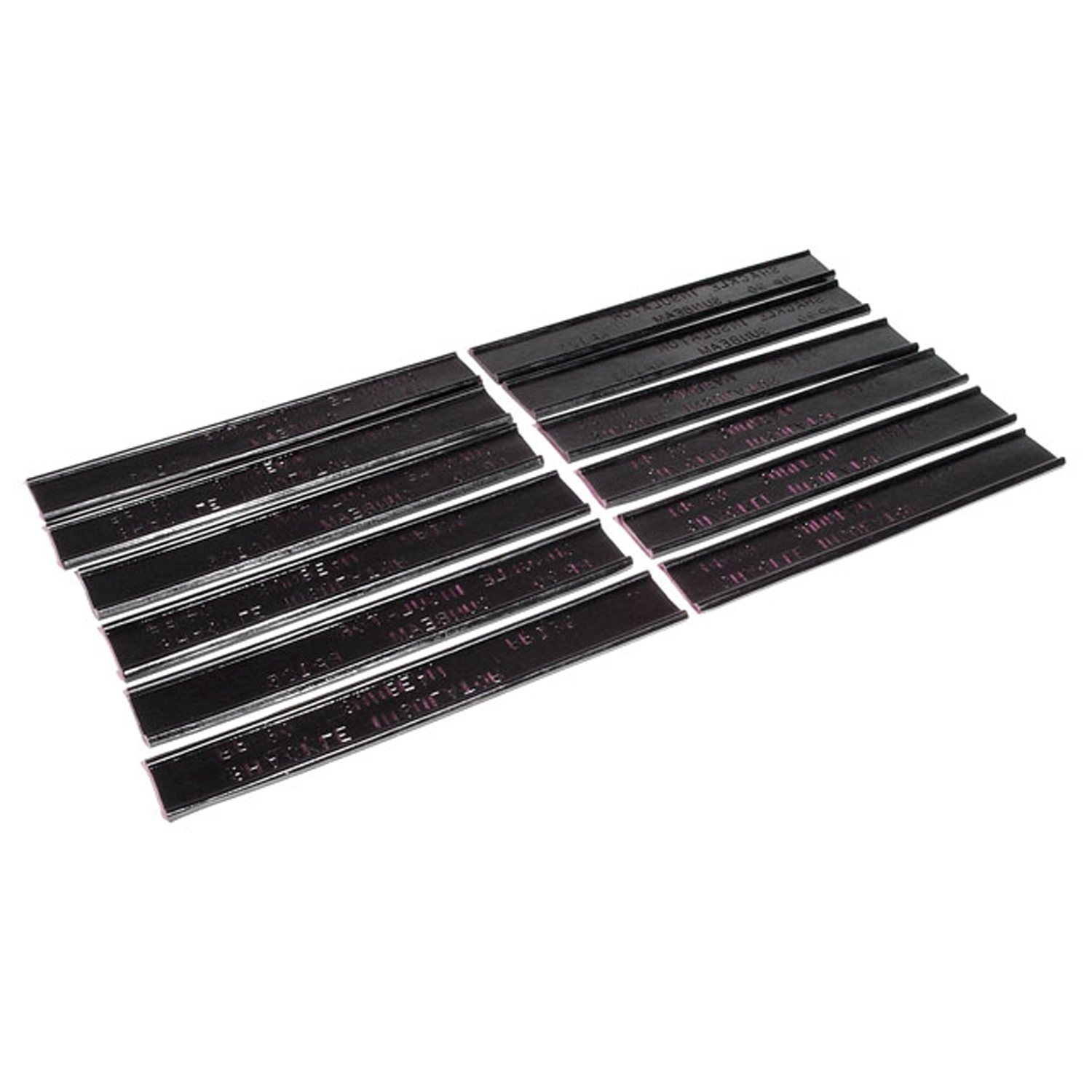 1929 Sunbeam THREE-LITRE Spring Shackle Rubber Insulators-RP 125Spring Shackle Rubber Insulators. 1" wide X 6-3/4" long each. 12-Piece Set
Why Choose Metro?
For over 100 years, Metro Moulded Parts has been the pinnacle of quality in classic car restoration parts. Our commitment to precision and authenticity in every component ensures a perfect fit and an OEM-level appearance.
- Expert Craftsmanship & Quality: Each part is a testament to our dedication to reliability and perfection, crafted from original designs and thoroughly tested.
- Advanced Technology: We use cutting-edge techniques to create flawless, long-lasting parts that surpass others in performance.
- SuperSoft Sponge – The Ultimate Door Seal: Not only are our door seals 30% softer than competitors', but they're also guaranteed to never leak. They effectively reduce wind and road noise, enhancing your classic car's comfort and driving experience.
- Proudly American: Our parts are a product of American craftsmanship, made in the USA with a spirit of excellence and heritage.
- Unrivaled Warranty: We back our products with a 30-year industry-leading warranty, a testament to our confidence in their quality.
Join us in preserving the legacy of classic cars with parts that are crafted for perfection, not just made.