

Image of 1929 Sunbeam Twenty-Five, Note: These illustrations use artistic license and may differ from actual historical models.
Performance Metrics
Fundamental Metrics
Emotional Appeal
MMP Rating
| Engine Specifications | |
|---|---|
| Engine: | Inline-6 |
| Displacement: | 3.3L |
| Horsepower: | Estimated 50-60 HP |
| Torque: | Not available |
| Compression Ratio: | Not available |
| Ignition System: | Magneto ignition system |
| Cooling System: | Water-cooled |
| Performance Specifications | |
| 0-60 Time: | Not available |
| 1/4 Mile Time: | Not available |
| Top Speed: | 70 mph |
| Transmission and Drive | |
| Drive Type: | Rear-wheel drive |
| Transmission Type: | 4-speed manual |
| Fuel and Efficiency | |
| Fuel System Type: | Carburetor |
| MPG: | Not available |
| Dimensions and Brakes | |
| Brakes: | Drum brakes |
| Wheelbase: | 132 inches |
| Weight: | Estimated 3500 lbs |
Note: Specifications for classic cars are given to the best of our ability, considering the limited and variant data available.
1929 Sunbeam Twenty-Five: A British Luxury Six
The 1929 Sunbeam Twenty-Five was built for motorists who wanted substantial power, fine coachwork and the quiet confidence of a prestigious British marque. Made by the Sunbeam Motor Car Company in Wolverhampton, England, it belonged to a class of large, high-quality touring cars that sat well above everyday family transport.
Sunbeam had earned an international reputation through both road cars and competition machines. Its cars were associated with engineering ambition, while its racing successes gave the marque a sporting edge. The Twenty-Five brought that reputation to a luxurious six-cylinder chassis, typically supplied to specialist coachbuilders for completion as a saloon, tourer or limousine.
One useful distinction: “Twenty-Five” refers to the car’s RAC taxable horsepower rating, not its actual engine output. The rating was a British taxation formula, and it should not be mistaken for a 25-horsepower engine. The car’s real power was considerably higher.
Elegant Styling and Coachbuilt Comfort
The Twenty-Five had the long bonnet, upright radiator and substantial proportions expected of a large British car of its period. Its tall radiator grille and prominent headlamps gave the front end a formal presence, while sweeping front wings and running boards visually connected the nose to the rear body. Depending on the coachwork, the result could feel stately and restrained or more sporting and open.
Sunbeam supplied the chassis, leaving much of the body design to established coachbuilders. Buyers could choose from body styles such as a four-door saloon, tourer, limousine or landaulette, with exact offerings varying by coachbuilder and individual order. The saloon and limousine forms suited formal use, while an open tourer showed off the car’s flowing lines and made the most of fine-weather motoring. No single body style defines every surviving Twenty-Five.
Interior appointments were generally appropriate to an expensive car: generous seating, quality upholstery, polished wood trim and carefully finished controls. The precise materials and layout depended on the body and coachbuilder. A limousine might emphasize rear-seat space and privacy, while a tourer offered a more exposed, sporting atmosphere. Buyers also had scope to specify trim and paint to suit their tastes.
There was no one universal color palette for all Twenty-Fives. Coachbuilt cars could be ordered in individual combinations, with dark blue, maroon, green and black among period-appropriate choices. Contrasting body and wheel colors, along with restrained brightwork, could add a custom touch without overwhelming the car’s formal lines.
Engineering for the Open Road
At its heart was a large six-cylinder engine of roughly 3.5 litres, paired with a manual gearbox and rear-wheel drive. Published specifications and surviving examples can differ, so exact details should be checked against a particular chassis and engine. In period terms, the appeal was not a high-revving, highly stressed motor, but smooth, flexible power suited to carrying a substantial car and its passengers.
The Twenty-Five’s specification reflected the expectations of a premium late-1920s motorcar. It had a conventional separate chassis, substantial suspension and four-wheel braking. Those systems were familiar to experienced motorists and mechanics, even if they demanded more attention and physical input than modern equivalents. Equipment and details could vary with year, chassis and coachbuilt body.
Its design was not a mass-market breakthrough in the way that a new production method or affordable small car might be. Instead, the Twenty-Five represented the established British luxury-car formula at a high level: a capable engine, a sturdy chassis and a body tailored to the owner. Its significance lies in how Sunbeam combined that traditional approach with the marque’s strong engineering and sporting reputation.
Performance and Driving Character
A sound Twenty-Five could reach roughly 75 to 80 mph, depending on its gearing, body style, condition and load. A modern 0-to-60-mph figure is difficult to pin down because period testing was not standardized and surviving cars vary. A reasonable estimate is around 20 to 25 seconds, rather than the kind of acceleration expected from a modern performance car.
On a smooth road, the six-cylinder engine should feel relaxed and well suited to steady touring. Its strongest impression is likely to be a measured, smooth pull rather than a dramatic burst of speed. The engine’s mechanical notes, the whir of the transmission and the sound of the road are all part of the experience. These cars were designed for purposeful progress, not silence by modern standards.
The long wheelbase and substantial weight help the car feel composed on open roads, but narrow, uneven lanes reveal its age. The suspension cannot erase sharp bumps, and the driver needs to plan ahead for rough surfaces, tight bends and steep descents. On winding roads, the steering and brakes call for more effort and anticipation than a contemporary car. In crosswinds, a tall saloon body may also feel more affected than a low modern vehicle.
Driving one is an active experience. The driver manages a manual gearbox, monitors temperatures and mechanical sounds, and allows extra distance for braking. That interaction is part of the appeal, but it also makes the Twenty-Five better suited to leisurely touring than hurried daily travel.
Sunbeam’s Place in History
The Twenty-Five arrived during a competitive period for British luxury cars, when established marques such as Bentley, Daimler and Rolls-Royce attracted buyers seeking prestige and engineering quality. Sunbeam offered its own blend of refinement and sporting heritage. Its competition record helped distinguish the name, even though the Twenty-Five itself was primarily a luxury touring car rather than a dedicated racing model.
The marque’s most spectacular engineering achievements belonged to separate record-breaking machines. In 1929, Sunbeam-built Golden Arrow, driven by Henry Segrave, set a land-speed record of 231.446 mph at Daytona Beach. Golden Arrow was not a Twenty-Five, but its achievement illustrates the technical ambition and reputation associated with Sunbeam during the same era.
The Twenty-Five did not create a lasting mass-market design template. Its influence is better understood as part of the final flowering of the coachbuilt British motorcar: a time when customers could select a chassis and commission a body tailored to their needs. That tradition would become increasingly costly and uncommon as the automotive industry moved toward standardized bodies and larger-scale production.
Ownership, Maintenance and Reliability
Today, a 1929 Sunbeam Twenty-Five is primarily a collector and touring car. Owners may use one for vintage rallies, club events, historic motoring weekends and shows. A well-sorted example can cover touring distances, but it is rarely a sensible everyday vehicle. Its size, age, fuel use and need for attentive maintenance all favor planned outings over routine commuting.
Mechanical repairs are approachable for a skilled enthusiast, but not necessarily easy for an average modern-car owner. The car’s systems are comparatively straightforward, yet parts availability, specialist knowledge and the condition of decades-old components can make restoration demanding. Engine work, brake rebuilding, electrical faults and coachwork repairs may require experienced help. Before buying, inspect the chassis for corrosion or poor repairs, check the engine’s oil pressure and cooling system, and assess the brakes, gearbox and timber or metal structure of the body.
Reliability depends more on maintenance and restoration quality than on the badge alone. A carefully maintained car can be dependable for appropriate use, while a neglected example may need substantial work before it is safe to tour. Owners should also budget for specialist servicing, suitable storage and the occasional search for hard-to-find parts.
Rare Details and Common Criticisms
Exact production figures for the 1929 Twenty-Five are not readily established in commonly available model summaries, and the coachbuilt nature of the cars complicates the picture. A reasonable working estimate is that production ran to several hundred cars rather than thousands, with surviving examples much scarcer. That estimate should be treated as an informed approximation, not a confirmed factory total.
The model is not widely known for a single celebrity owner or a major record of its own. Its more intriguing historical connection is its place within the Sunbeam marque during an era when the company was pursuing both luxurious road motoring and headline-making speed records. The contrast is striking: one Sunbeam was built for comfortable touring, while another was designed to travel faster than any car had gone before.
Common criticisms are familiar to owners of large pre-war cars: heavy controls, modest acceleration by modern standards, limited braking performance compared with present-day traffic and the expense of maintaining bespoke coachwork. The Twenty-Five’s size can also make storage and maneuvering a challenge. These are not hidden defects so much as the realities of owning a substantial 1920s motorcar.
Collector Values and Market Outlook
Values vary sharply with body style, originality, restoration quality and provenance. As a broad current-market estimate, a project or incomplete example might fall around £10,000 to £20,000. A usable, well-presented car could be in the region of £25,000 to £50,000, while a rare, exceptionally restored or especially desirable coachbuilt example may exceed that range. In U.S. dollars, those broad figures are roughly $13,000 to $65,000 or more, depending on exchange rates and the individual car.
Availability is limited. A buyer may wait a long time for the right example, and two cars with the same model name can differ substantially because their bodies were built to individual specifications. Values for well-restored pre-war cars tend to reward quality and documented history, but the market is selective. The Twenty-Five is best viewed as a specialist collector car with potential for steady long-term interest, rather than a guaranteed short-term investment.
Why the Sunbeam Twenty-Five Still Matters
The 1929 Sunbeam Twenty-Five brought together a smooth six-cylinder engine, a substantial touring chassis and coachbuilt British style. It was not designed to dominate a racetrack or transform mass production. Its appeal lies in a more personal kind of motoring, where each body could be distinctive and every journey demanded the driver’s attention.
For collectors, it offers a tangible link to Sunbeam’s ambitious interwar years and to the golden age of custom-bodied cars. Seen today, the Twenty-Five is more than a handsome vintage saloon or tourer: it is a reminder that luxury once meant craftsmanship, individuality and the pleasure of making every mile count.
1929 Sunbeam Twenty-Five Catalog of Parts
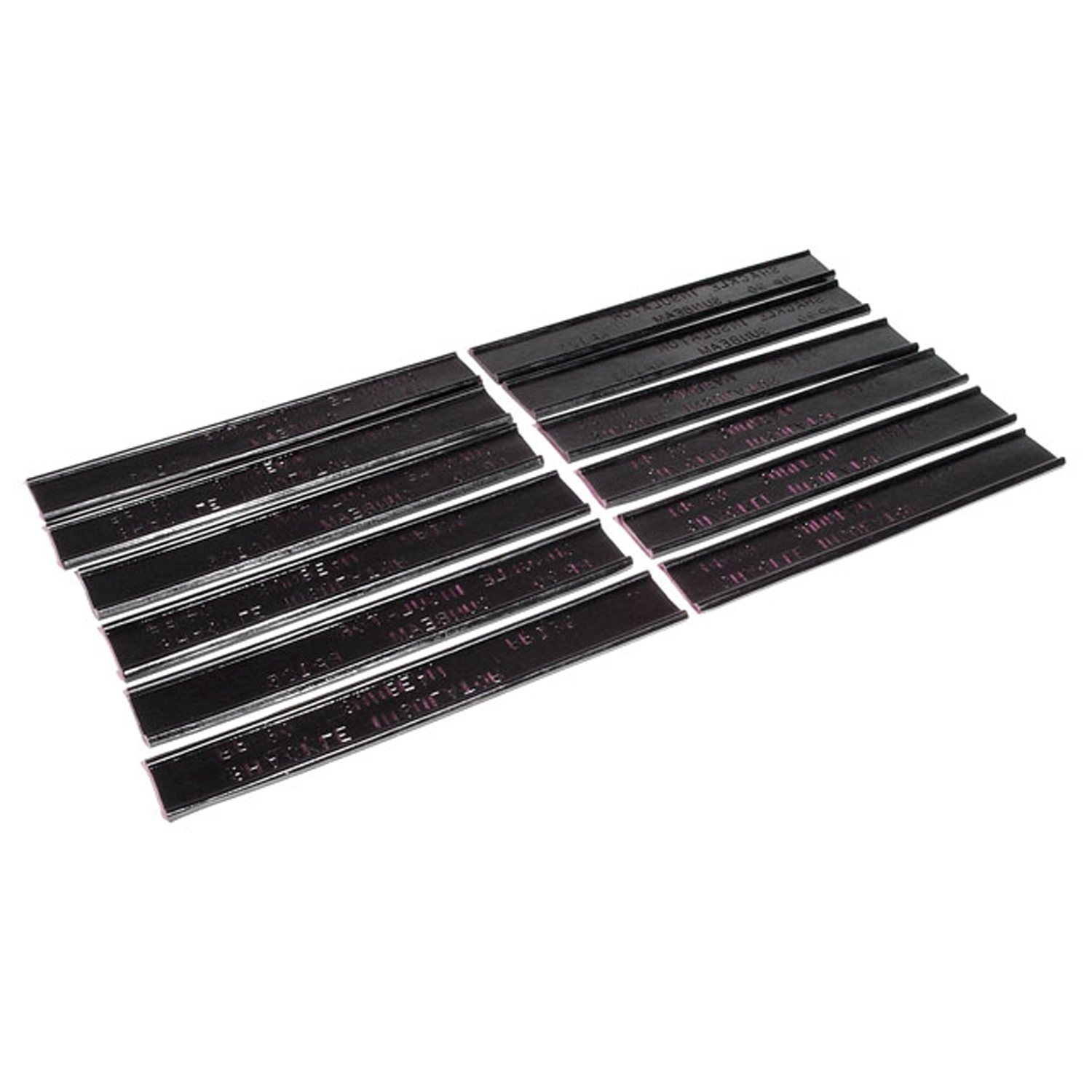 1929 Sunbeam TWENTY-FIVE Spring Shackle Rubber Insulators-RP 125Spring Shackle Rubber Insulators. 1" wide X 6-3/4" long each. 12-Piece Set
Why Choose Metro?
For over 100 years, Metro Moulded Parts has been the pinnacle of quality in classic car restoration parts. Our commitment to precision and authenticity in every component ensures a perfect fit and an OEM-level appearance.
- Expert Craftsmanship & Quality: Each part is a testament to our dedication to reliability and perfection, crafted from original designs and thoroughly tested.
- Advanced Technology: We use cutting-edge techniques to create flawless, long-lasting parts that surpass others in performance.
- SuperSoft Sponge – The Ultimate Door Seal: Not only are our door seals 30% softer than competitors', but they're also guaranteed to never leak. They effectively reduce wind and road noise, enhancing your classic car's comfort and driving experience.
- Proudly American: Our parts are a product of American craftsmanship, made in the USA with a spirit of excellence and heritage.
- Unrivaled Warranty: We back our products with a 30-year industry-leading warranty, a testament to our confidence in their quality.
Join us in preserving the legacy of classic cars with parts that are crafted for perfection, not just made.