

Image of 1930 Sunbeam Sixteen, Note: These illustrations use artistic license and may differ from actual historical models.
Performance Metrics
Fundamental Metrics
Emotional Appeal
MMP Rating
| Engine Specifications | |
|---|---|
| Engine: | 2.2L I6 |
| Displacement: | 2,200 cc |
| Horsepower: | Estimated 50-60 hp |
| Torque: | Not available |
| Compression Ratio: | Not available |
| Ignition System: | Magneto ignition system |
| Cooling System: | Water-cooled |
| Performance Specifications | |
| 0-60 Time: | Not available |
| 1/4 Mile Time: | Not available |
| Top Speed: | 70 mph |
| Transmission and Drive | |
| Drive Type: | Rear-wheel drive |
| Transmission Type: | 4-speed manual |
| Fuel and Efficiency | |
| Fuel System Type: | Carburetor |
| MPG: | Not available |
| Dimensions and Brakes | |
| Brakes: | Drum brakes |
| Wheelbase: | 130 inches |
| Weight: | Estimated 3,000 lbs |
Note: Specifications for classic cars are given to the best of our ability, considering the limited and variant data available.
1930 Sunbeam Sixteen: A Refined British Six
The 1930 Sunbeam Sixteen was a quietly capable British touring car: elegant enough for a smart arrival, yet engineered for long-distance motoring rather than mere display. Built by the Sunbeam Motor Car Company in Wolverhampton, England, it belonged to a marque already celebrated for racing and record-breaking. The Sixteen brought some of that engineering confidence to a more practical, road-going class of car.
The name can be a little misleading today. “Sixteen” referred to the car’s British RAC fiscal horsepower rating, not its engine size. It was also a six-cylinder car, with a 2.9-litre engine in the commonly cited specification. A particularly appealing contrast defines the model: Sunbeam was famous for spectacular speed records, while the Sixteen was designed to make ordinary journeys feel composed and substantial.
Sunbeam’s Place in 1930
Sunbeam had earned international attention through competition and record attempts, but by 1930 the company was navigating a changing and increasingly challenging car market. It had become part of the Sunbeam-Talbot-Darracq group, often abbreviated to STD, and would later pass into the Rootes organisation. The Sixteen sat in the traditional British market for well-made medium-sized cars, where buyers expected sound engineering, dignified coachwork and enough performance for the expanding road network.
It was not a mass-market car in the way a Ford or Austin might be. The Sunbeam’s appeal was to motorists who wanted more refinement and individuality than a basic family car offered, without stepping up to a large, expensive limousine. Its six-cylinder engine and coachbuilt appearance gave it a more prestigious feel than its “Sixteen” tax class might suggest.
Classic Sunbeam Styling and Coachwork
The Sixteen wore the upright, carefully proportioned look associated with British cars of the period. A tall radiator, long bonnet and distinct front wings gave the car a formal profile, while running boards connected the front and rear wings into one flowing line. Depending on the body, the passenger compartment could sit well back from the front axle, lending the car a stately, almost limousine-like stance.
Bodywork was not necessarily identical from one car to another. Buyers could encounter saloons and touring bodies, along with more specialised enclosed styles such as coupés or limousine-type coachwork, depending on the year, market and coachbuilder. The saloon was the natural choice for all-weather use, while an open tourer made the most of fine-weather motoring and showed off the car’s long bonnet. Period coachbuilders might tailor details such as the roofline, window arrangement, trim and luggage provision.
Paint choices varied with specification and coachbuilder rather than following one fixed palette for every Sixteen. Dark shades such as black, navy, deep green and maroon suited the car’s formal character; two-tone combinations could add a more individual touch. Polished brightwork, painted wheels or contrasting wheel colours helped finish the look.
A Comfortable, Hand-Finished Cabin
Inside, the Sixteen belonged to a more traditional world of motoring. Expect a broad, upright dashboard, clearly arranged instruments and a steering wheel that looks large by modern standards. Depending on the body and trim, the cabin might feature leather seating, quality cloth, polished wood or wood-effect trim, and carefully finished door panels. The exact materials were a matter of specification, so surviving cars can differ considerably.
There was none of the modern expectation of push-button convenience. The driver managed a manual gearbox, mechanical controls and the sounds and smells of an older car. But the payoff was an interior designed around comfort and craftsmanship, with proper seating and a more substantial atmosphere than a lightweight runabout. In a well-preserved example, the cabin’s patina is part of its appeal.
Engineering and Period Technology
At the heart of the Sixteen was a smooth-running six-cylinder engine of about 2.9 litres. Published specifications for Sunbeam models and individual cars can differ, but the Sixteen is generally associated with an output in the region of 50 horsepower. That was respectable for a medium-sized British car of its day, especially when paired with the engine’s flexible delivery.
The car used conventional, robust period engineering: a separate chassis, a manual gearbox and leaf-sprung suspension. Four-wheel braking was an important practical feature for a car intended to travel at modern-for-the-time road speeds, though braking feel and stopping distances are very different from those of a contemporary car. Equipment and details could vary across production and body styles, so it is wise to check a particular car’s specification rather than assume every example is identical.
Road Performance and Driving Character
A sound, correctly tuned Sixteen can be expected to reach roughly 65 to 70 mph, depending on its body, gearing, condition and load. Period cars were not generally tested using today’s standardised 0-to-60 method, so acceleration figures should be treated as estimates. A reasonable modern estimate is around 25 to 35 seconds to 60 mph for a well-running example, with heavier saloons taking longer and some cars feeling more comfortable cruising below that speed.
The Sixteen is best understood as a steady touring car rather than a sports saloon. Its six-cylinder engine should produce a measured, mechanical hum that becomes more pronounced under load, while the long bonnet and upright driving position make the driver feel closely connected to the machinery. Gear changes require attention and timing, and the brakes call for more anticipation than a modern driver may expect.
On rough roads, the chassis and tall tyres offer a distinctly old-fashioned ride. The car can absorb ordinary bumps with a soft, gently floating motion, but larger potholes and broken surfaces demand care. On winding roads, its size, steering effort and period suspension reward a smooth approach rather than quick direction changes. Crosswinds and road camber can also make themselves felt. Driven with patience, the Sixteen is at its best on open roads and scenic touring routes.
Why the Sunbeam Sixteen Matters
The Sixteen’s significance lies less in introducing a single world-changing innovation than in showing how a respected engineering marque translated its expertise into a refined touring car. Its six-cylinder layout offered smoothness that a smaller four-cylinder engine could not easily match, while its chassis and available coachwork gave buyers a choice of practical and more distinctive configurations.
Against contemporaries, the Sunbeam stood out through its combination of mechanical refinement, established sporting reputation and individual coachbuilt character. It was not as common as the best-selling family cars, and it did not need to be. The model represented a middle ground between everyday transport and the grander, costlier luxury cars of the era. Its influence is therefore best understood as part of the broader British tradition of well-engineered, owner-driven touring cars, rather than as the origin of a specific modern technology.
Living With a 1930 Sunbeam
Today, a Sunbeam Sixteen is most likely to be used for vintage rallies, club events, shows and occasional touring. It can be driven on suitable roads, but regular modern commuting is rarely its ideal role. Traffic speeds, limited braking performance, weather protection and the availability of replacement parts all make careful route planning worthwhile.
Maintenance is approachable for an owner with mechanical experience, workshop space and patience, but it is not quite a matter of walking into any parts shop. Routine jobs such as servicing, ignition work and brake adjustment are familiar to vintage-car specialists. More involved repairs may require a marque club, a knowledgeable restorer or parts made to suit the car. The chassis and mechanical layout are generally more straightforward than those of a modern vehicle, but age, previous repairs and specialist components can complicate a restoration.
Reliability depends heavily on condition. A properly rebuilt and maintained Sixteen can be a rewarding touring car; an unrestored example may hide worn bearings, tired brakes, cooling-system problems, timber or bodywork deterioration, and improvised repairs. A pre-purchase inspection by someone familiar with pre-war cars is money well spent.
Sunbeam Sixteen Facts and Myths
The Sixteen’s name is one of its best conversation starters: it signals a tax-rating class, not a 1.6-litre engine. The car also belongs to a marque whose history includes extraordinary record-breaking machines, but the Sunbeam Sixteen itself was a road-going touring model, not a land-speed-record car. Those celebrated exploits help explain the name’s glamour, but they should not be mistaken for the Sixteen’s intended purpose.
There is no widely recognised production record or major speed title associated specifically with the 1930 Sixteen. Nor is there a well-established celebrity ownership story that defines the model. Its more common criticism is practical: compared with a contemporary car, it is slow to accelerate, requires deliberate braking and steering, and can be demanding in dense traffic. Those are normal trade-offs for a pre-war car, not evidence that the Sunbeam was poorly conceived.
Collector Values and Availability
Exact production totals for the 1930 Sunbeam Sixteen are not readily established in the commonly available model histories. As a best estimate rather than a factory figure, production across the relevant Sixteen model run may have been in the low thousands, perhaps around 1,500 to 3,000 cars. The number surviving in usable condition is much smaller, and individual body styles can be considerably harder to find than the general model name suggests.
As an indicative 2026 guide, a project car may fall around £8,000 to £15,000 in the UK, while a sound, usable example could be roughly £18,000 to £35,000. A highly restored or especially attractive coachbuilt car may reach £40,000 to £60,000 or more, depending on provenance, originality and the quality of its restoration. In the United States, comparable cars might broadly range from about $20,000 to $75,000, with exceptional examples potentially higher. These are estimates, not a substitute for recent comparable sales or a specialist valuation.
Values are influenced by condition, documentation, body style and whether the car retains its original features. The market for pre-war cars is selective: exceptional, well-documented examples can hold their appeal, while cars needing expensive restoration may be difficult to sell at a price that reflects the work involved. The Sixteen is best bought for its character and usability, with appreciation treated as a bonus rather than a guarantee.
A Distinctive British Tourer
The 1930 Sunbeam Sixteen combined a smooth six-cylinder engine, traditional British coachwork and a sporting marque’s engineering heritage in a car built for comfortable travel. It was not a record-breaker or a modern-speed performer, but it offered refinement and individuality at a time when personal motoring was rapidly changing.
More than nine decades later, its appeal is easy to understand: the Sixteen turns a journey into an occasion. For enthusiasts who value craftsmanship, mechanical character and the pleasure of travelling at an unhurried pace, it remains a memorable expression of pre-war British motoring.
1930 Sunbeam Sixteen Catalog of Parts
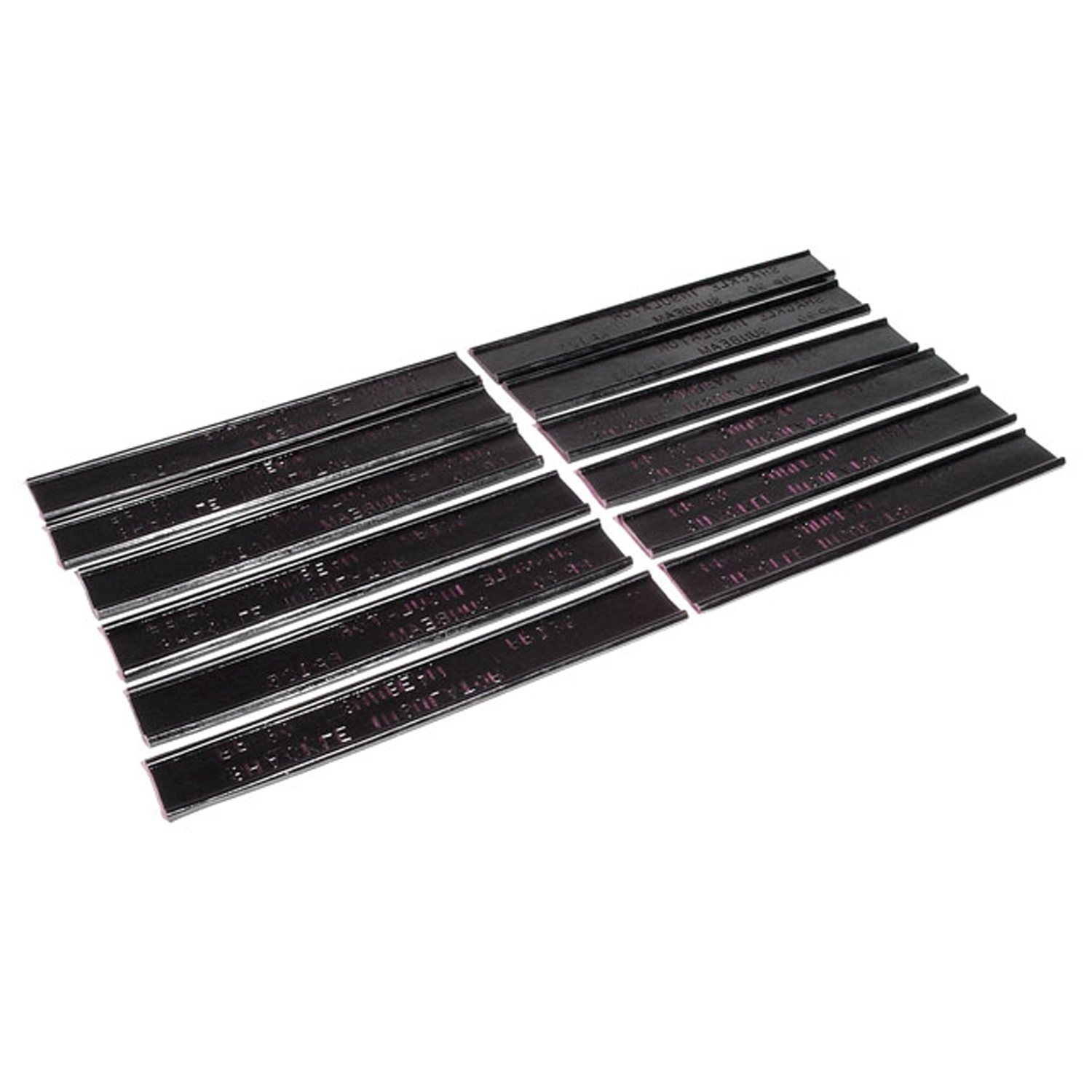 1930 Sunbeam SIXTEEN Spring Shackle Rubber Insulators-RP 125Spring Shackle Rubber Insulators. 1" wide X 6-3/4" long each. 12-Piece Set
Why Choose Metro?
For over 100 years, Metro Moulded Parts has been the pinnacle of quality in classic car restoration parts. Our commitment to precision and authenticity in every component ensures a perfect fit and an OEM-level appearance.
- Expert Craftsmanship & Quality: Each part is a testament to our dedication to reliability and perfection, crafted from original designs and thoroughly tested.
- Advanced Technology: We use cutting-edge techniques to create flawless, long-lasting parts that surpass others in performance.
- SuperSoft Sponge – The Ultimate Door Seal: Not only are our door seals 30% softer than competitors', but they're also guaranteed to never leak. They effectively reduce wind and road noise, enhancing your classic car's comfort and driving experience.
- Proudly American: Our parts are a product of American craftsmanship, made in the USA with a spirit of excellence and heritage.
- Unrivaled Warranty: We back our products with a 30-year industry-leading warranty, a testament to our confidence in their quality.
Join us in preserving the legacy of classic cars with parts that are crafted for perfection, not just made.