

Image of 1930 Sunbeam Twenty, Note: These illustrations use artistic license and may differ from actual historical models.
Performance Metrics
Fundamental Metrics
Emotional Appeal
MMP Rating
| Engine Specifications | |
|---|---|
| Engine: | Inline 6-cylinder engine |
| Displacement: | 3.3L |
| Horsepower: | Estimated 20-30 HP |
| Torque: | Not available |
| Compression Ratio: | Not available |
| Ignition System: | Magneto ignition system |
| Cooling System: | Water-cooled |
| Performance Specifications | |
| 0-60 Time: | Not available |
| 1/4 Mile Time: | Not available |
| Top Speed: | 60 mph |
| Transmission and Drive | |
| Drive Type: | Rear-wheel drive |
| Transmission Type: | 4-speed manual |
| Fuel and Efficiency | |
| Fuel System Type: | Carburetor |
| MPG: | Not available |
| Dimensions and Brakes | |
| Brakes: | Drum brakes |
| Wheelbase: | 130 inches |
| Weight: | Estimated 3500 lbs |
Note: Specifications for classic cars are given to the best of our ability, considering the limited and variant data available.
1930 Sunbeam Twenty: A British Sporting Six-Cylinder
The 1930 Sunbeam Twenty was a substantial British touring car with the manners of a sporting machine and the finish of a luxury coachbuilt automobile. Built by the Sunbeam Motor Car Company in Wolverhampton, England, it belonged to a period when British manufacturers paired smooth six-cylinder engines with elegant, individually bodied cars. The “Twenty” name referred to its RAC tax-horsepower class, while the model is commonly associated with the 20/60: roughly 20 tax horsepower and around 60 brake horsepower.
Sunbeam had already earned a reputation for engineering and competition success before the Twenty arrived. Its racing cars had taken on European rivals, and the company was also responsible for record-breaking machines. One intriguing distinction is that the road-going Twenty shared its maker’s sporting heritage, but was not a racing car in disguise. It was designed to carry its occupants comfortably over long distances, with enough performance to make fast touring enjoyable.
Elegant Coachwork and Period Craft
The Twenty’s long bonnet, upright radiator, sweeping front wings and tall, narrow profile gave it the unmistakable proportions of a well-bred British car of the late 1920s. Its coachwork could be formal or sporting depending on the body fitted. A saloon presented a dignified, enclosed silhouette, while an open tourer showed off the chassis and made the car feel more overtly athletic. Many examples were supplied with coachwork produced or finished to suit a buyer’s requirements, so details such as windscreen shape, luggage arrangements and rear seating could vary.
Inside, the emphasis was on craftsmanship rather than modern convenience. Buyers could expect substantial upholstery, polished wood or wood-effect trim, carefully finished metal fittings and generous seating. The exact materials depended on the body and coachbuilder, but a well-appointed saloon could feel genuinely luxurious for its day. The driving position was upright, with a large steering wheel, clear instruments and controls arranged for a driver accustomed to managing a substantial pre-war car.
There was no single universally fixed paint palette for every Twenty. Black, dark blue, maroon, green and sober shades of grey suited the period and the car’s formal character. Open tourers could also wear brighter combinations, with contrasting body and wheel colors. Because bodies and finishes were often ordered to a customer’s taste, surviving cars may differ considerably from one another.
Typical body styles included saloons, tourers, coupés and more formal limousine or landaulette-style arrangements, depending on the year and coachbuilder. The four-door saloon was a natural choice for owners who valued weather protection and prestige; the open tourer is often the most immediately appealing to enthusiasts today. Exact body availability could vary, so individual cars are best identified by their chassis and coachwork history rather than by appearance alone.
Engineering for Fast, Comfortable Touring
At the heart of the 20/60 was a straight-six engine of approximately 2.9 litres. Period specifications commonly list an overhead-valve layout and an output in the neighborhood of 60 bhp, although figures and equipment can vary with model year and source. The “Twenty” designation was a tax classification, not a direct statement of engine size or power. A four-speed manual gearbox gave the driver useful flexibility for climbing hills and cruising at speed, while four-wheel brakes were an important safety feature for a large car of the era.
That combination made the Sunbeam more than a stately carriage. Its six-cylinder engine offered smoother running than many four-cylinder rivals, and the four-speed transmission helped make better use of the available power. The Twenty was not packed with modern electronics or convenience systems; its innovations were mechanical and practical, focused on refinement, control and long-distance capability.
What Set the Sunbeam Twenty Apart
The Twenty occupied an appealing middle ground in the British luxury market. It had the scale and finish expected of a substantial touring car, but Sunbeam’s sporting identity gave it a livelier image than a purely formal limousine. Smooth six-cylinder power, a multi-speed gearbox and four-wheel braking made it a capable choice for the expanding network of intercity roads, where owners wanted to cover ground briskly without giving up comfort.
Its significance is best understood as part of Sunbeam’s broader engineering story rather than as a single design revolution. The model brought the company’s performance-minded reputation to a practical road car. Sunbeam’s competition experience helped establish the marque as an engineering-led maker, but the Twenty itself was intended for owners, families and professional drivers rather than Grand Prix grids. Its lasting appeal lies in that blend of sporting character and traditional coachbuilt refinement.
The model also reflects the pressures facing British carmakers around 1930. The Great Depression was beginning to affect demand for expensive automobiles, while the market was moving toward larger-scale production and more standardized models. Sunbeam would later pass through financial difficulties and become part of the Rootes group in 1935. The Twenty therefore belongs to the final chapter of Sunbeam’s independent-car-making era.
Performance and Road Manners
A healthy 20/60 is generally associated with a top speed in the region of 65 to 70 mph, depending on its body, gearing, condition and load. A light tourer would have an advantage over a heavy limousine. There is no consistently documented factory 0–60 mph figure for every 1930 body and specification, but a period-correct estimate is roughly 25 to 30 seconds. That is brisk enough to make the car a useful fast tourer, though modern traffic will make its acceleration feel measured.
On a smooth road, the six-cylinder engine should deliver a quiet, even surge rather than a sharp burst of power. The driver works the four-speed gearbox deliberately, listening to the engine and matching revs with each change. At speed, the car’s long wheelbase and substantial chassis help it feel composed, while its steering and braking demand more attention than those of a modern vehicle.
On rough surfaces, the suspension can absorb ordinary bumps with the soft, substantial feel expected of a large touring car, but it will not isolate occupants as effectively as a later luxury saloon. Tight, winding roads require planning: the Twenty has considerable mass, a tall body and period steering geometry. In crosswinds, an enclosed saloon may feel more affected than a lower modern car, while an open tourer exposes occupants to wind and weather. The experience is engaging precisely because the driver remains involved.
Expect the engine to produce a restrained mechanical hum, with more induction and exhaust sound when worked hard. The large steering wheel, manual gear changes and unassisted controls connect the driver directly to the machine. This is not a car for effortless point-and-go motoring; it rewards smooth inputs, anticipation and a relaxed touring pace.
Living with a Sunbeam Twenty
Today, the Twenty is best suited to vintage motoring, club events, touring rallies, historic displays and private collections. A carefully maintained example can cover meaningful distances, but it is rarely a sensible daily driver. Its size, age, period braking performance and need for regular attention make it a car to use thoughtfully rather than in heavy modern traffic.
Mechanical work is approachable for an experienced classic-car owner, particularly when the car is complete and has a clear maintenance history. The engine, gearbox, brakes and chassis are conventional mechanical systems, but age brings its own complications. Parts may require specialist sourcing or careful repair, and coachwork, trim and body fittings can be harder to restore than the basic mechanical components. Before purchase, inspect the chassis for corrosion or poor repairs, check the engine for oil pressure and overheating, and confirm that the brakes operate evenly.
Reliability depends heavily on restoration quality and regular use. Period cars dislike being left idle for long stretches, and cooling, lubrication, ignition and fuel systems all benefit from preventative maintenance. A neglected example can become expensive quickly, especially if it needs both mechanical rebuilding and coachwork restoration.
Sunbeam Twenty Facts and Myths
The Twenty’s name can be confusing to modern readers. It does not mean the engine displaced 20 litres or produced only 20 horsepower. It refers to the British RAC tax-horsepower rating, a formula based largely on cylinder dimensions. The model’s commonly quoted 20/60 description distinguishes that tax class from its approximate brake-horsepower output.
Sunbeam’s famous land-speed achievements are part of the marque’s history, but they should not be confused with the Twenty’s own record book. In 1927, Henry Segrave drove the specialized Sunbeam 1000 hp to a record-setting speed of more than 200 mph, making it the first car to pass that landmark. The 1000 hp machine was a purpose-built record car, not a modified Twenty. The road car’s connection is its maker and the ambitious engineering culture surrounding the brand.
No widely recognized production or endurance record belongs specifically to the 1930 Twenty. Its significance is instead as a representative of Sunbeam’s independent luxury-car production. A common criticism today is that it is large and relatively slow by modern standards, with heavy controls and a need for frequent maintenance. Those traits are part of the period experience, but they also mean that condition and usability matter more than headline specifications.
Rarity and Collector Values
Exact production totals for the 1930 Sunbeam Twenty are difficult to establish from readily available model-level records. A cautious estimate for the 20/60 family across its production run is roughly 1,000 to 2,000 cars, rather than a confirmed factory total. Only a fraction are likely to survive, and the number of examples offered for sale in any one year is small. Body style, originality, provenance and restoration quality can all have a major effect on desirability.
As a broad 2026 collector-market estimate, a project car might fall around £8,000 to £15,000, while a sound, usable example could be in the £18,000 to £35,000 range. A particularly attractive, correctly restored car with documented history may reach £40,000 to £55,000 or more. These are indicative ranges, not formal valuations; location, exchange rates, body style and the quality of the restoration can shift the price substantially.
Values are likely to be selective rather than uniformly rising. Well-presented, usable cars with strong provenance should remain the most appealing, while incomplete or poorly restored examples can be difficult to sell because restoration costs are high relative to the finished car’s value. The Twenty’s rarity and distinctive marque history support collector interest, but it is a specialist purchase rather than a mainstream investment car.
A Distinctive Chapter in Sunbeam History
The 1930 Sunbeam Twenty combined a smooth, approximately three-litre six-cylinder engine, traditional coachbuilt elegance and the sporting reputation of a celebrated British marque. It was comfortable enough for long journeys, mechanically engaging to drive and sophisticated for its time, yet still grounded in the hands-on character of pre-war motoring.
Its greatest appeal is not a single record or revolutionary feature. It is the way the Twenty captures Sunbeam at a turning point: an independent maker with a competition-bred identity building substantial road cars just as the industry was changing around it. For collectors who value craftsmanship, history and the sound of a straight-six working through the gears, the Sunbeam Twenty remains a memorable British touring car.
1930 Sunbeam Twenty Catalog of Parts
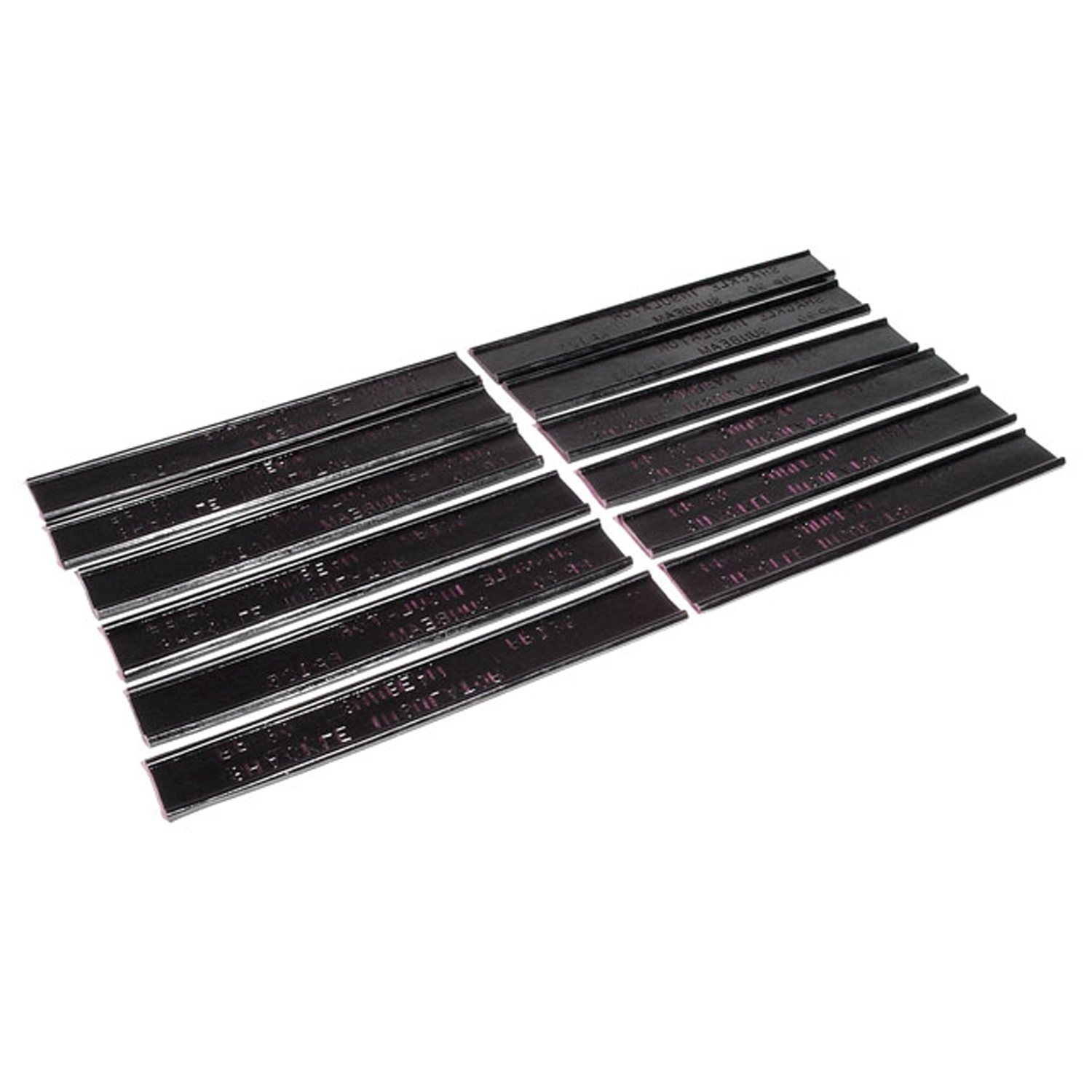 1930 Sunbeam TWENTY Spring Shackle Rubber Insulators-RP 125Spring Shackle Rubber Insulators. 1" wide X 6-3/4" long each. 12-Piece Set
Why Choose Metro?
For over 100 years, Metro Moulded Parts has been the pinnacle of quality in classic car restoration parts. Our commitment to precision and authenticity in every component ensures a perfect fit and an OEM-level appearance.
- Expert Craftsmanship & Quality: Each part is a testament to our dedication to reliability and perfection, crafted from original designs and thoroughly tested.
- Advanced Technology: We use cutting-edge techniques to create flawless, long-lasting parts that surpass others in performance.
- SuperSoft Sponge – The Ultimate Door Seal: Not only are our door seals 30% softer than competitors', but they're also guaranteed to never leak. They effectively reduce wind and road noise, enhancing your classic car's comfort and driving experience.
- Proudly American: Our parts are a product of American craftsmanship, made in the USA with a spirit of excellence and heritage.
- Unrivaled Warranty: We back our products with a 30-year industry-leading warranty, a testament to our confidence in their quality.
Join us in preserving the legacy of classic cars with parts that are crafted for perfection, not just made.