

Image of 1930 Sunbeam Twenty-Five, Note: These illustrations use artistic license and may differ from actual historical models.
Performance Metrics
Fundamental Metrics
Emotional Appeal
MMP Rating
| Engine Specifications | |
|---|---|
| Engine Options: | 6-cylinder in-line, side valves |
| Displacement Range: | 3,670 cc |
| Horsepower Range: | Estimated 70-80 HP |
| Torque: | Not available |
| Compression Ratio: | Not available |
| Ignition System: | Magneto |
| Cooling System: | Water-cooled |
| Performance Specifications | |
| 0-60 Time: | Not available |
| 1/4 Mile Time: | Not available |
| Top Speed: | 70-75 mph |
| Transmission and Drive | |
| Drive Type: | Rear-wheel drive |
| Transmission Type: | 4-speed manual |
| Fuel and Efficiency | |
| Fuel System Type: | Carburetor |
| MPG: | Not available |
| Dimensions and Brakes | |
| Brakes: | Drum brakes |
| Wheelbase: | 132 inches |
| Weight: | 3,500 lbs |
Note: Specifications for classic cars are given to the best of our ability, considering the limited and variant data available.
1930 Sunbeam Twenty-Five: A British Sporting Saloon with Quiet Authority
The 1930 Sunbeam Twenty-Five was a substantial, finely engineered British touring car built for drivers who wanted more than a comfortable way to travel. It came from Sunbeam Motor Car Company of Wolverhampton, a manufacturer whose reputation stretched from well-finished road cars to international racing and record-breaking machines. The Twenty-Five brought that engineering heritage to the luxury-car market in a more restrained form: a powerful six-cylinder chassis ready for elegant coachwork and long-distance motoring.
Its name refers to its RAC tax-horsepower rating, not the engine’s actual output. That distinction matters: the car’s engine was considerably more powerful than “25 horsepower” sounds today. A notable historical wrinkle is that the Twenty-Five belongs to Sunbeam’s independent pre-Rootes era. Rootes acquired Sunbeam in 1935, so a 1930 example represents the marque before that change in ownership.
Coachbuilt Lines and a Six-Cylinder Heart
The Twenty-Five was built around a long, imposing chassis. Its bonnet, upright radiator and tall proportions gave it the confident stance expected of a large British car of the period. Depending on the body fitted, it could look formal and chauffeur-ready or more sporting and open. Long sweeping wings, running boards, wire wheels and a rear-mounted spare were typical details, though the exact appearance varied from car to car.
Sunbeam supplied chassis for bodies made in-house or by specialist coachbuilders. Buyers could choose from enclosed saloons and tourers, with other bespoke body styles possible according to the coachbuilder and individual order. A saloon offered weather protection and a dignified profile; an open tourer made the most of the car’s sporting side. There is no single universally accepted “iconic” body, since surviving examples reflect the varied coachwork offered when new.
Inside, the emphasis was on craftsmanship rather than modern convenience. Depending on the body and trim specification, owners could expect leather upholstery, polished wood or carefully finished metal trim, deep carpeting and well-upholstered seats. Instruments and controls were arranged for a driver accustomed to direct mechanical operation. Paint and trim were often specified to order, so there was no single standard color palette. Dark blues, greens, maroons and black were period-appropriate choices, but individual coachwork and restoration history determine what a particular car wears today.
The Twenty-Five’s most important technology was beneath its bonnet. Period specifications describe a straight-six engine with overhead valves, a design that helped it breathe more freely than many side-valve rivals. A four-speed manual gearbox gave the driver useful control over the engine’s broad power delivery. Braking and suspension were conventional for a high-quality car of its day, but still require a different level of anticipation and attention than modern systems.
Sunbeam’s Place in the Luxury-Car Field
The Twenty-Five competed in a market where refinement, engineering and coachwork mattered as much as outright speed. Its six-cylinder layout, overhead-valve design and bespoke-body potential set it apart from more utilitarian cars and gave it the substance to cover long distances at a purposeful pace. It was not a mass-market model, nor was it simply a racing car with number plates. It sat between those worlds: a serious road car from a company with a strong sporting reputation.
Its significance is best understood as part of Sunbeam’s broader engineering story rather than as a model that transformed the industry on its own. Sunbeam had built competitive racing cars and pursued speed records, and that reputation lent prestige to its road cars. The Twenty-Five carried the marque’s sporting identity into a larger, more luxurious format. It did not create a lasting design template for other manufacturers, but it illustrates how British makers of the period combined advanced-for-the-time engine design with individually tailored coachwork.
Sunbeam’s famous record-breaking machines are part of the same company history, but they should not be confused with the Twenty-Five. The model was a capable touring car, not a land-speed-record special. That contrast is part of its appeal: the same marque could build both spectacular record cars and composed, high-grade road machines.
Performance and the Period Driving Experience
Published figures for individual surviving cars can vary with engine condition, gearing, body style and restoration. Period accounts and specifications place the Twenty-Five in the roughly 70 to 80 horsepower class, with a likely top speed in the neighborhood of 70 to 75 mph when properly maintained and fitted with suitable coachwork. A precise factory 0-to-60 mph figure is difficult to establish. Given the car’s weight, gearing and period tyres, an estimate of roughly 20 to 25 seconds is more realistic than a modern-style performance claim.
On the road, a healthy six-cylinder engine should feel smooth and unhurried rather than sharp-edged. The long chassis and substantial body favor a steady touring rhythm. Over bumps, the car’s weight and period suspension absorb the road differently from a modern luxury car: it can feel composed on a flowing route but may pitch or jostle over sharp irregularities. On winding roads, its size and age call for measured inputs. The driver works the gearbox, plans braking early and listens closely to the engine rather than relying on electronic assistance.
Expect mechanical sounds that are part of the experience: the muted six-cylinder note, the whir of the transmission and the occasional creak of coachwork. Steering effort can be significant at low speeds, and braking distances are longer than those of a contemporary car. The reward is a direct, tactile connection with the machinery and the road, especially when the car is running well.
Living with a Twenty-Five
Today, the Sunbeam Twenty-Five is best suited to touring, club events, historic displays and careful weekend use. Its size, age and scarcity make it an impractical daily driver for most owners. A well-sorted example can be used on the road, but it rewards regular exercise and attentive preparation rather than being left idle for long periods.
Maintenance is manageable for an experienced vintage-car owner, but not always straightforward for a newcomer. Routine work on ignition, lubrication, cooling and the manual gearbox is familiar to a competent classic-car mechanic. The bigger challenge is finding correct parts and specialist knowledge, especially for model-specific components, electrical details and coachwork. Before buying, inspect the chassis for corrosion or poor repairs, check the engine for oil pressure and overheating, and assess the gearbox, brakes and steering. A documented restoration by a specialist is valuable, but condition and workmanship matter more than a glossy finish.
Reliability depends heavily on upkeep. Age-related issues such as tired wiring, worn bearings, fuel-system problems and neglected cooling passages are common concerns in cars of this era. The average owner can handle basic servicing, but major engine or chassis work may require a vintage-Sunbeam specialist. Joining a marque club can be especially useful for locating parts, technical advice and records.
Little-Known Details and Common Misconceptions
The “Twenty-Five” label is a tax-class designation, not a promise of 25 brake horsepower. That naming convention was common in Britain, where RAC horsepower ratings were used for taxation and could differ markedly from an engine’s real output. Sunbeam’s 3.5-litre-class six-cylinder engine was a much more substantial unit than the model name might suggest.
There is no widely documented production record that supports a precise total for the 1930 Twenty-Five. It was a low-volume, coachbuilt luxury car, and surviving examples are uncommon. Claims about a specific celebrity owner, a major competition victory or a model-specific speed record should be treated carefully unless supported by vehicle records. Sunbeam’s famous racing and record achievements belong to the marque’s wider history, not automatically to this road model.
Common criticisms are practical rather than dramatic: the car is large, parts can be difficult to source, and pre-war braking and handling demand respect. Coachbuilt examples also differ considerably, which complicates comparisons between cars. Those drawbacks are balanced by its engineering quality, strong visual presence and the individuality of its bodywork.
Collector Values, Rarity and Market Outlook
The Twenty-Five is rare in today’s market, but a reliable production total is not readily established. As a rough estimate rather than a documented factory figure, it is reasonable to think in terms of a limited run of hundreds, not thousands, across the model’s production life. The number of 1930 examples still extant is smaller again, and the condition and originality of each car can vary widely.
As a broad 2026 guide, a project or incomplete example might fall around US$20,000 to US$40,000. A usable, well-presented car could bring roughly US$40,000 to US$80,000, while an exceptional, correctly restored example with desirable coachwork and strong history may exceed US$100,000. These are estimates, not a formal valuation: the market for rare pre-war Sunbeams is thin, and sale prices depend heavily on provenance, mechanical condition, body style and where the car is offered. Equivalent British-pound values will move with exchange rates and local demand.
Values for pre-war luxury cars have been uneven, with the strongest results going to exceptional, documented cars rather than merely old ones. The Twenty-Five is unlikely to behave like a fast-moving investment. Its rarity and Sunbeam heritage support long-term collector interest, but restoration costs can exceed the value added, and finding the right buyer may take time. For most owners, its appeal is best measured in craftsmanship and motoring character rather than short-term appreciation.
A Distinctive Sunbeam for the Open Road
The 1930 Sunbeam Twenty-Five combined a smooth, capable six-cylinder engine with substantial coachbuilt style and the engineering confidence of a respected British marque. It was a luxury tourer rather than a racing special, yet Sunbeam’s sporting reputation gave it an edge over more anonymous contemporaries. Rare, individual and rewarding to drive at a vintage pace, the Twenty-Five remains a compelling reminder of an era when a car could be both a piece of engineering and a work of craftsmanship.
1930 Sunbeam Twenty-Five Catalog of Parts
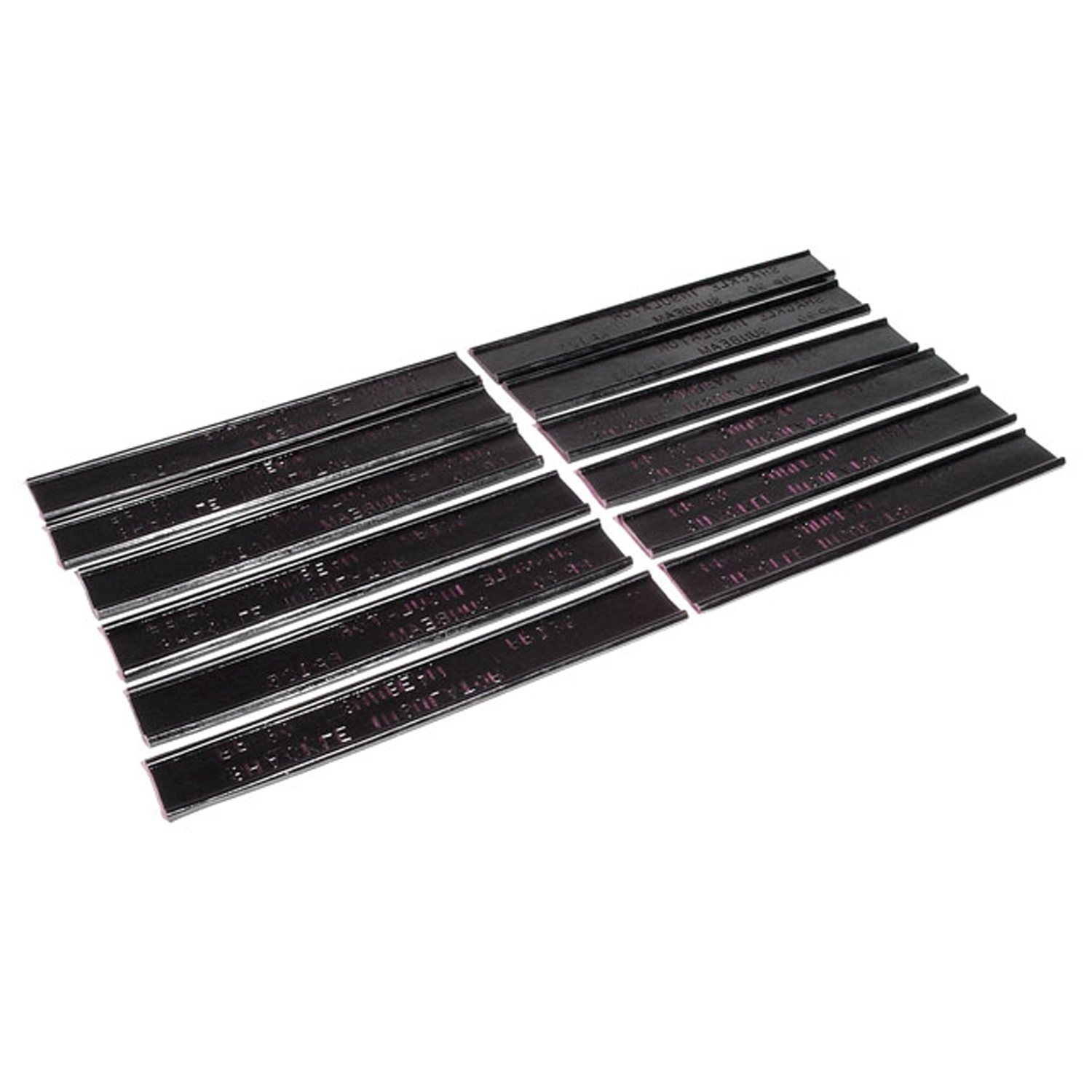 1930 Sunbeam TWENTY-FIVE Spring Shackle Rubber Insulators-RP 125Spring Shackle Rubber Insulators. 1" wide X 6-3/4" long each. 12-Piece Set
Why Choose Metro?
For over 100 years, Metro Moulded Parts has been the pinnacle of quality in classic car restoration parts. Our commitment to precision and authenticity in every component ensures a perfect fit and an OEM-level appearance.
- Expert Craftsmanship & Quality: Each part is a testament to our dedication to reliability and perfection, crafted from original designs and thoroughly tested.
- Advanced Technology: We use cutting-edge techniques to create flawless, long-lasting parts that surpass others in performance.
- SuperSoft Sponge – The Ultimate Door Seal: Not only are our door seals 30% softer than competitors', but they're also guaranteed to never leak. They effectively reduce wind and road noise, enhancing your classic car's comfort and driving experience.
- Proudly American: Our parts are a product of American craftsmanship, made in the USA with a spirit of excellence and heritage.
- Unrivaled Warranty: We back our products with a 30-year industry-leading warranty, a testament to our confidence in their quality.
Join us in preserving the legacy of classic cars with parts that are crafted for perfection, not just made.