
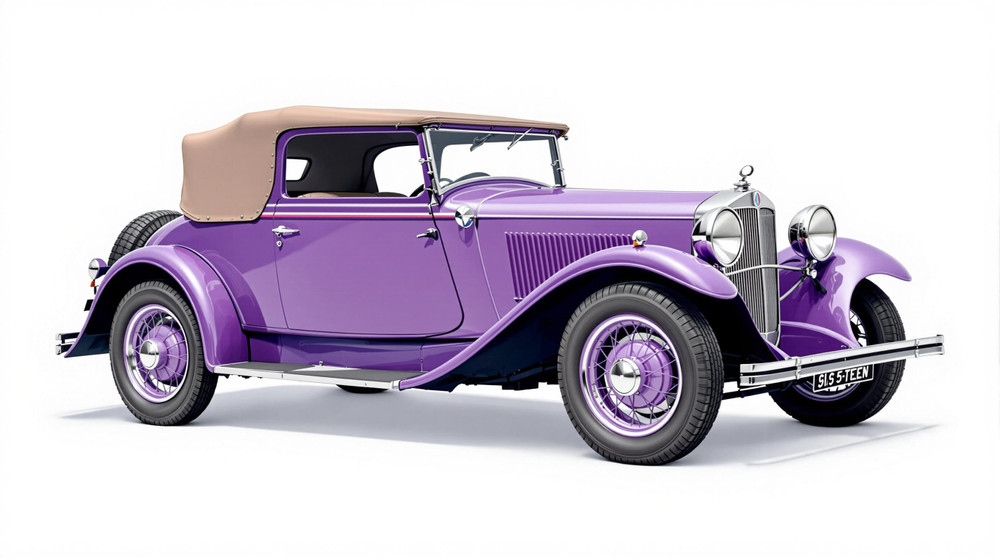
Image of 1931 Sunbeam Sixteen, Note: These illustrations use artistic license and may differ from actual historical models.
Performance Metrics
Fundamental Metrics
Emotional Appeal
MMP Rating
| Engine Specifications | |
|---|---|
| Engine: | 2.2L I6 |
| Displacement: | 2,200 cc |
| Horsepower: | Estimated 50-60 HP |
| Torque: | Unknown |
| Compression Ratio: | Unknown |
| Ignition System: | Magneto ignition system |
| Cooling System: | Water-cooled |
| Performance Specifications | |
| 0-60 Time: | Unknown |
| 1/4 Mile Time: | Unknown |
| Top Speed: | 70 mph |
| Transmission and Drive | |
| Drive Type: | Rear-wheel drive |
| Transmission Type: | 4-speed manual |
| Fuel and Efficiency | |
| Fuel System Type: | Carburetor |
| MPG: | Unknown |
| Dimensions and Brakes | |
| Brakes: | Drum brakes |
| Wheelbase: | 113 inches |
| Weight: | Estimated 1,500 kg |
Note: Specifications for classic cars are given to the best of our ability, considering the limited and variant data available.
1931 Sunbeam Sixteen: A Refined British Six
The 1931 Sunbeam Sixteen was a quietly confident British car: smooth, well-engineered and built for motorists who wanted more than basic transport. It came from the Sunbeam Motor Car Company of Wolverhampton, England, a marque known for both carefully made road cars and record-setting competition machines. The Sixteen was not a Grand Prix car in disguise, but it carried the same period ambition for sound engineering into a more practical, six-cylinder package.
Sunbeam had earned international attention through racing and land-speed achievements, including its famous record-breaking cars. By 1931, however, the company’s road-car range also had to compete in a crowded market for comfortable, prestigious transport. The Sixteen sat below the larger Sunbeam models and offered a more accessible route into the marque. One intriguing detail is that “Sixteen” referred to its British tax-horsepower rating, not the engine’s actual output. The rating was based on a government formula, and it understated the power of the real engine.
Elegant Styling and Coachbuilt Character
The Sixteen had the upright, formal proportions typical of a quality car from the early 1930s. Its tall radiator, long bonnet and separate front wings gave it a purposeful profile, while running boards linked the front and rear fenders in a clean, continuous line. Large headlamps flanked the radiator, and details such as brightwork, bonnet louvres and a polished radiator surround added visual distinction without making the car look ostentatious.
Like many cars of its class, the Sunbeam could be supplied in different body configurations, with coachbuilt saloons, tourers and coupés among the possibilities. Exact offerings varied by year, market and coachbuilder. A saloon suited owners who valued weather protection and a formal appearance; an open tourer showed off the car’s long bonnet and was especially appealing in fine weather. The saloon is the most immediately recognizable choice for a refined pre-war Sunbeam, though surviving examples are not all alike.
Paint and trim choices depended on the body and order rather than a single universal palette. Period cars could be finished in sober dark shades or more expressive two-tone combinations, often with contrasting wings or coachlines. Deep greens, blues, maroons and black were natural choices for a car of this character. The interior was similarly tailored to the buyer: leather upholstery, polished wood or wood-effect trim, quality carpeting and substantial door panels helped create a more polished cabin than a basic family car.
Six-Cylinder Engineering for the Road
At the heart of the Sixteen was an inline six-cylinder engine of roughly 2.0 litres. Published figures and specifications can vary across versions and sources, but the engine was designed to deliver smooth, usable power rather than a high-revving sporting rush. A manual gearbox, generally with four forward ratios on cars of this type, gave the driver useful control over the engine’s modest but flexible output. Mechanical details could differ with production changes and individual specification, so a surviving car’s chassis records are the best guide to its exact equipment.
For its day, the six-cylinder layout was a meaningful refinement. Six cylinders typically delivered a smoother power flow than a comparable four, which suited the Sunbeam’s role as a comfortable touring car. The car also reflected the period’s growing emphasis on combining chassis engineering, dependable mechanical systems and better passenger accommodation. It did not introduce a single revolutionary feature that transformed the industry, but it showed how a quality manufacturer could make advanced engineering feel useful in ordinary motoring.
Where the Sixteen Fit in Sunbeam History
The Sunbeam Sixteen belongs to the final chapter of the company’s independent identity. Sunbeam had built a reputation for engineering excellence and competition success, but the economics of the British motor industry were changing. The company later became part of the Rootes Group, in 1935. The Sixteen therefore represents a period when Sunbeam was still producing its own distinctive range of road cars before its place in a larger corporate structure altered the marque’s direction.
What set the car apart from many contemporaries was the combination of a smooth six-cylinder engine, careful finish and a more individual character than mass-market saloons. It was not necessarily faster or more spacious than every rival, and it was not intended to be a luxury limousine. Its appeal lay in the middle ground: a car for a driver who wanted quiet mechanical refinement and solid craftsmanship without stepping up to a much larger, costlier model.
The Sixteen’s influence is best understood as part of Sunbeam’s broader reputation rather than as a direct design landmark. It carried the marque’s engineering values into a practical road car, helping keep the name associated with quality after its most celebrated competition years. Today, its significance is also in what it reveals about British motoring between the wars, when smaller specialist manufacturers offered highly individual alternatives to high-volume cars.
Performance and Driving Feel
Exact performance depended on body style, gearing, engine condition and the weight of the finished car. A healthy Sixteen could plausibly reach around 65 to 70 mph, while acceleration from 0 to 60 mph was leisurely by modern standards and likely took roughly 25 to 30 seconds or more. These are period-appropriate estimates, not guaranteed factory figures for every 1931 example. The car was built to cruise comfortably, not to sprint away from modern traffic.
On the road, the six-cylinder engine should feel smoothest when allowed to gather speed progressively. The driver works a manual gearbox, listens to the engine and plans overtakes well in advance. Rather than a sharp, contemporary exhaust note, expect a subdued vintage six-cylinder murmur that grows more audible under load. A well-tuned example feels composed at touring speeds, with the engine’s smoothness helping make longer journeys less tiring.
The chassis and suspension are products of their era. On broken surfaces, the Sunbeam will move and pitch more than a modern car, and its narrow tyres and period brakes call for a measured driving style. On a winding road, careful steering inputs and sensible corner speeds matter more than aggressive driving. A well-maintained car can feel reassuring and balanced, but it should not be expected to provide modern levels of grip, braking or directional precision.
Living with a 1931 Sunbeam
Most owners today use a Sixteen as a show car, a touring vehicle for appropriate events or a prized member of a collection. Regular local drives are possible when the car is properly sorted, but it is rarely a practical daily driver. Its age, braking performance, lighting and vulnerability in modern traffic make careful route planning essential.
Maintenance is manageable for an experienced vintage-car enthusiast, but it is not as simple as servicing a modern vehicle. Owners should expect regular attention to lubrication, ignition, cooling, tyres, brakes and the fuel system. Parts availability is more limited than for common British classics, and some components may need to be sourced through specialist clubs, marque networks or careful refurbishment. The average owner can handle routine work with the right tools and workshop information, but engine, gearbox or coachwork repairs may call for a specialist.
Condition is especially important. A sound chassis, correct mechanical parts and a well-executed restoration are worth more than shiny paint over hidden structural problems. Before buying, check the frame and body for corrosion or poor repairs, inspect the engine for oil pressure and overheating, and confirm that the brakes and steering operate safely. Documentation and a credible restoration history can make a major difference to both confidence and value.
Little-Known Facts and Common Criticisms
The name “Sixteen” is a useful reminder of Britain’s old tax-horsepower system: it described a calculated rating, not the engine’s true horsepower. Also, while Sunbeam is often associated with speed records and racing, the road-going Sixteen was primarily a refined touring car. Its connection to the marque’s sporting history is one of engineering culture, not a claim that it was a competition model.
There is no widely recognized production record, endurance achievement or celebrity ownership story specifically associated with the 1931 Sixteen. Nor is there a dependable, universally accepted production total for the model year. A reasonable working estimate is that production across the relevant Sixteen series numbered in the low thousands, with substantially fewer examples surviving today. That estimate should be treated as a guide, not an official factory figure.
Common criticisms are typical of pre-war cars: modest acceleration, comparatively weak brakes, limited parts supply and a driving experience that demands attention. Its coachbuilt variations can also make restoration complicated, since body details and trim may differ between examples. For enthusiasts, those same qualities are part of the appeal, but they make a Sixteen a less straightforward purchase than a more common post-war classic.
Collector Values and Rarity
The 1931 Sunbeam Sixteen is uncommon on the open market, and availability can be sporadic. A project car or incomplete example may be worth considerably less than a usable, well-documented car, while a high-quality restoration or particularly attractive coachbuilt body can command a premium. As a broad current-market estimate, expect roughly US$20,000 to US$55,000 for many complete examples, with exceptional cars potentially selling above that range. Actual prices depend heavily on condition, provenance, body style and the market in which the car is sold.
Values for specialist pre-war cars tend to move more slowly than those of fashionable post-war sports cars. The Sixteen’s rarity supports its appeal, but its smaller audience and the cost of restoration limit rapid price growth. In general, the best examples are likely to hold value better than projects, and a well-documented car may appreciate gradually as sound pre-war Sunbeams become harder to find. Buyers should view it first as a distinctive enthusiast car, rather than a guaranteed investment.
Why the Sunbeam Sixteen Still Matters
The 1931 Sunbeam Sixteen brought together a smooth six-cylinder engine, handsome British styling and the craftsmanship of a specialist manufacturer at a turning point in the marque’s history. It was not a record-breaker or a mass-market sensation, but it offered a thoughtful balance of comfort, engineering and individuality for its time.
More than ninety years later, the Sixteen rewards owners who enjoy the rituals of vintage motoring: warming the engine, working the gearbox and taking the scenic route at a pace the car can comfortably manage. It is a reminder that automotive significance is not measured only in speed records or sales figures. Sometimes it is found in the quiet confidence of a beautifully considered car built to make the journey itself the point.
1931 Sunbeam Sixteen Catalog of Parts
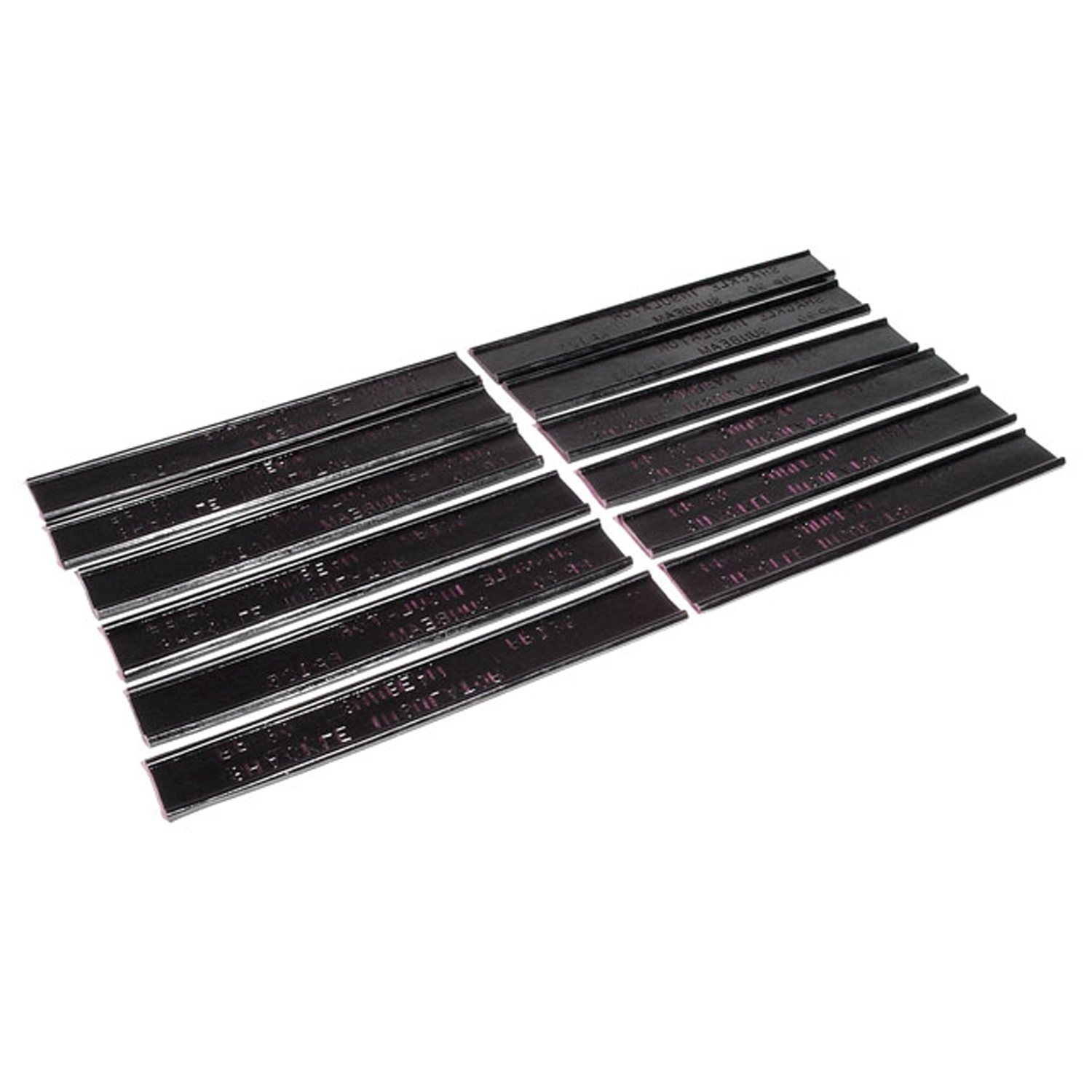 1931 Sunbeam SIXTEEN Spring Shackle Rubber Insulators-RP 125Spring Shackle Rubber Insulators. 1" wide X 6-3/4" long each. 12-Piece Set
Why Choose Metro?
For over 100 years, Metro Moulded Parts has been the pinnacle of quality in classic car restoration parts. Our commitment to precision and authenticity in every component ensures a perfect fit and an OEM-level appearance.
- Expert Craftsmanship & Quality: Each part is a testament to our dedication to reliability and perfection, crafted from original designs and thoroughly tested.
- Advanced Technology: We use cutting-edge techniques to create flawless, long-lasting parts that surpass others in performance.
- SuperSoft Sponge – The Ultimate Door Seal: Not only are our door seals 30% softer than competitors', but they're also guaranteed to never leak. They effectively reduce wind and road noise, enhancing your classic car's comfort and driving experience.
- Proudly American: Our parts are a product of American craftsmanship, made in the USA with a spirit of excellence and heritage.
- Unrivaled Warranty: We back our products with a 30-year industry-leading warranty, a testament to our confidence in their quality.
Join us in preserving the legacy of classic cars with parts that are crafted for perfection, not just made.