

Image of 1931 Sunbeam Twenty, Note: These illustrations use artistic license and may differ from actual historical models.
Performance Metrics
Fundamental Metrics
Emotional Appeal
MMP Rating
| Engine Specifications | |
|---|---|
| Engine Options: | 6-cylinder side-valve |
| Displacement Range: | 3.1 liters |
| Horsepower Range: | Estimated 20-30 HP |
| Torque: | Not available |
| Compression Ratio: | Not available |
| Ignition System: | Magneto ignition system |
| Cooling System: | Water-cooled |
| Performance Specifications | |
| 0-60 Time: | Not available |
| 1/4 Mile Time: | Not available |
| Top Speed: | 60 mph |
| Transmission and Drive | |
| Drive Type: | Rear-wheel drive |
| Transmission Type: | 4-speed manual |
| Fuel and Efficiency | |
| Fuel System Type: | Carburetor |
| MPG: | Not available |
| Dimensions and Brakes | |
| Brakes: | Drum brakes |
| Wheelbase: | 130 inches |
| Weight: | Estimated 3500 lbs |
Note: Specifications for classic cars are given to the best of our ability, considering the limited and variant data available.
1931 Sunbeam Twenty: British Luxury Before the War
The 1931 Sunbeam Twenty was a substantial British touring car with the manners of a country-house express and the craftsmanship of a coachbuilt luxury machine. It came from the Sunbeam Motor Car Company of Wolverhampton, England, a manufacturer whose name was already associated with both refined road cars and record-breaking speed machines.
The Twenty belonged to the era when a car’s “horsepower” often referred to its tax rating, not its actual engine output. Its six-cylinder engine was rated at about 20 RAC horsepower, while its real power was greater. A particularly intriguing part of Sunbeam’s story is the contrast between this dignified road car and the company’s racing exploits: Sunbeam-built machines had set world land-speed records, including Segrave’s 1927 run at more than 200 mph. The Twenty was no land-speed racer, but it shared the marque’s engineering heritage.
Coachbuilt Style and Cabin Craft
The Twenty’s appearance depended on its body, but its proportions were unmistakably those of a formal British car. A long bonnet led to a tall radiator, upright windscreen and separate front wings. Running boards connected the front and rear fenders, while a rear-mounted spare wheel and exposed lamps gave many examples a purposeful, period-correct profile. The result was elegant rather than flamboyant, with the generous dimensions expected of a car designed for long journeys.
Buyers could choose from a range of body styles, including open tourers, saloons, limousines, coupés and formal bodies such as landaulettes. Coachwork varied between cars, so no single version can be called the universal standard. A closed saloon or limousine best expressed the Twenty’s luxury character, while a tourer offered a more sporting look and an open-air experience. The precise body and coachbuilder depended on the individual order.
Inside, the emphasis was on comfort and finish. Period examples could feature leather upholstery, polished wood trim, deep carpeting and carefully appointed instruments. Equipment and materials varied with the body and specification, but the cabin was a clear step above the basic transport offered by ordinary family cars. The tall seating position and broad doors also made entry easier than the low-slung sports cars of the period.
Color was often a matter of individual taste and coachbuilder choice rather than a short, modern-style factory palette. Dark blue, black, maroon and deep green are all fitting period choices, frequently paired with contrasting wings or pinstriping. Restored cars may wear historically inspired colors, but the exact original finish is best confirmed from a car’s records or surviving paint layers.
Engineering for the Open Road
The Twenty’s central feature was its approximately 2,916 cc inline six-cylinder engine. Specifications can differ by year and chassis, but the model is generally associated with overhead-valve engineering and an output in the broad region of 60 to 70 bhp. That power gave the car useful touring ability, rather than the sharp acceleration expected of a modern performance car. A four-speed manual gearbox was typical, and the controls required the deliberate operation familiar to drivers of prewar cars.
Four-wheel braking and a substantial chassis helped make the Twenty a capable road car for its time. Its equipment and construction were more sophisticated than those of a bare-bones runabout, though features varied between examples. As with any car from this period, it is important to check the specification of the individual chassis rather than assume every surviving Twenty is identical.
Sunbeam’s Place in Automotive History
The Sunbeam Twenty arrived during a difficult period for the British motor industry. The Great Depression was squeezing demand for expensive cars, while larger manufacturers were consolidating and competing for a smaller pool of luxury-car buyers. Sunbeam’s connection to the Sunbeam-Talbot-Darracq group gave it a broader industrial background, but the company’s fortunes were under pressure. Rootes took control of Sunbeam in 1934, after the period of the 1931 Twenty.
What distinguished the Twenty was its combination of traditional coachbuilt luxury and a comparatively advanced six-cylinder powertrain. It offered quiet, smooth progress and long-distance comfort at a time when many cars were smaller, less refined and more workmanlike. Its influence is best understood as part of the British luxury-car tradition, rather than as a single model that introduced a world-changing technology. Sunbeam’s larger legacy also rests on the engineering culture that produced both refined road cars and record-setting machines.
Performance and Driving Character
Period performance figures are not uniform across all bodies and chassis, and reliable factory figures for acceleration are difficult to establish. As a practical guide, a sound, lightly bodied Twenty may reach roughly 65 to 70 mph, with heavier saloon or limousine versions generally feeling slower. A 0-to-60-mph time was not commonly quoted in the way it is today. Based on the car’s power, weight and gearing, an estimate in the region of 25 to 35 seconds is more realistic than a precise claim, and actual results will depend heavily on condition and body style.
On the road, the six should deliver a measured, even note rather than a sharp sporting bark. The long wheelbase and substantial chassis help the car settle over broad undulations, while the period suspension and tall tires can feel busy over potholes and broken surfaces. On winding roads, the Twenty rewards smooth inputs. Its size, steering effort and high center of gravity make it less nimble than a small sports car, but its steady road manners suit open-road touring.
The driving experience is hands-on. The driver must coordinate the clutch, gear lever and throttle with more care than in a modern car, and steering and braking demand anticipation. That involvement is part of the appeal: the engine’s unhurried rhythm, the mechanical sounds from the drivetrain and the view over the long bonnet make even a moderate journey feel like an occasion.
Owning and Maintaining a 1931 Twenty
Today, a Sunbeam Twenty is best suited to touring, vintage motoring events and shows, not daily commuting. Its size and prewar controls make it rewarding on quiet country roads, but modern traffic, limited crash protection and the scarcity of replacement parts all argue against treating it like a contemporary car.
The basic mechanical layout is understandable to an experienced vintage-car mechanic, and many repairs are conventional for the period. However, “simple” does not mean effortless. Engine work, ignition and fuel-system tuning, brake servicing and chassis lubrication require specialist knowledge and regular attention. Bodywork and interior restoration can be particularly expensive because coachbuilt components may be unique to the car. Before buying, inspect the chassis for corrosion or poor repairs, verify the engine and gearbox condition, and check whether the body is original to the chassis.
Reliability depends more on maintenance and restoration quality than on the badge alone. A carefully maintained example can tour reliably at a sensible pace, while an neglected car may need extensive mechanical and structural work before it is safe to use. Parts support is specialist rather than plentiful, so owners benefit from joining marque clubs and building relationships with vintage-car suppliers.
Little-Known Facts and Caveats
The name “Twenty” refers to the RAC tax-horsepower class, not a 20-horsepower engine. The actual output was several times higher, which is why the model could serve as a genuine touring car. Also, Sunbeam’s association with land-speed records can be misleading: the record cars and the Twenty were entirely different machines, even though they came from the same broad engineering tradition.
There is no widely recognized mass-production record or single celebrity-owner story that defines the 1931 Twenty. Its appeal today comes instead from its rarity, coachbuilt individuality and connection to a notable British marque. One common criticism is that the car’s size and prewar controls can make it demanding in modern traffic. Another is the cost of restoring bespoke bodywork, which can exceed expectations even when the mechanical work appears straightforward.
Rarity and Collector Value
Exact production totals for the 1931 Twenty are difficult to pin down, particularly because model-year records, chassis designations and body styles are not always counted consistently. A reasonable estimate is that production was in the hundreds rather than the thousands, with far fewer surviving in complete, usable condition. This is a best estimate, not a confirmed factory total.
Values vary sharply with originality, body style, provenance and restoration quality. As a broad current-market guide, a project or incomplete example might fall around US$20,000 to US$40,000, while a presentable running car could be roughly US$45,000 to US$80,000. A high-quality, well-documented restoration or especially desirable coachbuilt example may reach US$90,000 to US$130,000 or more. These are indicative ranges, not guaranteed sale prices; location, exchange rates and the cost of bringing a car up to standard matter greatly.
The market for prewar coachbuilt cars is selective. Exceptional examples can attract committed collectors, but restoration costs and a limited buyer pool can restrain prices. Values are therefore better described as condition-sensitive and uneven than as reliably appreciating year after year. Provenance, originality and a sound chassis are usually more persuasive to buyers than a fresh cosmetic restoration alone.
A Distinctive Sunbeam for the Long Road
The 1931 Sunbeam Twenty brought together a smooth six-cylinder engine, formal British styling and the individual character of coachbuilt construction. It was created for comfortable travel at a time when motoring remained an event, and it reflected a manufacturer with ambitions that reached from quiet touring to the fastest machines in the world.
For collectors, its appeal lies in that blend of refinement, rarity and mechanical personality. The Twenty may not be a modern-speed performer or an easy everyday classic, but it remains a memorable example of British luxury motoring before the Second World War.
1931 Sunbeam Twenty Catalog of Parts
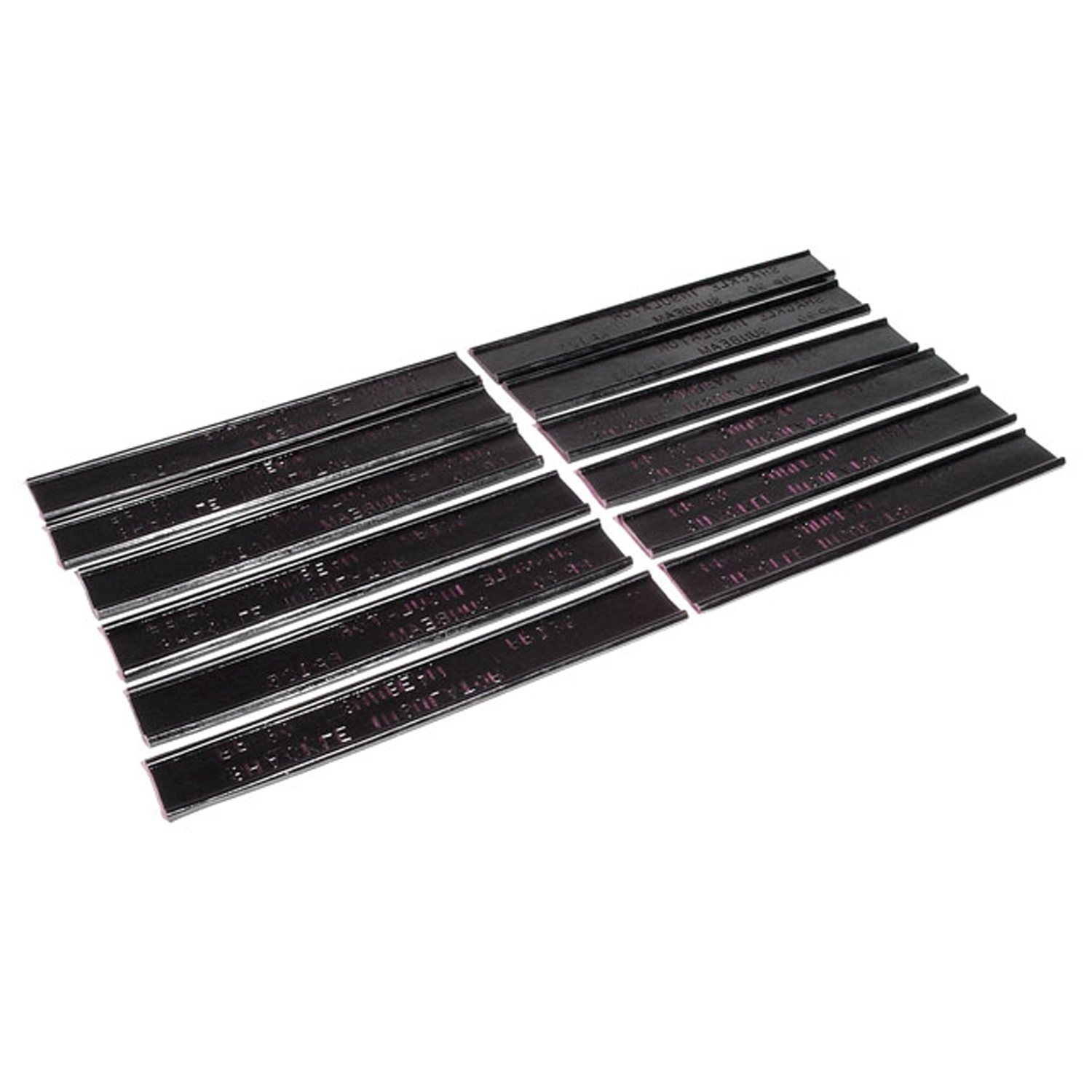 1931 Sunbeam TWENTY Spring Shackle Rubber Insulators-RP 125Spring Shackle Rubber Insulators. 1" wide X 6-3/4" long each. 12-Piece Set
Why Choose Metro?
For over 100 years, Metro Moulded Parts has been the pinnacle of quality in classic car restoration parts. Our commitment to precision and authenticity in every component ensures a perfect fit and an OEM-level appearance.
- Expert Craftsmanship & Quality: Each part is a testament to our dedication to reliability and perfection, crafted from original designs and thoroughly tested.
- Advanced Technology: We use cutting-edge techniques to create flawless, long-lasting parts that surpass others in performance.
- SuperSoft Sponge – The Ultimate Door Seal: Not only are our door seals 30% softer than competitors', but they're also guaranteed to never leak. They effectively reduce wind and road noise, enhancing your classic car's comfort and driving experience.
- Proudly American: Our parts are a product of American craftsmanship, made in the USA with a spirit of excellence and heritage.
- Unrivaled Warranty: We back our products with a 30-year industry-leading warranty, a testament to our confidence in their quality.
Join us in preserving the legacy of classic cars with parts that are crafted for perfection, not just made.