

Image of 1931 Sunbeam Twenty-Five, Note: These illustrations use artistic license and may differ from actual historical models.
Performance Metrics
Fundamental Metrics
Emotional Appeal
MMP Rating
| Engine Specifications | |
|---|---|
| Engine Options: | 6-cylinder in-line, side-valve |
| Displacement Range: | 3,670 cc |
| Horsepower Range: | Estimated 70-80 HP |
| Torque: | Not available |
| Compression Ratio: | Not available |
| Ignition System: | Magneto ignition |
| Cooling System: | Water-cooled |
| Performance Specifications | |
| 0-60 Time: | Not available |
| 1/4 Mile Time: | Not available |
| Top Speed: | 70-75 mph |
| Transmission and Drive | |
| Drive Type: | Rear-wheel drive |
| Transmission Type: | 4-speed manual |
| Fuel and Efficiency | |
| Fuel System Type: | Carburetor |
| MPG: | Not available |
| Dimensions and Brakes | |
| Brakes: | Drum brakes |
| Wheelbase: | 132 inches |
| Weight: | 3,500 lbs |
Note: Specifications for classic cars are given to the best of our ability, considering the limited and variant data available.
1931 Sunbeam Twenty-Five: A British Luxury Six
The 1931 Sunbeam Twenty-Five was built for motorists who wanted quiet power, fine coachwork, and the reassuring presence of a substantial British luxury car. Its name referred to its RAC fiscal horsepower class, not its actual engine output: beneath the bonnet sat a six-cylinder engine of about 3.4 litres, capable of producing considerably more than 25 brake horsepower.
Sunbeam’s roots stretched back to Wolverhampton, where industrialist John Marston built bicycles before the company turned to motor cars at the end of the nineteenth century. By 1931, Sunbeam was part of the Sunbeam-Talbot-Darracq group, often shortened to STD. The Twenty-Five belonged to the company’s upper-level road-car range, combining substantial engineering with the coachbuilt finish expected of an expensive car.
The model arrived during a difficult period for the British motor industry. The Depression was squeezing demand for luxury vehicles, and Sunbeam’s fortunes would continue to decline before the Rootes Group took control of the marque in 1935. One striking piece of context is that Sunbeam had recently made headlines for a very different kind of speed: in 1927, Henry Segrave drove the company’s enormous Sunbeam 1000 HP to a land-speed record of 203.79 mph. That record car was not related to the Twenty-Five, but it shows the breadth of Sunbeam’s ambitions.
Elegant Coachwork and a Refined Cabin
The Twenty-Five’s appearance depended heavily on the body fitted to its chassis. The underlying proportions were those of a traditional British luxury car: a long bonnet, upright radiator, sweeping front wings, generous running boards, and a cabin set well back from the front axle. Tall wheels and a formal grille gave it an imposing stance without the exaggerated bulk of some larger limousines.
Sunbeam supplied the rolling chassis, while specialist coachbuilders could create bodies to suit a buyer’s tastes and budget. Saloon and limousine forms emphasized comfort and dignity, while touring bodies offered a more open-air experience. Coupés and other individual designs were also possible. Closed saloons were a natural choice for owners seeking an all-weather luxury car, while an elegant tourer is among the most visually appealing configurations today. Exact body availability varied by chassis and coachbuilder, so surviving examples do not all look alike.
Inside, owners could expect a carefully finished cabin rather than mass-produced simplicity. Leather upholstery, polished wood trim, carpeting, and metal fittings were typical features of the class. The precise materials and layout varied with the body, and a bespoke car could be tailored to its first owner. Period comfort was generous by contemporary standards, though it did not include modern conveniences such as effective climate control or today’s safety equipment.
Paint choices were similarly influenced by the individual body order. Black, dark green, maroon, and deep blue are fitting and commonly seen colors on cars of this type, often paired with contrasting wheels or coach lines. There was no single universal color combination that defined every Twenty-Five, which is part of the model’s coachbuilt character.
Engineering for the Open Road
At the heart of the car was an overhead-valve inline-six displacing approximately 3.4 litres. The engine’s smooth delivery suited a large touring car: rather than relying on high revs, it provided useful pulling power and a relaxed pace on open roads. Exact output figures can differ between references and individual cars, but roughly 70 to 85 bhp is a reasonable period-informed estimate for a sound example.
The Twenty-Five used rear-wheel drive and a four-speed manual gearbox, giving the driver a useful spread of ratios for both town work and faster touring. Four-wheel brakes were a significant part of its equipment, although braking feel and performance by modern standards are limited. Its engineering was sophisticated and substantial for the early 1930s, but the car was not built around a single radical invention. Its appeal lay in the complete package: a smooth six, a proper touring chassis, and the ability to carry high-quality coachwork.
As with many cars of the period, the chassis and body could be configured in ways that changed the finished car’s weight and character. A formal limousine body would feel different from a lighter tourer, even when both shared the Twenty-Five’s basic mechanical layout.
Performance and Driving Character
Published performance figures for individual surviving Twenty-Fives are not consistent, and body weight, gearing, engine condition, and restoration choices all make a difference. A reasonable estimate for a healthy, appropriately bodied car is a top speed in the region of 70 to 80 mph. Zero to 60 mph acceleration is likely to take roughly 20 to 25 seconds, rather than the brisk sprint associated with a modern car. These are estimates, not guaranteed factory figures.
On a smooth road, the car’s long wheelbase and substantial mass help it settle into a composed touring rhythm. The six-cylinder engine should feel smooth and unhurried when properly tuned, accompanied by the mechanical sounds of a period powertrain rather than modern isolation. The driver works a manual gearbox, manages the controls directly, and has to plan braking and overtaking well in advance.
Leaf-sprung suspension and a traditional chassis bring their own personality. The Twenty-Five can absorb ordinary road irregularities with a measured, floating quality, but sharp bumps may unsettle it more than a modern independent suspension system would. On winding roads, its size and weight encourage a smooth line rather than quick direction changes. Strong crosswinds and uneven surfaces call for attention, particularly with tall or formal coachwork. This is a car for measured progress, not point-and-shoot driving.
Its Place in Sunbeam History
The Twenty-Five’s significance is less about introducing a technology that transformed the entire industry and more about showing what Sunbeam could offer at the height of its prestige-car ambitions. Its combination of a six-cylinder engine, four-speed transmission, substantial chassis, four-wheel braking, and coachbuilt bodywork placed it among Britain’s serious luxury touring cars.
It also stood apart from less expensive, mass-produced cars through its individuality. Buyers could choose a body style and finish that reflected their preferences, and the result could be distinctly different from another Twenty-Five. That approach connected the model to Britain’s broader coachbuilding tradition, in which the chassis maker and body maker each contributed to the finished automobile.
The car’s direct influence on later mass-market design was limited. Its lasting importance is instead as a representative of the pre-war British luxury-car world, when a manufacturer’s reputation rested on engineering, refinement, and the skill of its coachbuilding partners. It is also a reminder that Sunbeam’s history encompassed both road-going luxury cars and record-breaking machines, even though those branches of the story were technically quite separate.
Living With a Twenty-Five Today
Today, a 1931 Sunbeam Twenty-Five is most often a collector car, a show-field entrant, or a participant in carefully planned vintage touring events. Its size and historical character make it better suited to occasional use than to daily commuting. In sympathetic hands, it can still cover distance, but it needs regular checks and a driver comfortable with pre-war controls.
Maintenance is manageable for an experienced vintage-car owner, but not always straightforward for a beginner. Routine work such as lubrication, ignition adjustment, and basic servicing follows familiar mechanical principles. The challenge is sourcing correct parts, finding specialists who understand the model, and dealing with components that may have been altered or worn over many decades. Coachwork and trim repairs can be especially expensive because they depend on the car’s individual body rather than a standardized replacement shell.
Reliability depends strongly on restoration quality and upkeep. A well-maintained example can be a dependable touring car for its age, but neglect, incorrect rebuilding, or long periods off the road can quickly create costly problems. Before purchase, a buyer should inspect the chassis for corrosion or poor repairs, check the engine and gearbox carefully, and confirm the identity and history of the body and mechanical components.
Rare Details and Common Criticisms
A notable Sunbeam fact often associated with the Twenty-Five is the marque’s 1927 land-speed record. Segrave’s Sunbeam 1000 HP reached 203.79 mph at Daytona, becoming the first car to exceed 200 mph. The record belongs to a separate purpose-built machine, not the Twenty-Five, but it makes a memorable connection to the manufacturer behind this more restrained road car.
The Twenty-Five’s RAC rating can also cause confusion. “Twenty-Five” described a British taxation classification based on an official formula, not a claim that the engine made only 25 bhp. Its actual output was several times higher. That distinction mattered to buyers facing annual motoring taxes and remains a useful reminder that period model names did not always describe real engine power.
No widely documented celebrity ownership or major competition record is central to the model’s story. Its appeal is more understated: fine coachwork, rarity, and the chance to experience a substantial British car from the early 1930s. Common criticisms are equally practical. It is thirsty by modern standards, large in tight traffic, slow to accelerate compared with contemporary cars, and dependent on specialist knowledge for some repairs. Braking and visibility also require more care than in a modern vehicle.
Collector Values and Availability
Surviving 1931 Twenty-Fives are uncommon, and examples do not appear on the market in large numbers. A precise production total is difficult to establish from readily available model records. A cautious best guess is that production was in the low hundreds, perhaps around 250 to 500 chassis across the relevant run, but that range should be treated as an estimate rather than a confirmed factory figure. The number of complete, usable survivors is necessarily much smaller.
As a broad 2026 collector-market guide, a project or incomplete car might fall around US$10,000 to US$25,000, while a running example needing work could be roughly US$25,000 to US$45,000. A well-restored car with attractive, correct coachwork might bring about US$45,000 to US$80,000 or more. Exceptional provenance, a particularly desirable body, or concours-level restoration can push a car above that range. Actual results depend heavily on condition, originality, documentation, and local market demand.
Values for pre-war luxury cars have not risen uniformly. The best documented and most usable examples tend to hold attention, while cars requiring expensive restoration can be difficult to sell at a price that reflects the work involved. The Twenty-Five’s scarcity supports its collector appeal, but its large size, running costs, and specialist requirements limit the pool of buyers. It is best viewed as a distinctive long-term enthusiast purchase rather than a guaranteed short-term investment.
Why the Sunbeam Twenty-Five Still Matters
The 1931 Sunbeam Twenty-Five brought together a smooth 3.4-litre six, a substantial touring chassis, and the individuality of coachbuilt British luxury. It was not a mass-market car or a technological revolution, but it represented a high point of personal, carefully finished motoring during a challenging period for the industry.
For today’s enthusiast, its charm lies in the details: the long bonnet, the measured pace, the crafted cabin, and the unmistakable feel of a car designed for open-road journeys. The Sunbeam Twenty-Five is a reminder that a great classic is not always the fastest or most famous car in its class. Sometimes its significance is simply the way it captures an entire era of motoring in one elegant, rare machine.
1931 Sunbeam Twenty-Five Catalog of Parts
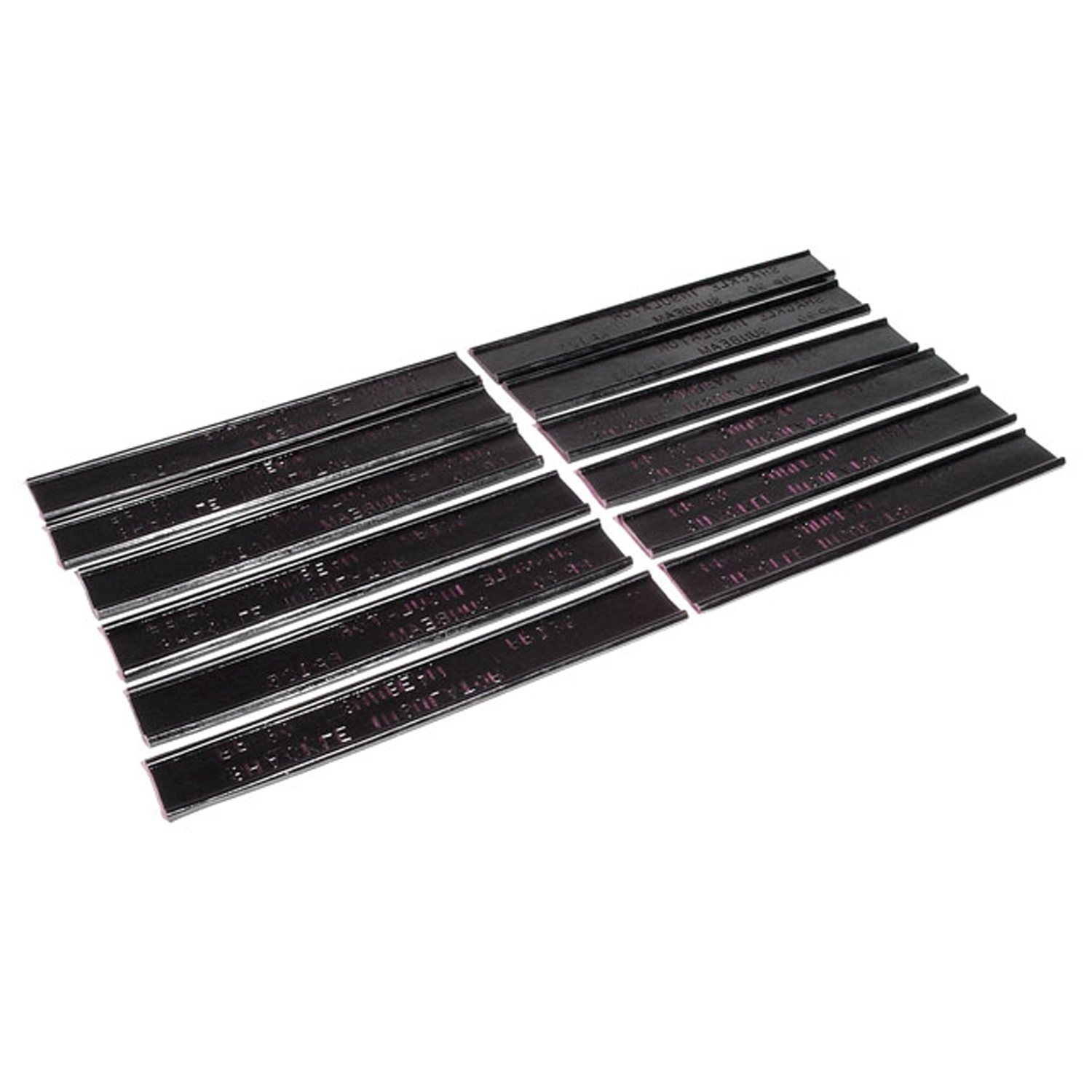 1931 Sunbeam TWENTY-FIVE Spring Shackle Rubber Insulators-RP 125Spring Shackle Rubber Insulators. 1" wide X 6-3/4" long each. 12-Piece Set
Why Choose Metro?
For over 100 years, Metro Moulded Parts has been the pinnacle of quality in classic car restoration parts. Our commitment to precision and authenticity in every component ensures a perfect fit and an OEM-level appearance.
- Expert Craftsmanship & Quality: Each part is a testament to our dedication to reliability and perfection, crafted from original designs and thoroughly tested.
- Advanced Technology: We use cutting-edge techniques to create flawless, long-lasting parts that surpass others in performance.
- SuperSoft Sponge – The Ultimate Door Seal: Not only are our door seals 30% softer than competitors', but they're also guaranteed to never leak. They effectively reduce wind and road noise, enhancing your classic car's comfort and driving experience.
- Proudly American: Our parts are a product of American craftsmanship, made in the USA with a spirit of excellence and heritage.
- Unrivaled Warranty: We back our products with a 30-year industry-leading warranty, a testament to our confidence in their quality.
Join us in preserving the legacy of classic cars with parts that are crafted for perfection, not just made.