

Image of 1935 Sunbeam Twenty, Note: These illustrations use artistic license and may differ from actual historical models.
Performance Metrics
Fundamental Metrics
Emotional Appeal
MMP Rating
| Engine Specifications | |
|---|---|
| Engine Options: | Inline 6 |
| Displacement Range: | 3.3L |
| Horsepower Range: | Estimated 70-80 HP |
| Torque: | Not available |
| Compression Ratio: | Not available |
| Ignition System: | Distributor and points |
| Cooling System: | Water-cooled |
| Performance Specifications | |
| 0-60 Time: | Not available |
| 1/4 Mile Time: | Not available |
| Top Speed: | 75 mph |
| Transmission and Drive | |
| Drive Type: | Rear-wheel drive |
| Transmission Type: | 4-speed manual |
| Fuel and Efficiency | |
| Fuel System Type: | Carburetor |
| MPG: | Not available |
| Dimensions and Brakes | |
| Brakes: | Drum brakes |
| Wheelbase: | 130 inches |
| Weight: | Estimated 3500 lbs |
Note: Specifications for classic cars are given to the best of our ability, considering the limited and variant data available.
1935 Sunbeam Twenty: A British Luxury Car at a Turning Point
The 1935 Sunbeam Twenty was built for motorists who wanted six-cylinder refinement and coachbuilt style without stepping up to the largest, most expensive cars on the road. It came from Sunbeam Motor Car Company of Wolverhampton, England, a respected maker with a reputation for engineering that stretched from luxury touring cars to Grand Prix racers.
The Twenty arrived during a pivotal year for the company. Sunbeam was part of the Sunbeam-Talbot-Darracq group, which went into receivership in 1935. The Rootes Group acquired the Sunbeam name and related assets, but the transition did not turn this car into a Rootes-era Sunbeam-Talbot. The Twenty belongs to the older Sunbeam tradition, and its timing makes it a particularly interesting marker in the company’s story.
One intriguing connection is the contrast between the Twenty’s comfortable road-going character and Sunbeam’s earlier sporting fame. The company had been involved in Grand Prix competition and land-speed record attempts. The Twenty was no record-breaker, but it carried that engineering heritage into a quieter, more luxurious kind of motoring.
Sunbeam Twenty Styling and Coachbuilt Details
The Twenty’s long bonnet and upright radiator gave it the formal presence expected of a substantial British car of the mid-1930s. Its sweeping front wings, tall lamps and running boards created a balanced profile, while a separate chassis allowed the body to sit with the graceful proportions associated with prewar luxury cars. Depending on the body fitted, the rear could be an enclosed passenger compartment or an open touring space.
Rather than offering only one fixed body design, Sunbeam supplied the car in different configurations, with coachwork and specification varying by market and order. Saloon and limousine-style bodies suited buyers who wanted weather protection and a chauffeur-friendly cabin. Touring and drophead forms offered a more open-air experience. The precise range could depend on the coachbuilder and the particular chassis, so surviving cars should be judged by their individual history rather than assumed to share identical equipment.
Inside, the Twenty aimed for restrained quality rather than flashy ornament. Owners could expect substantial upholstery, polished wood trim and clear, formal instrumentation, with details varying between body styles and coachbuilders. Leather was a natural choice for many well-appointed examples, while carpeting, seating layout and rear-cabin fittings depended on the specification. A limousine-bodied car could place particular emphasis on rear-seat comfort, while a tourer made the driver’s position and weather protection more central concerns.
Period color choices were not necessarily limited to a single factory palette because coachbuilders and owners could influence the finish. Black, deep blue, dark green and maroon are plausible period choices, and contrasting body and wing colors suited the era’s coachbuilt style. Today, original paint evidence and documented restoration history are more useful than assuming one shade was the definitive Twenty color.
Engineering and Period Technology
At the heart of the Sunbeam Twenty was a smooth six-cylinder engine of roughly 3.2 litres. Published specifications can differ by year and source, but the car is generally associated with an overhead-valve straight-six and an output commonly placed in the broad range of about 75 to 85 horsepower. The “Twenty” name refers to its period tax-horsepower class, not a claim that the engine produced only 20 bhp.
The engine’s six-cylinder layout was a notable part of the driving experience. Compared with a smaller four-cylinder unit, it could deliver power more evenly and with less vibration, a welcome quality in a heavy touring car. The Twenty used the conventional front-engine, rear-wheel-drive layout of its time, with a separate chassis and mechanical systems designed for serviceability by a well-equipped workshop.
It was not a technology showcase in the modern sense. Its appeal came from applying established engineering to a refined, substantial car. Buyers should check the exact transmission, braking system and equipment on any individual example, since specifications and subsequent repairs may differ. In a car of this age, a documented, correctly maintained system matters more than a feature list copied from another Sunbeam model.
Historical Significance: Sunbeam Before the Rootes Era
The Twenty represents the established Sunbeam marque just as its independent identity was under pressure. Sunbeam had built a reputation for quality cars and competition engineering, but the business and financial conditions of the 1930s were difficult. The 1935 receivership and subsequent Rootes acquisition changed the company’s direction. Later Sunbeam-Talbot models belong to a different chapter, even though the names are related.
In design terms, the Twenty is a good example of the prewar British luxury formula: a separate chassis, a smooth six-cylinder engine, formal proportions and a choice of body styles. It did not introduce a single technology that transformed the industry. Its significance is instead in how it brought Sunbeam’s engineering reputation to buyers seeking an elegant, capable touring car at a time when the company itself was approaching a major change.
That makes the Twenty especially appealing to marque enthusiasts. It is not simply an early example of the postwar Sunbeam-Talbot line. It is a product of the Wolverhampton Sunbeam tradition, built before Rootes reshaped the marque’s future.
Performance and Driving Experience
Period performance figures for surviving cars are not always consistent, and body weight, gearing, engine condition and road conditions all make a difference. A reasonable estimate for a sound, lightly bodied Twenty is a top speed in the neighborhood of 70 to 75 mph. A heavier saloon or limousine would likely be slower. A 0-to-60 mph time of roughly 25 to 30 seconds is a practical estimate, not a guaranteed factory figure, and acceleration would feel leisurely by modern standards.
The Twenty was designed to cover distance with composure, not to sprint away from traffic lights. The straight-six should feel smooth when properly tuned, producing a steady mechanical hum that becomes more pronounced under acceleration. Its substantial chassis and long wheelbase would help it settle into a relaxed touring pace, although modern drivers should expect slower responses and a much greater need to plan braking and overtaking.
On a reasonably smooth road, the car’s size and suspension are likely to make it feel stately and comfortable. Broken surfaces can expose the limits of prewar suspension design, and a car that wanders, knocks or feels unsettled may need more than a simple adjustment. On winding roads, expect deliberate steering inputs and modest cornering speeds rather than sports-car agility. The experience is about reading the road, working with the gearbox and enjoying the engine’s steady rhythm.
Owning and Maintaining a 1935 Sunbeam
Today, the Twenty is best suited to touring, club events, preservation displays and classic-car shows. It can be driven on suitable roads, but it is not a practical daily driver for most owners. Traffic speed, braking distances, weather protection and the availability of parts all favor planned outings over everyday commuting.
Maintenance requires patience and a willingness to work with prewar engineering. Routine servicing may include careful attention to lubrication, ignition, cooling, fuel delivery, steering and brakes. Many repairs are understandable to an experienced classic-car mechanic, but parts are not as readily available as they are for more common British classics. Components may need to be sourced through marque specialists, repaired, or made to pattern.
Reliability depends heavily on the quality of the restoration and the condition of the car’s systems. A well-maintained Twenty can be a rewarding touring car, but age-related issues such as tired wiring, worn steering components, overheating or neglected brakes can quickly spoil an outing. Before purchase, inspect the chassis for corrosion and previous repairs, verify engine condition, and assess the car’s paperwork and parts support. A specialist inspection is a sensible investment.
Sunbeam Twenty Facts and Common Criticisms
The Twenty is not known for a dedicated speed record or a major endurance victory of its own. Its more notable historical context is the Sunbeam name’s association with competition and record-breaking elsewhere in the company’s history. Those achievements belong to other Sunbeam machines, not to the Twenty itself.
There is no widely established production total for the 1935 Twenty, and no single figure should be treated as definitive without factory records. Given the model’s specialist market, the company’s upheaval and the relatively small scale of luxury-car production, a cautious estimate would be several hundred built, perhaps around 200 to 500. That is a reasoned estimate rather than a confirmed factory count.
There is also no broadly documented celebrity-owner story that defines the model’s reputation. Its appeal is more closely tied to its rarity, coachbuilt character and place in Sunbeam history. Common criticisms are straightforward: it is slow by modern standards, parts can be difficult to find, and a large prewar car demands ongoing care. Those are real considerations, but they are also part of the ownership experience rather than unexpected flaws.
Collector Values and Market Availability
The Sunbeam Twenty is a rare sight on the market, and values depend strongly on body style, completeness, originality, restoration quality and documentation. As a broad current-market estimate, a project or incomplete example might fall around US$15,000 to US$30,000. A sound, usable car could be in the region of US$30,000 to US$60,000, while an exceptional, correctly restored example with desirable coachwork may reach roughly US$70,000 to US$100,000 or more. These are guide ranges, not guaranteed sale prices.
Values for uncommon prewar cars can be uneven because the pool of buyers is smaller than for better-known classics. Excellent restoration and clear provenance can make a substantial difference, but rarity alone does not guarantee a high price. Over the long term, the Twenty is likely to hold appeal among Sunbeam and prewar-car enthusiasts, though its market may be slower and less predictable than that of a famous sports car. As with any collector vehicle, condition and maintenance history usually matter more than optimistic asking prices.
Why the 1935 Sunbeam Twenty Still Matters
The 1935 Sunbeam Twenty combines a smooth six-cylinder engine, formal coachbuilt style and the substantial feel of a prewar British touring car. It also sits at a fascinating crossroads: a product of Sunbeam’s established Wolverhampton identity, built during the year the company’s fortunes and ownership changed dramatically.
It may not be quick, common or effortless to maintain, but the Twenty offers something more distinctive than a spec-sheet victory. It connects the refinement of 1930s motoring with the final chapter of an independent British marque, making every well-preserved example a handsome survivor of Sunbeam’s changing history.
1935 Sunbeam Twenty Catalog of Parts
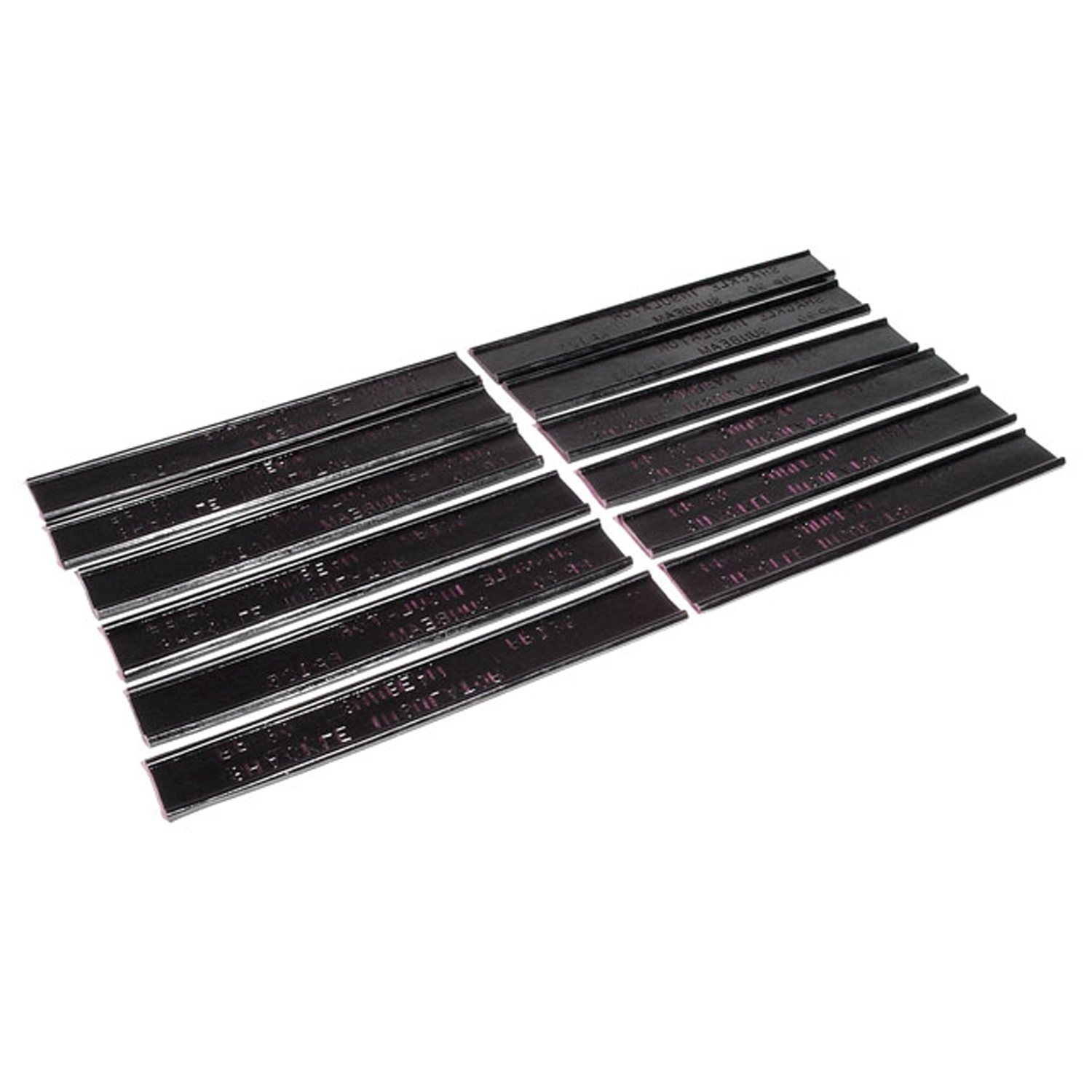 1935 Sunbeam TWENTY Spring Shackle Rubber Insulators-RP 125Spring Shackle Rubber Insulators. 1" wide X 6-3/4" long each. 12-Piece Set
Why Choose Metro?
For over 100 years, Metro Moulded Parts has been the pinnacle of quality in classic car restoration parts. Our commitment to precision and authenticity in every component ensures a perfect fit and an OEM-level appearance.
- Expert Craftsmanship & Quality: Each part is a testament to our dedication to reliability and perfection, crafted from original designs and thoroughly tested.
- Advanced Technology: We use cutting-edge techniques to create flawless, long-lasting parts that surpass others in performance.
- SuperSoft Sponge – The Ultimate Door Seal: Not only are our door seals 30% softer than competitors', but they're also guaranteed to never leak. They effectively reduce wind and road noise, enhancing your classic car's comfort and driving experience.
- Proudly American: Our parts are a product of American craftsmanship, made in the USA with a spirit of excellence and heritage.
- Unrivaled Warranty: We back our products with a 30-year industry-leading warranty, a testament to our confidence in their quality.
Join us in preserving the legacy of classic cars with parts that are crafted for perfection, not just made.