

Image of 1935 Sunbeam Twenty-Five, Note: These illustrations use artistic license and may differ from actual historical models.
Performance Metrics
Fundamental Metrics
Emotional Appeal
MMP Rating
| Engine Specifications | |
|---|---|
| Engine Options: | Inline 6-cylinder |
| Displacement Range: | 3.6L |
| Horsepower Range: | Estimated 25-30 HP |
| Torque: | Not available |
| Compression Ratio: | Not available |
| Ignition System: | Coil ignition |
| Cooling System: | Water-cooled |
| Performance Specifications | |
| 0-60 Time: | Not available |
| 1/4 Mile Time: | Not available |
| Top Speed: | 70 mph |
| Transmission and Drive | |
| Drive Type: | Rear-wheel drive |
| Transmission Type: | 4-speed manual |
| Fuel and Efficiency | |
| Fuel System Type: | Carburetor |
| MPG: | Not available |
| Dimensions and Brakes | |
| Brakes: | Drum brakes |
| Wheelbase: | 130 inches |
| Weight: | 4000 lbs |
Note: Specifications for classic cars are given to the best of our ability, considering the limited and variant data available.
1935 Sunbeam Twenty-Five: A British Luxury Car on the Cusp of Change
The 1935 Sunbeam Twenty-Five was built for the driver who wanted a quietly powerful British car with room for passengers, luggage and the occasional long-distance adventure. Its straight-six engine and coachbuilt body placed it in the luxury market, while its arrival coincided with a major change in the fortunes of the Sunbeam marque.
Sunbeam began as a Wolverhampton engineering company before becoming known for high-quality motor cars. By the mid-1930s, the company was under severe financial pressure, and the Rootes Group took control of Sunbeam-Talbot-Darracq in 1935. The Twenty-Five belongs to this transitional period, when Sunbeam still carried the prestige of an established independent marque but the shape of its future was changing.
One point of distinction is easy to miss: the Twenty-Five was a luxury road car, not one of the record-breaking Sunbeams associated with racing driver Malcolm Campbell. The marque’s speed-record history gives the name extra glamour, but the Twenty-Five’s appeal was its smooth, substantial touring character rather than competition performance.
Long-Bonnet Styling and Coachbuilt Comfort
The Twenty-Five had the classic proportions of a large 1930s British car: a long bonnet, upright radiator, sweeping front wings and a passenger cabin set well back on the chassis. Its tall grille and prominent headlamps gave it a formal presence, while running boards and rear-mounted spare wheels reinforced its traditional touring-car look. Depending on the body, the silhouette could be stately and chauffeur-like or more open and sporting.
As with many cars in this class, bodywork and trim could vary. Buyers could encounter enclosed saloons and limousine-style bodies, as well as open or convertible forms. The closed saloon was a natural choice for comfortable all-weather motoring; open touring bodies offered a more dramatic view of the car’s long, flowing lines. The precise range depended on the chassis and coachbuilder, so surviving cars should be judged individually rather than assumed to share identical details.
Inside, the Twenty-Five offered the materials expected of a British luxury car of its era. Depending on specification and coachbuilder, owners could find leather upholstery, polished wood trim, fitted carpets and substantial door and seat fittings. The driving position was upright, the dashboard was clearly arranged by the standards of the period, and the cabin was designed for comfort rather than sporting minimalism.
Sunbeam did not offer a single universal color palette for every body style. Paint and upholstery choices could reflect the buyer’s taste and the coachbuilder’s work. Dark greens, blues, maroons and black are all period-appropriate choices for a formal car of this type, but an individual car’s original finish should be confirmed from its records or surviving paint layers rather than guessed from its age.
Engineering for Smooth, Confident Touring
At the heart of the Twenty-Five was a large, overhead-valve straight-six of roughly 3.5 litres. Period descriptions commonly identify the engine by its RAC rating of 25 horsepower, a taxation figure rather than a direct measure of its actual output. The engine’s real appeal was its smooth delivery of torque, which suited a heavy luxury chassis and made relaxed cruising its natural role.
A multi-speed manual gearbox gave the driver more control over the engine’s broad power band than was typical of simpler cars. The Twenty-Five also benefited from the steady progress in braking and chassis design taking place during the 1930s. Exact equipment could vary by specification, so details such as gearbox features and brake arrangements are best checked against the particular car’s build information.
Those features did not make the Twenty-Five a technical revolution, but they helped it compete in a demanding sector. Its combination of a substantial six-cylinder engine, traditional chassis construction and bespoke bodywork represented the established British luxury-car formula: refinement, presence and owner choice rather than mass-market standardization.
Performance and Road Manners
Published performance figures for surviving examples and period specifications are not always consistent, and body weight makes a meaningful difference. A reasonable guide is a top speed in the region of 80 to 85 mph when the car is in sound condition. A modern-style 0-to-60 mph figure is rarely documented; a rough estimate of about 20 to 25 seconds is more realistic than treating it as a precise factory claim.
On the road, the Twenty-Five is best understood as a fast touring car for its time, not a sports saloon. The straight-six should produce a measured, even note, growing more purposeful as the driver works through the gears. The ride is likely to feel compliant over ordinary road imperfections, though a large prewar chassis will not isolate occupants as completely as a modern luxury car.
On winding roads, the car’s length and weight call for anticipation. A careful driver will plan braking and gear changes early, then let the engine’s torque carry the car through bends without rushing it. In crosswinds, the tall bodywork and period tyres can demand attention. The result is a satisfying, involved drive, with the steering, gear lever and mechanical sounds keeping the driver closely connected to the car.
Living with a Sunbeam Twenty-Five
Today, the Twenty-Five is best suited to touring, classic-car events and preservation rather than daily commuting. It can make a memorable show car, especially when its bodywork and trim are original or carefully restored. Its size and period running gear also reward owners who enjoy leisurely country drives more than tight parking or stop-start traffic.
Maintenance is manageable for an experienced classic-car owner, but this is not a modern car with universal parts availability. Routine work on the engine, ignition and mechanical systems is within the reach of a capable enthusiast, while body repairs, coachwork and trim restoration can be costly. Parts may require specialist suppliers, careful searching or skilled fabrication. A thorough inspection before purchase should include the chassis, wood framing where fitted, cooling system, brakes, electrical equipment and the condition of the engine.
Reliability depends heavily on the quality of past restoration and regular use. A well-maintained car can be a dependable tourer for its age, but long storage, incorrect repairs and neglected cooling or lubrication systems can turn a promising example into a major project. Keeping the car in regular service and finding a mechanic familiar with prewar British vehicles are practical advantages.
Rarity, Reputation and Useful Trivia
The Sunbeam Twenty-Five is not known for a single famous speed record or a major competition victory. Its connection to Sunbeam’s celebrated record-breaking past is part of the marque’s wider story, not a claim that belongs to this model. Its own historical interest lies in representing the company’s large-car ambitions during a period of commercial upheaval.
Exact production totals are difficult to establish from commonly available summaries. As a cautious estimate rather than a verified factory figure, perhaps around 100 to 250 Twenty-Five chassis were built. The total number of surviving examples, and the number in any particular body style, may be much smaller. Coachbuilt variations also mean that two cars carrying the same model name can look quite different.
A common criticism of cars like the Twenty-Five is their size and complexity. They are heavy, thirsty by modern standards and less convenient to maintain than a postwar classic. Their slower acceleration and period braking also require a different driving style. For enthusiasts, those drawbacks are balanced by their craftsmanship, road presence and sense of occasion.
Collector Values and Market Outlook
Values depend strongly on body style, originality, mechanical condition, restoration quality and provenance. As a broad current-market guide, a project or incomplete car might fall around £10,000 to £25,000, while a usable, well-presented example could be roughly £25,000 to £60,000. Exceptional restorations or especially desirable coachbuilt bodies may exceed that range. In US dollars, those broad figures translate to approximately $13,000 to $75,000, with top examples potentially higher. These are estimates, not guaranteed sale prices.
The Twenty-Five is a low-volume car with a limited pool of buyers, so condition and documentation matter more than short-term market fashion. Over the long term, the best-preserved and most distinctive examples are likely to hold their appeal, but expensive restoration work is not always reflected in a higher resale price. Its rarity is real, yet rarity alone does not ensure rapid appreciation.
A Final Word on the 1935 Sunbeam Twenty-Five
The 1935 Sunbeam Twenty-Five combines a smooth large-capacity six-cylinder engine, traditional British styling and the flexibility of coachbuilt luxury. It was not designed to chase racing records or modern performance figures. Instead, it offered dignified, capable touring at a moment when the Sunbeam name was entering a new chapter under Rootes ownership.
For today’s collector, the Twenty-Five is a rewarding choice for its individuality and period character. It is a reminder that the best classic cars are not always the fastest or most famous: sometimes their lasting appeal comes from the way they turn an ordinary journey into an occasion.
1935 Sunbeam Twenty-Five Catalog of Parts
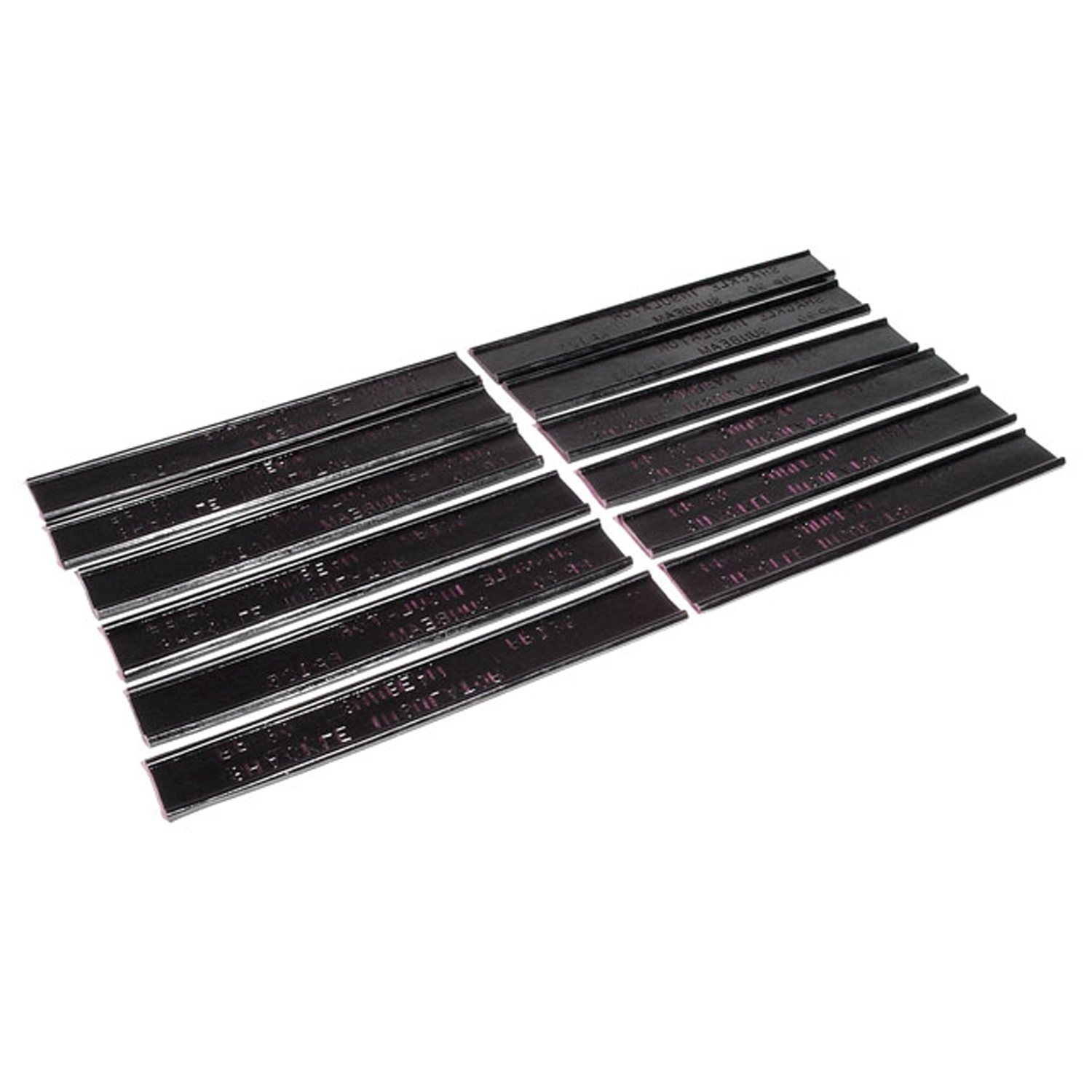 1935 Sunbeam TWENTY-FIVE Spring Shackle Rubber Insulators-RP 125Spring Shackle Rubber Insulators. 1" wide X 6-3/4" long each. 12-Piece Set
Why Choose Metro?
For over 100 years, Metro Moulded Parts has been the pinnacle of quality in classic car restoration parts. Our commitment to precision and authenticity in every component ensures a perfect fit and an OEM-level appearance.
- Expert Craftsmanship & Quality: Each part is a testament to our dedication to reliability and perfection, crafted from original designs and thoroughly tested.
- Advanced Technology: We use cutting-edge techniques to create flawless, long-lasting parts that surpass others in performance.
- SuperSoft Sponge – The Ultimate Door Seal: Not only are our door seals 30% softer than competitors', but they're also guaranteed to never leak. They effectively reduce wind and road noise, enhancing your classic car's comfort and driving experience.
- Proudly American: Our parts are a product of American craftsmanship, made in the USA with a spirit of excellence and heritage.
- Unrivaled Warranty: We back our products with a 30-year industry-leading warranty, a testament to our confidence in their quality.
Join us in preserving the legacy of classic cars with parts that are crafted for perfection, not just made.