

Image of 1977 Volkswagen Scirocco, Note: These illustrations use artistic license and may differ from actual historical models.
Performance Metrics
Fundamental Metrics
Emotional Appeal
MMP Rating
| Engine Specifications | |
|---|---|
| Engine Options: | Inline 4 |
| Displacement Range: | 1.5L - 1.6L |
| Horsepower Range: | 70 - 110 hp |
| Torque: | 81 - 94 lb-ft |
| Compression Ratio: | 8.5:1 |
| Ignition System: | Electronic ignition |
| Cooling System: | Water-cooled |
| Performance Specifications | |
| 0-60 Time: | 10.5 - 12 seconds |
| 1/4 Mile Time: | 17.5 - 18 seconds |
| Top Speed: | 104 - 112 mph |
| Transmission and Drive | |
| Drive Type: | Front-wheel drive |
| Transmission Type: | 4-speed manual, 3-speed automatic |
| Fuel and Efficiency | |
| Fuel System Type: | Carburetor |
| MPG: | 25 - 30 mpg |
| Dimensions and Brakes | |
| Brakes: | Front disc, rear drum |
| Wheelbase: | 94.5 inches |
| Weight: | 2,000 - 2,200 lbs |
Note: Specifications for classic cars are given to the best of our ability, considering the limited and variant data available.
1977 Volkswagen Scirocco: The Sporty VW That Made Practical Look Fast
The 1977 Volkswagen Scirocco turned everyday Volkswagen engineering into a sharp, lightweight coupe with genuine driver appeal. Built by German coachbuilder Karmann and styled by Giorgetto Giugiaro’s Italdesign studio, the first-generation Scirocco paired the mechanical basics of Volkswagen’s new front-wheel-drive compact cars with a low roofline, a practical hatchback and a distinctly sporting character.
The Scirocco arrived in Europe in 1974, ahead of the Golf’s widespread arrival, and reached North America for the 1975 model year. It was conceived as a modern, usable alternative to the aging Karmann Ghia: still stylish and compact, but more contemporary in its engineering and packaging. The name comes from the sirocco, a hot wind that blows north from the Sahara. A fitting name for a little coupe with a lively personality.
One telling detail about the Scirocco’s early history is that it helped introduce the Golf’s basic front-engine, front-wheel-drive formula in a sportier package. Volkswagen effectively let the coupe make an early impression while the practical hatchback followed. By 1977, the Scirocco had established itself as more than a pretty variation on a small car. It was a credible European sports coupe that could still carry luggage and handle daily errands.
Giugiaro Styling and a Purposeful Cabin
The 1977 Scirocco is a three-door hatchback coupe, and that single body style is central to its appeal. Its long, sloping hood, sharply raked windshield and fastback roof give it a clean, wedge-shaped profile. The front end is simple and purposeful, while the broad glass area and compact dimensions keep the car from feeling overly dramatic. At the rear, the hatch and large glass opening give the Scirocco a useful dose of practicality beneath its sporty silhouette.
Model-year and market details can vary, but 1977 examples reflect the first-generation car’s development, including styling and equipment changes made during its production run. The result is still recognizably an early Scirocco: slim bumpers, crisp body lines and a stance that looks athletic without relying on oversized spoilers or aggressive bodywork. Its proportions do much of the visual work.
Inside, the Scirocco is modest but driver-focused. The dashboard is straightforward, with clear instruments and controls placed within easy reach. Materials are typical of a small European car of the period: practical vinyl, durable trim and cloth upholstery on many versions, rather than luxury-grade finishes. Sportier trims could add more supportive seats and upgraded details. Expect the cabin to feel intimate by modern standards, but the hatchback layout makes it more useful than the coupe shape might suggest.
Volkswagen offered the Scirocco in a range of market-specific paint colors. Period palettes included restrained shades such as white, silver and blue, alongside brighter reds, yellows and oranges that suited the car’s youthful image. Exact names and availability differed by country and model year. Bright red and yellow cars are especially memorable today because they emphasize the Scirocco’s clean, angular shape.
Small-Car Engineering with Big Influence
The Scirocco’s importance lies less in a single groundbreaking gadget than in the way it brought together modern compact-car engineering and sporty design. Its transverse-mounted engine and front-wheel drive gave it efficient packaging, while its hatchback body offered useful cargo space. It shared its underlying mechanical architecture with Volkswagen’s compact-car family, but the coupe’s bodywork and tuning gave it a distinct identity.
That combination helped establish a template for the modern sport compact: a relatively affordable front-wheel-drive car that could be fun on a winding road without becoming impractical in everyday use. The Scirocco also helped make Giugiaro’s crisp, geometric design language one of the defining looks of 1970s European cars. Its influence can be seen in the broader rise of sporty hatchbacks and compact coupes that followed.
Compared with many contemporary sports cars, the Scirocco was not especially powerful. Its appeal came from balance, light weight and accessible performance. It offered European coupe style without the running costs or difficult manners associated with larger, more demanding performance cars.
1977 Scirocco Performance and Road Manners
Engine specifications depend on the market. A typical 1977 Scirocco used a four-cylinder engine of around 1.6 liters, usually paired with a four-speed manual gearbox. European versions could produce roughly 75 to 85 horsepower, while North American cars were generally less powerful because of emissions regulations and market-specific tuning. A three-speed automatic was available in some markets, though the manual is the more involving and commonly sought-after choice among enthusiasts.
As a broad period-performance estimate, a healthy 1.6-liter car can reach 60 mph in roughly 10 to 12 seconds, with a top speed around 95 to 105 mph depending on engine, gearing and market. Those figures are modest today, but the Scirocco’s low weight makes it feel more eager than the numbers alone suggest. It rewards momentum rather than brute force.
The front-wheel-drive layout gives the car predictable road manners, and its compact size makes it easy to place on narrow roads. On a winding route, the Scirocco feels nimble and communicative, with the steering and chassis giving the driver a clear sense of what the front tires are doing. Push too hard into a corner and the front end will tend toward understeer, a familiar trait of front-wheel-drive cars of the era. On uneven pavement, the suspension can feel firm and busy, especially by modern standards, but a well-maintained car should remain composed rather than harsh.
From behind the wheel, the experience is direct and mechanical. The four-cylinder engine has a purposeful, slightly buzzy sound as it revs, and the manual gearbox encourages the driver to work through the gears. There is no abundance of sound insulation or electronic assistance to filter out the road. That simplicity is part of the charm: the driver feels the engine, the pavement and the car’s modest weight in a way that newer cars often soften.
Living with a Classic Volkswagen Coupe
A 1977 Scirocco can serve as a weekend car, a show car or, with careful upkeep, a regular-use classic. Its hatchback makes it more practical than many coupes, and the shared Volkswagen mechanical components can make routine service approachable for a home mechanic. Basic jobs such as ignition work, brakes and many engine-service tasks are familiar to vintage Volkswagen specialists.
Age and condition matter more than the badge. Rust is a major concern, particularly around the floor, sills, wheel arches, hatch area and structural seams. Parts availability is mixed: many mechanical components are shared with related Volkswagen models or reproduced, while model-specific trim, interior pieces and body panels can be harder to source. Before buying, inspect the shell carefully and confirm that the car has not received poorly repaired collision or rust damage.
Reliability is best when the car is maintained as the older machine it is. Carburetor condition, fuel delivery, cooling-system health, electrical connections and rubber components all deserve attention. A neglected Scirocco may be inexpensive to purchase but quickly become a restoration project. A sound example, by contrast, is relatively simple to understand and rewarding to maintain.
Volkswagen Scirocco Facts and Criticisms
The name is an automotive spelling of the sirocco, the warm wind that crosses the Mediterranean from North Africa. Volkswagen’s first-generation Scirocco was built from 1974 to 1981, with Karmann responsible for production of the coupe body. The full first-generation run is commonly reported at about 504,000 cars, although that figure covers all years and markets, not just 1977. A dependable worldwide production count for the 1977 model year alone is difficult to establish.
The Scirocco also found a place in motorsport. Its light weight and front-wheel-drive layout made it a natural fit for club racing and competition, and Volkswagen-backed one-make racing helped promote the model in Europe. It was not a record-setting speed machine, and it has no widely recognized endurance or production-car speed record to claim. Its legacy is more about making sporty, accessible front-wheel-drive motoring appealing.
There is no universally recognized celebrity-owner story that defines the 1977 Scirocco. Its strongest claim to fame is its role in Volkswagen’s design and product history, along with its long-standing appeal among enthusiasts who appreciate compact, analog cars. Common criticisms are straightforward: performance is modest by modern standards, the cabin is tight, and corrosion can be extensive. Originality and condition also vary widely after decades of repairs and modifications.
1977 Scirocco Values and Collectibility
The first-generation Scirocco is increasingly appreciated by collectors, especially as clean, unmodified examples become harder to find. It remains less expensive than a comparable early Golf GTI in many markets, but the best cars are no longer simply disposable old Volkswagens. Scarcity is most noticeable in well-preserved cars with sound bodywork, original trim and documented history. Surviving numbers are not reliably tracked, so rarity is best judged by condition and availability rather than a precise count.
As a broad U.S. market estimate, a project car may sell for about $2,000 to $5,000, while a usable driver might bring roughly $5,000 to $10,000. A clean, well-maintained example could fall around $10,000 to $18,000, and an excellent restoration or unusually original car may reach $20,000 to $30,000 or more. These are indicative ranges, not a formal appraisal. Local market, specification, rust, service history and originality can move the price substantially.
Values have generally strengthened for the best examples as interest in 1970s and 1980s Volkswagen models has grown. The market is not uniform: rough cars remain difficult to justify economically, while rust-free, documented examples are increasingly sought after. Buyers should compare condition carefully rather than assuming every Scirocco is a rising investment.
Why the 1977 Volkswagen Scirocco Still Matters
The 1977 Volkswagen Scirocco brought together Giugiaro’s crisp styling, Karmann craftsmanship and Volkswagen’s practical front-wheel-drive engineering in a compact package that was fun without being fussy. It was not the fastest coupe of its era, but it offered a rare combination of light-footed handling, everyday usefulness and distinctive design.
That balance is why the Scirocco still resonates. It captures a moment when a small car could be clever, stylish and engaging all at once, and it remains one of Volkswagen’s most appealing reminders that driving enjoyment does not require a large engine or a large car.
1977 Volkswagen Scirocco Catalog of Parts
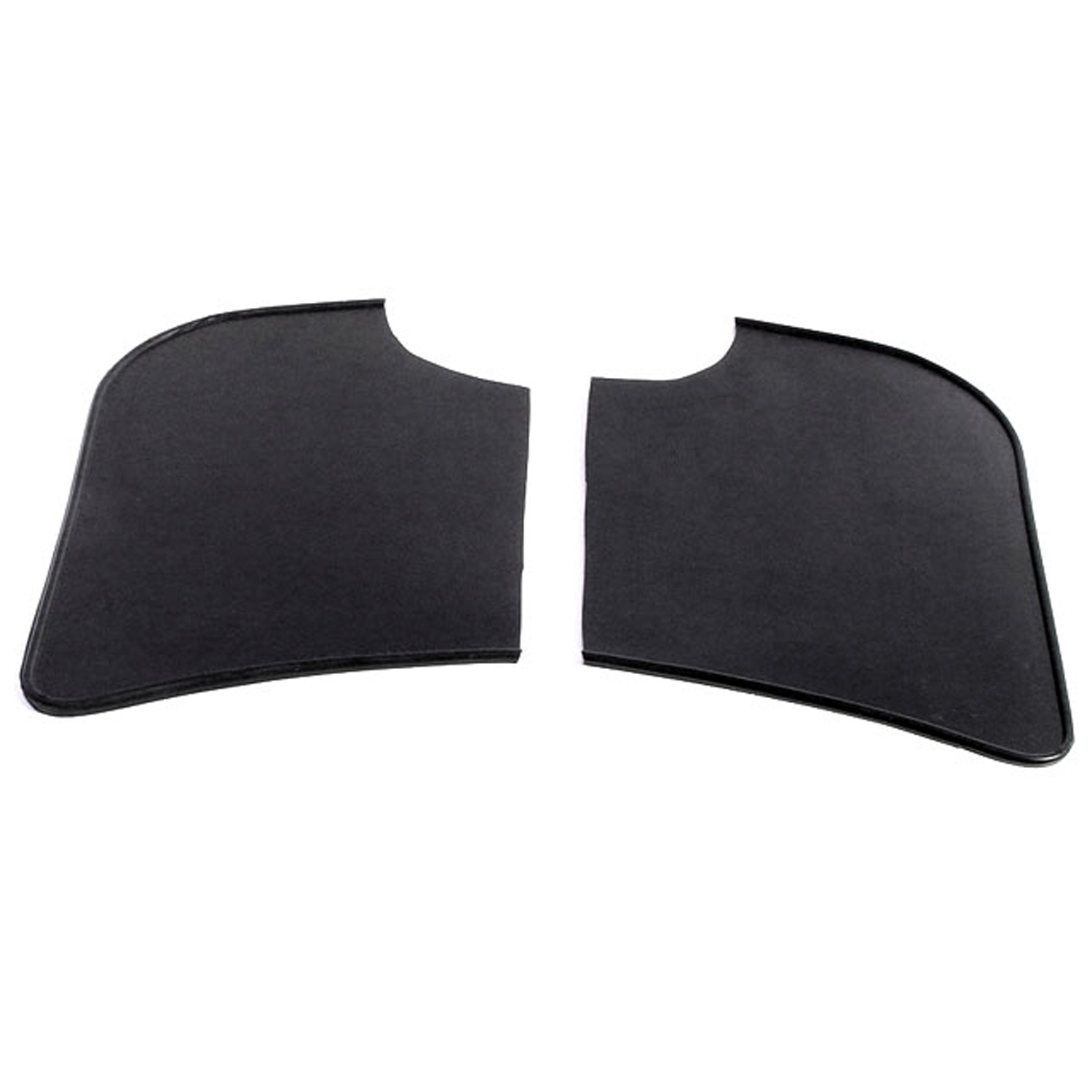 1977 Volkswagen Scirocco Gravel Shields. Molded flat without metal backing plates-FS 40Gravel Shields. Molded flat without metal backing plates. Apply with contact cement. 7-5/8" long X 5-5/8" wide at top. Pair
Why Choose Metro?
For over 100 years, Metro Moulded Parts has been the pinnacle of quality in classic car restoration parts. Our commitment to precision and authenticity in every component ensures a perfect fit and an OEM-level appearance.
- Expert Craftsmanship & Quality: Each part is a testament to our dedication to reliability and perfection, crafted from original designs and thoroughly tested.
- Advanced Technology: We use cutting-edge techniques to create flawless, long-lasting parts that surpass others in performance.
- SuperSoft Sponge – The Ultimate Door Seal: Not only are our door seals 30% softer than competitors', but they're also guaranteed to never leak. They effectively reduce wind and road noise, enhancing your classic car's comfort and driving experience.
- Proudly American: Our parts are a product of American craftsmanship, made in the USA with a spirit of excellence and heritage.
- Unrivaled Warranty: We back our products with a 30-year industry-leading warranty, a testament to our confidence in their quality.
Join us in preserving the legacy of classic cars with parts that are crafted for perfection, not just made.