

Image of 1978 Volkswagen Scirocco, Note: These illustrations use artistic license and may differ from actual historical models.
Performance Metrics
Fundamental Metrics
Emotional Appeal
MMP Rating
| Engine Specifications | |
|---|---|
| Engine: | Inline 4 |
| Displacement: | 1.5L-1.6L |
| Horsepower: | 70-110 hp |
| Torque: | 80-100 lb-ft |
| Compression Ratio: | 8.5:1 |
| Ignition System: | Electronic Ignition |
| Cooling System: | Water-cooled |
| Performance Specifications | |
| 0-60 Time: | 10-12 seconds |
| 1/4 Mile Time: | 17-18 seconds |
| Top Speed: | 100-110 mph |
| Transmission and Drive | |
| Drive Type: | FWD (Front Wheel Drive) |
| Transmission Type: | 4-speed manual, 3-speed automatic |
| Fuel and Efficiency | |
| Fuel System Type: | Carburetor |
| MPG: | 25-30 mpg |
| Dimensions and Brakes | |
| Brakes: | Front disc, rear drum |
| Wheelbase: | 94.5 inches |
| Weight: | 2000-2200 lbs |
Note: Specifications for classic cars are given to the best of our ability, considering the limited and variant data available.
1978 Volkswagen Scirocco: The Original Sporty VW
The 1978 Volkswagen Scirocco turned practical front-wheel-drive engineering into something with real sporting character. With its crisp Giugiaro lines, eager four-cylinder engine and hatchback practicality, it offered a lively alternative to larger, thirstier coupes at a time when fuel economy mattered more than ever.
Built by German coachbuilder Karmann for Volkswagen, the first-generation Scirocco was based on the same front-wheel-drive architecture as the Volkswagen Golf. It debuted in 1974, just ahead of the Golf, and was conceived as a modern successor to the Karmann Ghia: a compact, stylish car with room for everyday use. The 1978 model sits in the middle of the first-generation run, before the more rounded second-generation Scirocco arrived in 1981.
A noteworthy detail: the Scirocco reached the public before the Golf, even though the two cars were developed together. The sporty coupe effectively previewed Volkswagen’s new transverse-engine, front-wheel-drive formula.
Giugiaro Styling and a Driver-Focused Cabin
The Scirocco’s shape is a study in clean, functional geometry. A long, low nose flows into a sharply sloped windshield and a short rear hatch, while straight character lines and broad glass give the car a distinctive wedge profile. Its proportions feel purposeful rather than ornamental. In the United States, federally required bumpers gave the 1978 car a bulkier look than some European versions, but the underlying design remained unmistakably lean.
There was just one body style: a two-door hatchback coupe. The folding rear seat and lift-up hatch made it more useful than its low roofline suggested, although the back seat was best suited to children or short trips. The front bucket seats, relatively upright driving position and straightforward controls helped the Scirocco feel like a driver’s car without making it difficult to live with.
Interior materials were sensible for an affordable sporting car, not luxurious. Expect durable cloth or vinyl trim, hard-wearing plastics and a simple instrument panel. Depending on market and equipment, features could include a tachometer, rear-window defroster, radio and air conditioning. The exact equipment varied, so original brochures and build details are useful when checking a particular car.
Paint choices differed by market and production date. Period Sciroccos were offered in vivid solid colors as well as more restrained shades, with red, yellow, white, silver and green among the kinds of colors associated with the range. Bright colors suit the car’s crisp design especially well, but paint codes should be checked against the specific year and market rather than guessed from appearance.
Small-Car Engineering with Sporting Intent
The Scirocco’s formula was simple and influential: mount a four-cylinder engine transversely at the front, drive the front wheels, and keep the body compact. MacPherson struts up front, a torsion-beam rear axle, front disc brakes and rack-and-pinion steering helped make the car responsive without requiring expensive or exotic hardware.
That balance set it apart from many coupes of the period. The Scirocco was not a grand tourer with a large engine, nor was it a stripped-out sports car. It combined everyday usability with sharp styling and lively road manners. Its shared mechanical foundation with the Golf also helped Volkswagen spread development costs and parts across related models, a strategy that became central to the company’s success.
The Scirocco helped establish the compact front-drive sports coupe as a credible category. Its design was practical enough for daily use yet distinctive enough to feel special, an approach later echoed by a wide range of small performance hatchbacks and coupes.
1978 Scirocco Performance and Road Manners
Specifications varied between countries. A typical U.S.-market 1978 Scirocco used a 1.6-liter inline-four, with power commonly quoted in the neighborhood of 75 to 80 horsepower, paired with a manual transmission. European versions and individual equipment packages could differ. As a period-correct performance estimate, expect 0 to 60 mph in roughly 11 to 13 seconds and a top speed around 95 to 105 mph, depending on gearing, condition and market specification. These are modest figures today, but the car’s light weight makes its performance feel more engaging than the numbers alone suggest.
On a smooth, winding road, the Scirocco feels nimble and direct. Its compact footprint makes it easy to place in a corner, and the rack-and-pinion steering gives the driver a clear sense of what the front tires are doing. The front-drive layout is predictable: push too hard and the nose tends to run wide, but the car is generally approachable rather than intimidating.
Short wheel travel and a sporty suspension setup can make rough pavement feel busy. Broken roads and sharp bumps come through more clearly than they would in a larger sedan, while strong crosswinds can be noticeable in a light car. The reward is a connected, mechanical driving experience, with a buzzy four-cylinder note, a willing engine and a manual gearshift that keeps the driver involved.
Living with a Classic Scirocco
A sound 1978 Scirocco can serve as a weekend driver, a show car or a vintage autocross project. It has enough hatchback utility for errands and small luggage, but its age, limited rear-seat space and scarcity of some trim pieces make it less convenient as a modern daily driver than a newer compact car.
Routine mechanical work is generally approachable for an owner with basic tools and repair experience. The engine bay is relatively uncomplicated, and many service parts are shared with contemporary Volkswagen models. Regular attention to ignition, fuel delivery, cooling, brakes and suspension is essential. On an older car, condition matters more than the odometer: maintenance records and evidence of careful repairs are valuable.
Rust is a major inspection priority. Check the floors, rocker panels, wheel arches, spare-wheel well, hatch area and seams around the windshield and windows. Also inspect the fuel system, electrical connections, suspension mounting points and the condition of any previous body repairs. A clean, rust-free shell is usually a better starting point than a cheap car with a fresh coat of paint hiding corrosion.
Useful Scirocco Trivia
The name comes from the Scirocco, a warm wind that blows northward from the Sahara across the Mediterranean. It fits a car designed to bring a little heat to Volkswagen’s practical lineup.
Karmann assembled the first-generation Scirocco in Osnabrück, Germany. The complete first-generation production run, from 1974 to 1981, is generally estimated at about 504,000 cars. That figure covers the generation, not just the 1978 model year; a reliable model-year production total is harder to establish.
The Scirocco also found a natural home in club racing, rallying and autocross, where its modest weight and predictable handling could be put to good use. It was not known for setting a headline-grabbing production-car speed record. Its appeal was the combination of balance, affordability and usable performance.
There is no single celebrity ownership story or universally recognized special edition that defines the 1978 model. Its reputation comes instead from the broader Scirocco story: a stylish Volkswagen that could be enjoyed on ordinary roads and adapted for grassroots competition. Common criticisms include modest power, a firm ride, limited rear-seat room and corrosion-prone bodywork.
Collector Values and Availability
First-generation Sciroccos are uncommon on today’s roads, especially in unmodified, rust-free condition, but they are not so rare that parts or cars never appear for sale. The roughly 504,000 first-generation production figure is substantial; attrition, corrosion and decades of modifications are what make good examples harder to find.
As a broad 2026 U.S. market estimate, a project car may sell for about $3,000 to $7,000, depending on completeness and rust. A usable driver commonly falls around $8,000 to $16,000, while a very clean, original example may reach roughly $18,000 to $30,000. Exceptional restorations or unusually well-preserved cars can exceed that range, but condition, documentation, originality and local demand make a significant difference.
Values have generally strengthened as interest in 1970s European cars has grown, particularly for original cars rather than heavily modified projects. The Scirocco remains more affordable than many higher-profile sports cars from the era, though the best examples are no longer bargain purchases. Prices are likely to favor cars with sound bodywork, correct details and a clear maintenance history.
Why the 1978 Scirocco Still Matters
The 1978 Volkswagen Scirocco brought together sharp Italian design, practical German engineering and the engaging feel of a light front-wheel-drive coupe. It was quick enough to be entertaining, economical enough to make sense and useful enough to fit into ordinary life. Its simple mechanical layout and distinct shape have kept it appealing to enthusiasts long after its original showroom days.
More than a sporty Golf in different clothes, the Scirocco helped show how an affordable compact car could be both rational and memorable. Find a solid example, and every winding road becomes a reminder of why this little Volkswagen earned a lasting place in automotive history.
1978 Volkswagen Scirocco Catalog of Parts
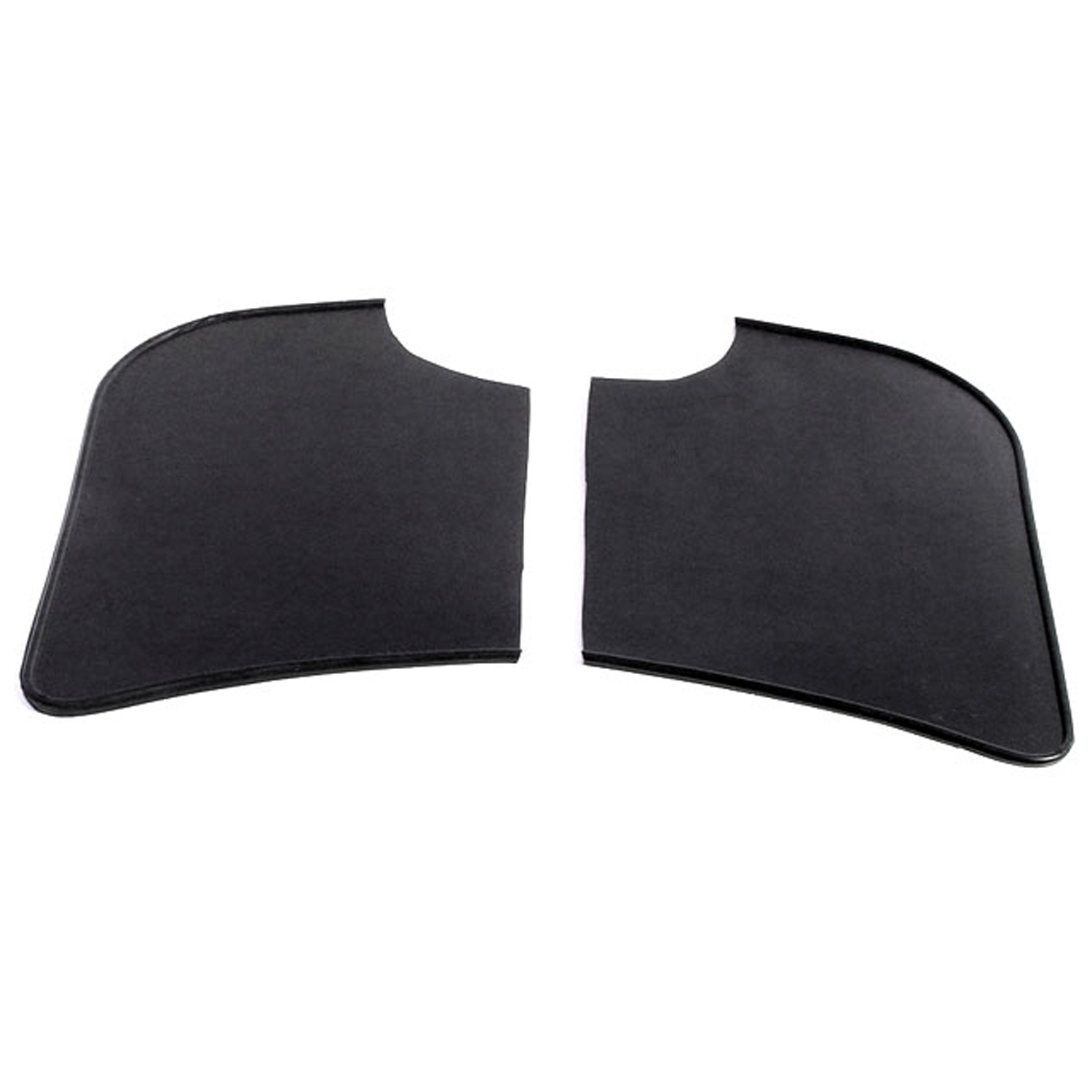 1978 Volkswagen Scirocco Gravel Shields. Molded flat without metal backing plates-FS 40Gravel Shields. Molded flat without metal backing plates. Apply with contact cement. 7-5/8" long X 5-5/8" wide at top. Pair
Why Choose Metro?
For over 100 years, Metro Moulded Parts has been the pinnacle of quality in classic car restoration parts. Our commitment to precision and authenticity in every component ensures a perfect fit and an OEM-level appearance.
- Expert Craftsmanship & Quality: Each part is a testament to our dedication to reliability and perfection, crafted from original designs and thoroughly tested.
- Advanced Technology: We use cutting-edge techniques to create flawless, long-lasting parts that surpass others in performance.
- SuperSoft Sponge – The Ultimate Door Seal: Not only are our door seals 30% softer than competitors', but they're also guaranteed to never leak. They effectively reduce wind and road noise, enhancing your classic car's comfort and driving experience.
- Proudly American: Our parts are a product of American craftsmanship, made in the USA with a spirit of excellence and heritage.
- Unrivaled Warranty: We back our products with a 30-year industry-leading warranty, a testament to our confidence in their quality.
Join us in preserving the legacy of classic cars with parts that are crafted for perfection, not just made.