

Image of 1979 Volkswagen Beetle, Note: These illustrations use artistic license and may differ from actual historical models.
Performance Metrics
Fundamental Metrics
Emotional Appeal
MMP Rating
| Engine Specifications | |
|---|---|
| Engine Options: | Air-cooled, overhead-valve, horizontally opposed four-cylinder engine |
| Displacement Range: | 1584cc |
| Horsepower Range: | 48 horsepower |
| Torque: | 73 lb-ft |
| Compression Ratio: | 7.5:1 |
| Ignition System: | Electronic ignition |
| Cooling System: | Air-cooled |
| Performance Specifications | |
| 0-60 Time: | 20 seconds |
| 1/4 Mile Time: | 21 seconds |
| Top Speed: | 80 mph |
| Transmission and Drive | |
| Drive Type: | Rear-wheel drive |
| Transmission Type: | 4-speed manual |
| Fuel and Efficiency | |
| Fuel System Type: | Carburetor |
| MPG: | 25 mpg |
| Dimensions and Brakes | |
| Brakes: | Front disc brakes, rear drum brakes |
| Wheelbase: | 94.5 inches |
| Weight: | 1,984 lbs |
Note: Specifications for classic cars are given to the best of our ability, considering the limited and variant data available.
1979 Volkswagen Beetle: The Classic Bug Nears the End of an Era
The 1979 Volkswagen Beetle was a familiar shape with a remarkable history behind it: a compact, air-cooled car that had grown from a prewar German project into one of the world’s best-known automobiles. Designed in the 1930s with Ferdinand Porsche’s engineering team and built by Volkswagen, the Beetle became a global success after production restarted following World War II. By 1979, the original design was nearing the end of its run in some markets, but its simple engineering and unmistakable personality remained intact.
One milestone helps explain the Beetle’s extraordinary reach. In 1972, it passed the Ford Model T as the world’s best-selling single model, with cumulative production eventually exceeding 21 million. The 1979 model arrived during a period when front-wheel-drive hatchbacks were rapidly changing the small-car market. Yet the Beetle still offered something different: rear-engine packaging, a distinctive air-cooled soundtrack, and styling recognizable from across a parking lot.
Availability depended on country. In the United States, the Beetle sedan had left the new-car lineup before 1979, while the convertible continued. Other markets still offered Beetle sedans, with specifications and equipment varying by factory and destination.
Round Fenders and a Familiar Cabin
The Beetle’s exterior needed no dramatic styling update to remain distinctive. Its curved roof flowed into a rounded engine cover, while bulbous fenders framed small wheels and simple bumpers. The headlights sat high on the front wings, and the upright windshield and short overhangs gave the car a compact, almost cheerful look. On the convertible, a thick, well-lined fabric top folded behind the rear seats, transforming the profile without losing the Bug’s familiar silhouette.
Inside, the Beetle was straightforward rather than luxurious. The dashboard used painted metal and simple controls, with a large, easy-to-read speedometer and minimal instrumentation. Materials were practical: vinyl upholstery was common, while carpets and trim varied with market and specification. The cabin was narrow by modern standards, but the upright seating position and generous windows made it feel airy. The convertible added the appeal of open-air motoring, though its top and body structure made it less isolated from wind and road noise than a modern cabriolet.
Late Beetles benefited from decades of incremental development. Depending on market, a 1979 car could have features such as an alternator, front disc brakes, and improved heating and ventilation compared with earlier examples. U.S.-specification convertibles used fuel injection and emissions-control equipment, while many other-market Beetles retained carburetors. These differences matter when identifying parts or judging a car, so buyers should check the market specification and chassis details rather than assume every 1979 Bug is identical.
Factory paint choices changed by country and production period. Buyers could encounter bright reds, yellows, blues, greens, whites, and more subdued beige or metallic shades. Vivid colors suit the Beetle’s friendly shape particularly well, while white and silver-toned finishes were popular choices for a cleaner, understated look. Original color can be a plus for collectors, especially when supported by factory records or the car’s identification plate.
The Beetle was offered in several forms over its long life, including sedans and convertibles, with commercial derivatives such as the Type 2 van sharing the broader Volkswagen family history rather than the Beetle body itself. For 1979, the convertible is especially notable in the U.S. market, where it represented the Beetle’s final chapter as a new Volkswagen passenger car.
A Design That Changed Small Cars
The Beetle’s mechanical layout set it apart from many of its contemporaries. Its air-cooled, horizontally opposed four-cylinder engine sat behind the rear axle and drove the rear wheels. That arrangement left the front of the car free of a conventional engine, helped create a compact package, and contributed to the Beetle’s distinctive proportions. It also avoided the need for a radiator, coolant, and associated plumbing.
Just as important was the car’s accessibility. The design was mechanically uncomplicated, and generations of owners learned to service their own Beetles. The engine, gearbox, brakes, and suspension became familiar to independent mechanics around the world. Volkswagen’s enormous production run created a deep supply of replacement and reproduction parts, helping keep the cars in use long after newer designs had taken over showrooms.
The Beetle was not the first rear-engine car, nor was every aspect of its engineering unique. Its influence came from combining a practical package, recognizable styling, and large-scale production into a vehicle that could be built and maintained across many countries. Its shape also became a cultural symbol, appearing in films, advertising, travel writing, and enthusiast communities worldwide.
Performance and Road Manners
Performance depends on the version. Many late Beetles used a 1.6-liter, air-cooled flat-four, though engine sizes and output varied by market. A U.S.-specification 1979 convertible had a modest output of roughly 48 horsepower by period U.S. ratings. A healthy example could reach approximately 75 to 80 mph, with 0-to-60-mph acceleration taking around 18 to 20 seconds. Those figures are estimates, not universal specifications, and a car’s condition, gearing, and local engine tune make a noticeable difference.
The Beetle rewards smooth driving rather than quick acceleration. Its four-speed manual gearbox has a direct, mechanical feel, and the engine produces a steady, distinctive chug that grows louder as revs rise. The rear-mounted engine gives the car good traction on slippery surfaces, but the weight distribution also means drivers should use measured inputs, particularly in a corner or during an abrupt maneuver. A well-maintained Beetle feels nimble at moderate speeds, with light controls and a small footprint that make it easy to place on narrow roads.
Ride quality is simple and communicative. The suspension absorbs ordinary bumps reasonably well, but rough pavement can make the short-wheelbase car bob and jiggle. On winding roads, its compact size and modest power encourage momentum driving: carry speed smoothly, choose a line, and avoid expecting modern levels of grip or braking. Crosswinds can make the lightweight body feel unsettled, especially with the convertible top up. In return, the driver gets an engaging, hands-on experience that feels very different from a contemporary compact car.
Living With a 1979 Beetle
Owners use 1979 Beetles as weekend cruisers, show cars, parade vehicles, and, in some cases, regular transportation. A tidy example can handle local trips and relaxed drives, but it is less suited to sustained high-speed commuting, heavy traffic, or long journeys where modern safety, comfort, and climate control are expected.
Routine service is approachable for a mechanically minded owner. Basic jobs such as changing oil, adjusting valves, replacing ignition components, and servicing brakes are well documented, and parts availability remains strong. The air-cooled engine does require regular attention. Correct valve adjustment, ignition timing, cooling-air flow, and oil condition are important to longevity. Overheating can cause serious damage, and the engine relies on its cooling fan and intact engine-bay seals to manage heat properly.
Rust is often the bigger concern than mechanical wear. Inspect the floor pans, heater channels, battery area, spare-wheel well, body seams, and lower edges of the doors and fenders. On convertibles, examine the roof frame, fabric, seals, and body structure carefully. A low purchase price can quickly become expensive if the car needs substantial metalwork, so a thorough inspection by a Beetle specialist is money well spent.
Beetle Trivia and Lasting Records
The Beetle’s 1972 production milestone is one of its most famous records: it overtook the Model T’s cumulative total and kept going for decades. Volkswagen assembled the last original Beetle in Mexico in 2003, bringing worldwide production to more than 21.5 million. That total includes cars built over many years and in multiple countries, not just the 1979 model.
The original Beetle also had a complicated origin. Its early development took place in Nazi Germany under the state-sponsored “people’s car” program, but mass civilian production was disrupted by World War II. After the war, British Army officer Ivan Hirst helped restart the Wolfsburg factory and get Beetle production moving again. The postwar car’s international success was a very different chapter from its prewar beginnings.
For U.S. buyers, 1979 is a particularly meaningful year because it marked the end of new Beetle sales in the country. German production of the convertible continued into 1980, while Beetle sedans continued to be built in other countries. It is also worth separating the 1979 Beetle from the later New Beetle, introduced in the late 1990s: the newer car borrowed the classic’s styling cues but used a modern, water-cooled, front-engine layout.
Criticisms are part of the story too. The Beetle is slow by modern standards, can be noisy, and has limited cargo space. Its cabin is small, its heating system depends on engine-warmed air, and safety equipment is modest compared with today’s cars. These are not reasons to dismiss it, but they are important realities for anyone considering one as transportation.
Collector Values and Availability
There is no single reliable worldwide production figure for the 1979 model year because Beetles were built in different countries, and factories did not all use the same model-year system. A reasonable broad estimate is roughly 250,000 to 350,000 Beetles produced worldwide during 1979, but that should be treated as an approximation, not a definitive factory total. The convertible is scarcer than the sedan overall, and original, rust-free examples with documented history attract particular interest.
As a broad U.S.-market guide in 2026, a Beetle project may sell for about $5,000 to $12,000, depending on completeness and rust. A usable driver often falls around $10,000 to $20,000, while a clean, well-presented example may bring roughly $18,000 to $30,000. Exceptional, highly original convertibles or professionally restored cars can exceed $35,000, with especially desirable examples sometimes reaching $50,000 or more. These are general ranges, not appraisals; condition, originality, documentation, location, and the quality of restoration can shift a price substantially.
Values have generally strengthened for sound, collectible Beetles, especially convertibles and cars with documented originality. The market is less forgiving of poor restorations and hidden rust than it can be of ordinary cosmetic wear. Buyers should also distinguish a carefully restored car from one that simply looks shiny in photographs. Structural repairs, correct parts, and dependable mechanical work matter more than bright paint alone.
Why the 1979 Beetle Still Matters
The 1979 Volkswagen Beetle combines a celebrated design with the practical character of a car built to be understood and maintained. Its air-cooled engine, rear-wheel-drive layout, rounded body, and modest performance make it a memorable classic, while its history connects it to one of the biggest stories in automotive production.
It may not be fast, quiet, or effortless by modern standards. But a good Beetle offers something harder to measure: a direct connection between driver, machine, and road. Nearly a century after its concept took shape, the Bug remains instantly recognizable, and that is a remarkable achievement for any car.
1979 Volkswagen Beetle Catalog of Parts
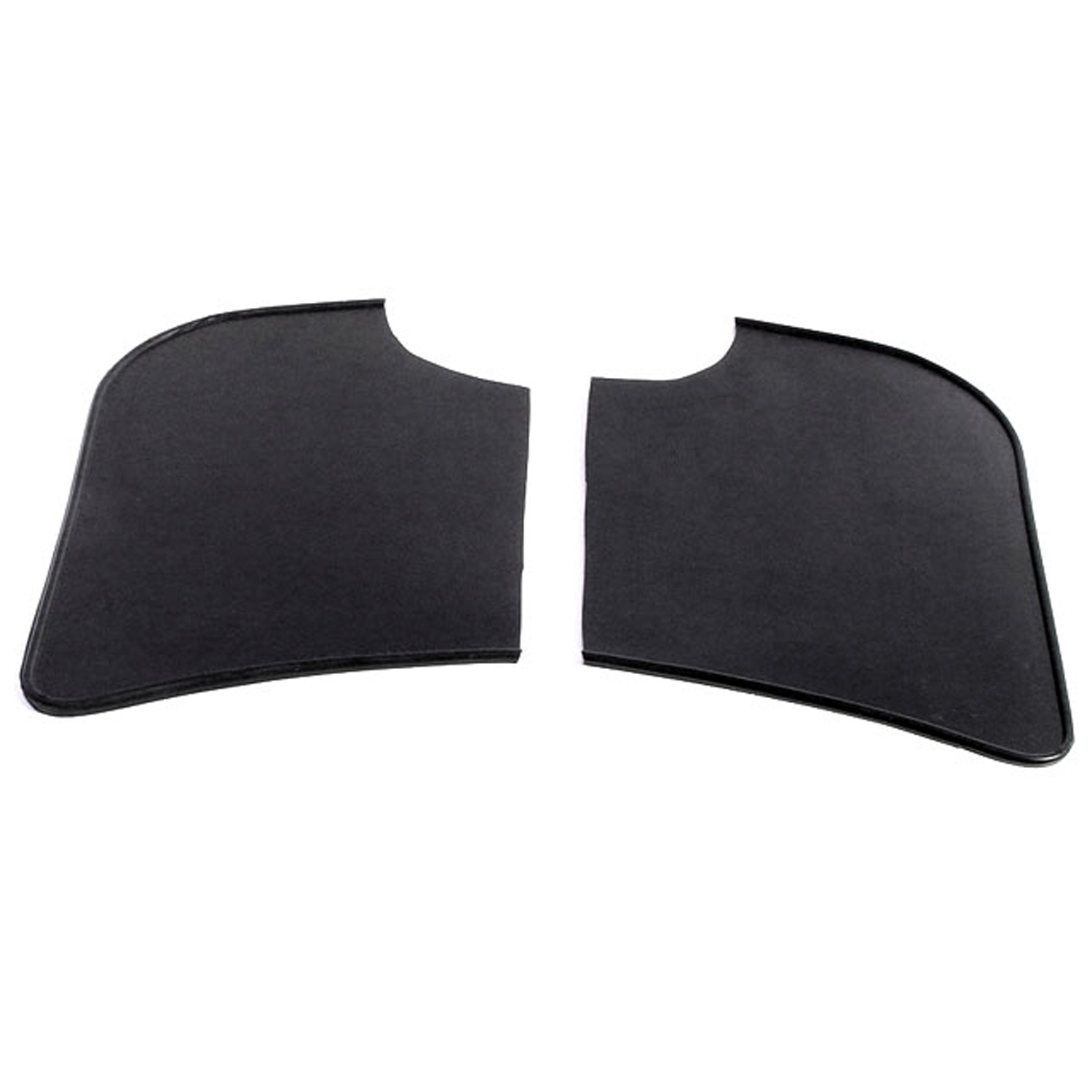 1979 Volkswagen Beetle Gravel Shields. Molded flat without metal backing plates-FS 40Gravel Shields. Molded flat without metal backing plates. Apply with contact cement. 7-5/8" long X 5-5/8" wide at top. Pair
Why Choose Metro?
For over 100 years, Metro Moulded Parts has been the pinnacle of quality in classic car restoration parts. Our commitment to precision and authenticity in every component ensures a perfect fit and an OEM-level appearance.
- Expert Craftsmanship & Quality: Each part is a testament to our dedication to reliability and perfection, crafted from original designs and thoroughly tested.
- Advanced Technology: We use cutting-edge techniques to create flawless, long-lasting parts that surpass others in performance.
- SuperSoft Sponge – The Ultimate Door Seal: Not only are our door seals 30% softer than competitors', but they're also guaranteed to never leak. They effectively reduce wind and road noise, enhancing your classic car's comfort and driving experience.
- Proudly American: Our parts are a product of American craftsmanship, made in the USA with a spirit of excellence and heritage.
- Unrivaled Warranty: We back our products with a 30-year industry-leading warranty, a testament to our confidence in their quality.
Join us in preserving the legacy of classic cars with parts that are crafted for perfection, not just made.