

Image of 1920 Willys Knight Model 20, Note: These illustrations use artistic license and may differ from actual historical models.
Performance Metrics
Fundamental Metrics
Emotional Appeal
MMP Rating
| Engine Specifications | |
|---|---|
| Engine: | Inline 4-cylinder engine |
| Displacement: | 3.0L |
| Horsepower: | Estimated 20-30 HP |
| Torque: | Not available |
| Compression Ratio: | Not available |
| Ignition System: | Battery and coil |
| Cooling System: | Water-cooled |
| Performance Specifications | |
| 0-60 Time: | Not available |
| 1/4 Mile Time: | Not available |
| Top Speed: | 45-50 mph |
| Transmission and Drive | |
| Drive Type: | Rear-wheel drive |
| Transmission Type: | 3-speed manual |
| Fuel and Efficiency | |
| Fuel System Type: | Carburetor |
| MPG: | Not available |
| Dimensions and Brakes | |
| Brakes: | Mechanical drum brakes |
| Wheelbase: | 112 inches |
| Weight: | Estimated 2500 lbs |
Note: Specifications for classic cars are given to the best of our ability, considering the limited and variant data available.
1920 Willys-Knight Model 20: A Quietly Different Classic
The 1920 Willys-Knight Model 20 offered an unusual promise for its day: a car powered by an engine designed to run with remarkable smoothness and little of the mechanical clatter drivers expected from early automobiles. Built by Willys-Overland in Toledo, Ohio, the Model 20 brought the company’s distinctive Knight sleeve-valve technology to buyers seeking a refined, substantial touring car.
Willys-Overland was one of America’s major automakers in the early 20th century. John North Willys had acquired the Overland company in 1908 and built it into a high-volume manufacturer. The Willys-Knight line sat above the company’s more affordable Overland models, appealing to motorists who wanted extra comfort and engineering distinction without stepping into the most expensive luxury-car class.
The Model 20’s noteworthy detail is its engine. Rather than use the familiar poppet valves found in most cars, it used sliding sleeves in the cylinders to control the intake and exhaust flow. That unusual arrangement made the engine notably quiet, helping give Willys-Knight cars a reputation for smoothness. It also brought a trade-off: sleeve-valve engines needed careful lubrication and could consume more oil than owners were used to.
Model 20 Styling and Cabin Details
The Model 20 had the upright, purposeful proportions typical of a 1920 automobile. Its tall radiator and long hood gave the front end a formal presence, while exposed lamps, separate fenders, running boards, and narrow tires emphasized its carriage-inspired roots. The body sat high above the road, with the wheels and suspension plainly visible rather than concealed beneath streamlined panels.
Open touring bodies were especially well suited to the era. They typically featured a folding fabric top, a broad passenger compartment, and a divided windshield. The roadster offered a sportier, more intimate layout, while closed bodies such as sedans or coupes provided better protection from weather. Exact body-style availability varied by model year and catalog, so surviving cars and period sales literature are the best guides to a particular configuration.
Inside, buyers found a practical, upright cabin rather than modern luxury. Upholstery was generally leather or a durable leatherette, with wood or wood-finished trim on the dashboard and painted metal surfaces elsewhere. The instruments were straightforward, and the driver controlled the car through a large steering wheel, a floor-mounted gear lever, and mechanical pedals. Compared with an inexpensive runabout, a Willys-Knight aimed to feel more substantial and carefully finished.
Period paint choices depended on body style and ordering details. Dark shades such as black, deep blue, and maroon were common choices across automobiles of the period, while contrasting trim or pinstriping could add visual interest. A surviving car’s paint is not always proof of its original color, especially after a century of repainting.
Sleeve-Valve Technology and Its Importance
The defining innovation was the Knight engine, developed by American inventor Charles Yale Knight. In a conventional engine, poppet valves open and close to admit fuel mixture and release exhaust. In the Willys-Knight design, moving sleeves surrounding the pistons used openings, or ports, to perform that job. The result was an engine with a notably smooth, muted sound and fewer conventional valve components.
That quietness gave Willys-Knight a distinctive selling point at a time when engines could be noisy and rough. The technology was not unique to Willys-Overland, but the company became one of its most prominent American champions. Other manufacturers also built Knight-engined cars, and the concept attracted buyers who valued refinement over simplicity.
The Model 20 therefore represents an interesting branch of automotive development. Sleeve valves demonstrated that engineers were willing to rethink basic engine design, but the arrangement was more complicated to maintain and less economical with oil than the simpler poppet-valve engine that ultimately became dominant. Its lasting influence is less about a technology adopted by every automaker and more about the era’s inventive competition to make cars quieter, smoother, and more comfortable.
Engine, Speed, and Road Manners
The Model 20 used a four-cylinder Knight sleeve-valve engine. Published specifications and surviving-car descriptions can differ by year and configuration, but period references commonly place its output in the neighborhood of 30 to 40 horsepower. That was useful power for a substantial touring car, though it was not intended to deliver the brisk acceleration of a modern vehicle.
A carefully maintained example may reach roughly 50 to 55 mph under favorable conditions. Treat that as a period-car estimate rather than a guaranteed factory-tested figure: gearing, engine condition, tire choice, body style, road surface, and mechanical setup all matter. A reliable 0-to-60-mph time is not generally documented, and many Model 20s would struggle to reach 60 mph at all. In practical terms, expect leisurely acceleration and plan for a relaxed cruising pace rather than modern highway speeds.
On the road, the Model 20 rewards anticipation. Its tall stance, narrow tires, and period suspension give it a different feel from a modern car. It can manage ordinary bumps at modest speeds, but rough roads call for a light touch and a willingness to slow down. On winding roads, steering takes more effort, body lean is noticeable, and braking distances are long by current standards. The driver works with the car rather than simply pointing it through a corner.
The engine’s sound is part of the appeal. Instead of the sharp tapping associated with some early engines, a healthy sleeve-valve motor tends to make a softer, more subdued mechanical noise. From the driver’s seat, the experience is hands-on: monitor the gauges, listen for changes, use the gearbox deliberately, and keep a close eye on lubrication. It is calm motoring, but not effortless motoring.
Living With a Willys-Knight
In 1920, a Model 20 was a transportation car, not a weekend showpiece. Owners used cars like it for touring, visiting, and everyday travel on the roads available at the time. Today, most examples are better suited to club events, local parades, carefully planned tours, and museum or private collections than to daily commuting.
Maintenance is manageable for an experienced vintage-car owner, but the engine needs specialist understanding. Sleeve-valve lubrication and clearances are not identical to those of a conventional poppet-valve engine, and incorrect oiling or neglect can lead to expensive problems. Parts availability is also more limited than for popular Ford models. Routine work on tires, brakes, ignition, and chassis components is familiar to vintage-car mechanics, while engine repairs may require a shop with specific Willys-Knight experience.
Reliability depends heavily on condition and preparation. A sound, properly maintained car can be enjoyable on suitable roads, but age alone makes every example a potential project. Before purchase, inspect the engine, confirm that the lubrication system is functioning correctly, check for evidence of overheating or excessive oil use, and have a specialist assess the car if possible.
Willys-Knight Facts and Common Criticisms
The Model 20’s sleeve-valve engine is its best-known talking point, but it is also the source of the most common criticism. The design could be quiet and smooth, yet it demanded attentive lubrication and could use oil more freely than a conventional engine. Repairs may be more involved, and qualified parts or expertise can take time to locate.
There is no widely recognized Model 20 speed or endurance record, and the car is not chiefly remembered as a racing machine. Its significance lies in its engineering and place in Willys-Overland’s passenger-car range, not in a famous competition victory. Nor is there a broadly documented celebrity ownership story that defines the model. That relative lack of headline-grabbing trivia makes the technology itself the most compelling fact.
It is also worth separating the Model 20 from Willys-Overland’s broader history. The company later became famous for the Jeep, but the Willys-Knight was part of an earlier effort to build refined passenger cars. It reflects a period when automakers were experimenting with different engine layouts and selling mechanical innovation as a reason to choose one marque over another.
Collector Values and Availability
Exact production figures for the 1920 Model 20 are difficult to pin down, and reliable body-style breakdowns are not readily available. As a broad, clearly speculative estimate, production across Model 20 versions may have been in the range of roughly 10,000 to 25,000 cars over the model’s production life. That is not a confirmed factory total, and the number of surviving cars is far smaller.
For a current collector-market estimate, a complete but tired project might fall around $10,000 to $20,000 USD. A sound, usable example could be roughly $20,000 to $40,000, while a high-quality restoration or especially desirable body style may reach about $40,000 to $70,000 or more. These are broad guide ranges, not formal appraisals. Condition, originality, documented history, location, and the quality of any engine work can shift the price substantially.
Model 20s are uncommon compared with mass-market Fords, but they are not necessarily impossible to find through marque clubs, specialist dealers, estate sales, and major classic-car auctions. Values tend to favor complete, well-documented cars because restoration can be costly. The market for prewar touring cars is selective, so prices do not always rise steadily. In the long term, excellent and correctly restored examples may appreciate, but buyers should not assume that every restoration expense will be recovered at resale.
Why the 1920 Model 20 Still Matters
The 1920 Willys-Knight Model 20 combined substantial early-American styling with an engine unlike the conventional designs that would eventually dominate. It was quiet for its time, comfortable in the manner of a period touring car, and technologically ambitious, while also requiring more attentive ownership than a simpler contemporary automobile.
That mix of promise and compromise is what makes the Model 20 memorable. It is more than an old car with handsome proportions: it is a rolling reminder that automotive history was shaped by bold experiments, including ideas that were fascinating without becoming universal. Hear a sleeve-valve Willys-Knight settle into its muted rhythm, and a century-old engineering choice becomes wonderfully tangible.
1920 Willys Knight Model 20 Catalog of Parts
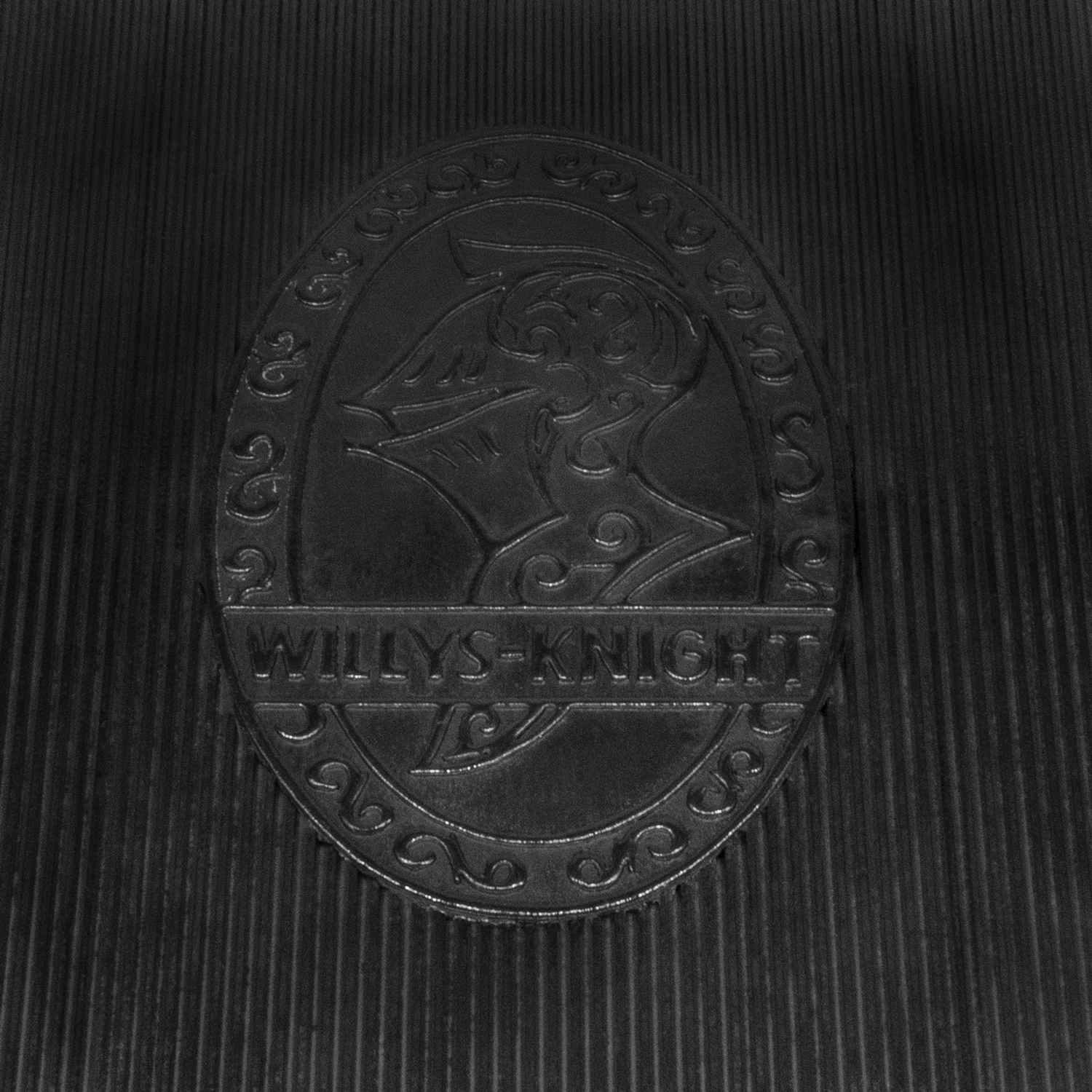 1920 Willys Knight Model 20 Accessory Floor Mat - 12"X17"-AC 51Accessory Floor Mat - made of high quality black rubber with molded original emblem. Also designed to be sewn into new carpets. 12"X17", Each
Why Choose Metro?
For over 100 years, Metro Moulded Parts has been the pinnacle of quality in classic car restoration parts. Our commitment to precision and authenticity in every component ensures a perfect fit and an OEM-level appearance.
- Expert Craftsmanship & Quality: Each part is a testament to our dedication to reliability and perfection, crafted from original designs and thoroughly tested.
- Advanced Technology: We use cutting-edge techniques to create flawless, long-lasting parts that surpass others in performance.
- SuperSoft Sponge – The Ultimate Door Seal: Not only are our door seals 30% softer than competitors', but they're also guaranteed to never leak. They effectively reduce wind and road noise, enhancing your classic car's comfort and driving experience.
- Proudly American: Our parts are a product of American craftsmanship, made in the USA with a spirit of excellence and heritage.
- Unrivaled Warranty: We back our products with a 30-year industry-leading warranty, a testament to our confidence in their quality.
Join us in preserving the legacy of classic cars with parts that are crafted for perfection, not just made.