

Image of 1921 Willys Knight Model 20, Note: These illustrations use artistic license and may differ from actual historical models.
Performance Metrics
Fundamental Metrics
Emotional Appeal
MMP Rating
| Engine Specifications | |
|---|---|
| Engine Options: | Inline 4-cylinder engine |
| Displacement Range: | 3.0L |
| Horsepower Range: | Estimated 20-30 HP |
| Torque: | Not available |
| Compression Ratio: | Not available |
| Ignition System: | Battery and coil |
| Cooling System: | Water-cooled |
| Performance Specifications | |
| 0-60 Time: | Not available |
| 1/4 Mile Time: | Not available |
| Top Speed: | 45-50 mph |
| Transmission and Drive | |
| Drive Type: | Rear-wheel drive |
| Transmission Type: | 3-speed manual |
| Fuel and Efficiency | |
| Fuel System Type: | Carburetor |
| MPG: | Not available |
| Dimensions and Brakes | |
| Brakes: | Mechanical drum brakes |
| Wheelbase: | 112 inches |
| Weight: | Estimated 2500 lbs |
Note: Specifications for classic cars are given to the best of our ability, considering the limited and variant data available.
1921 Willys-Knight Model 20: A Quietly Different Classic
The 1921 Willys-Knight Model 20 tried to make one of the automobile’s noisiest components nearly disappear. Built by Willys-Overland, it used a Knight sleeve-valve engine instead of the conventional poppet-valve arrangement found in most cars of its day. The result was a distinctive early automobile: refined in character, ambitious in engineering, and unusual enough to stand apart from the crowd even a century later.
Willys-Overland was founded by industrialist John North Willys and grew into one of America’s major automobile manufacturers. The company’s Willys-Knight line sat above its more affordable offerings, targeting buyers who wanted a smoother, more prestigious car. The Model 20 was among the smaller, four-cylinder members of that range. Its defining feature was not outright speed, but the quiet operation and smooth delivery promised by its Knight engine.
Here is the intriguing twist: the Model 20’s engine did not use ordinary valves opening and closing in the cylinder head. Instead, sliding sleeves controlled the flow of fuel and exhaust. That design gave the car its reputation for quietness, but it also made the engine more specialized to service than a typical engine of the period.
Model 20 Styling and Cabin Design
The Model 20 wore the upright, purposeful look typical of early-1920s automobiles. Its tall radiator, long hood, separate fenders, running boards, and narrow tires gave it a formal profile. On open models, the exposed cabin and folding canvas top emphasized the car’s touring character. Closed bodies looked more substantial, with upright glass, a high roofline, and a protected passenger compartment.
Inside, the experience depended on body style and specification. Open cars commonly used durable leather upholstery, while closed models could feature cloth or broadcloth trim. A large steering wheel, simple instruments, and straightforward controls reflected the era’s practical approach to driving. Wood trim and carefully finished upholstery helped distinguish more expensive versions, though surviving cars may differ considerably after decades of restoration.
Electric lighting and an electric starting system were part of the modernizing shift underway in the early 1920s, though exact equipment could vary by specification and market. The Model 20 also used a conventional manual transmission and mechanical controls, so it still required more driver involvement than a modern car. Period buyers could choose from open and closed body configurations, including touring and sedan-style forms, with coupe or other enclosed variants appearing in period offerings and market listings. The touring car is among the most recognizable Model 20 shapes today.
Factory color choices were not necessarily identical across every body style or production batch, and a complete, dependable 1921 Model 20 color list is difficult to establish. Dark finishes such as black, deep blue, maroon, and green were common choices across the period. Today, restored examples often wear rich, traditional colors that suit their brass-era-to-vintage transition styling.
Knight Sleeve-Valve Engineering
The Model 20’s most important innovation was its Knight sleeve-valve engine. Rather than relying on poppet valves moving up and down, the engine used sliding sleeves around the pistons. Ports in the sleeves aligned with openings in the cylinder to admit the fuel mixture and release exhaust. The arrangement reduced the sharp mechanical clatter associated with conventional valve gear, giving Willys-Knight cars a reputation for unusually quiet running.
That quietness was a real selling point when many cars sounded mechanically busy. The sleeve-valve design also demonstrated that automakers were exploring alternatives to the standard engine layout, not simply refining it. But the system was not an uncomplicated breakthrough. It required careful lubrication and specialist knowledge, and repairs could be more demanding than work on a conventional engine. The design influenced the identity of the Willys-Knight marque, even though sleeve-valve engines never displaced poppet valves across the wider industry.
In that sense, the Model 20’s legacy is less about a technology every later car adopted and more about a bold engineering detour. It gave buyers a distinctive experience and helped Willys-Overland sell a premium automobile in a competitive market.
1921 Willys-Knight Model 20 Performance
Published specifications vary by source and configuration, but the Model 20 is generally described as having a four-cylinder engine of roughly 3.2 to 3.3 liters, producing about 40 horsepower. It drove through a manual gearbox, typically with three forward speeds. Period performance figures are not as consistent as those for modern cars, so quoted numbers should be treated as estimates rather than laboratory measurements.
A sound Model 20 could likely reach roughly 50 to 60 mph under suitable conditions. A reliable factory 0-to-60-mph figure is not commonly available, and the car’s acceleration would have been modest by modern standards. Reaching 60 mph, if conditions allowed, would take a long time compared with any contemporary vehicle. The car was built for steady touring, not quick launches or high-speed driving.
On the road, the Model 20’s tall stance, narrow tires, and period suspension call for a measured driving style. It can feel composed on a smooth road, but bumps and ruts transmit more movement than a modern car’s suspension would. On winding roads, the driver must account for the car’s weight, steering effort, braking distances, and relatively limited tire grip. The best approach is to look well ahead, make smooth inputs, and leave generous space.
The engine’s signature is its muted mechanical sound, especially compared with a conventional valve engine of the same period. From behind the wheel, the experience is a mix of deliberate gear changes, a large steering wheel, open-air smells and sounds in a touring car, and the steady rhythm of an engine designed to feel refined rather than sporty. It rewards patience and mechanical sympathy.
Living With a Willys-Knight Model 20
Today, the Model 20 is mainly a collector car, parade vehicle, touring-car participant, or museum piece. It is not generally suited to routine modern traffic. Its modest speed, early braking system, exposed bodywork on open models, and need for attentive maintenance make it better for planned drives on quieter roads than for daily commuting.
Maintenance is manageable for an experienced prewar-car enthusiast, but the sleeve-valve engine is not an ideal first project for someone expecting ordinary parts-store repairs. Routine care includes close attention to lubrication, cooling, ignition, fuel delivery, and the condition of the sleeves and related components. A specialist familiar with Knight engines can be especially valuable when diagnosing internal wear or planning a rebuild.
Reliability depends heavily on condition and previous restoration quality. A well-sorted Model 20 can provide enjoyable touring, but neglected examples may need specialized work and hard-to-source parts. Before buying, inspect the engine’s history, confirm that it runs properly when warm, and seek an evaluation from a mechanic who understands sleeve-valve construction. The purchase price is only one part of the ownership budget.
Willys-Knight Model 20 Facts and Myths
The Model 20’s best-known claim to fame is its quiet-running engine, not a speed record or racing victory. Willys-Knight marketed the smoothness and refinement of the sleeve-valve design, making the engine itself a conversation piece. No widely accepted Model 20 production record, endurance achievement, or major historical-event appearance defines the model in the way a famous race win might define a sports car.
There is also no dependable, model-specific production total readily established for the 1921 Model 20. A cautious estimate would put production across its run in the several-thousand range, perhaps roughly 5,000 to 15,000 cars, but that is a broad working estimate rather than a documented factory figure. Surviving examples are far less common than the estimate might suggest because many early cars were scrapped, dismantled, or lost to time.
Its main criticism is inseparable from its main attraction: the sleeve-valve engine is quiet and distinctive, but more complex to maintain than a conventional engine. Buyers should also remember that period braking, steering, and ride quality require realistic expectations. Celebrity ownership stories are not well documented for the Model 20, so its appeal rests more on engineering character and rarity than on famous previous owners.
1921 Willys-Knight Model 20 Values
Values depend strongly on body style, originality, restoration quality, and whether the sleeve-valve engine is complete and running. As a broad current-market estimate in U.S. dollars, a project or incomplete example might fall around $5,000 to $15,000. A usable, driver-quality car may bring roughly $15,000 to $30,000, while a high-quality restoration or especially desirable body style could reach approximately $30,000 to $45,000 or more.
These are general estimates, not a substitute for comparing recent sales of similar cars. A professionally restored example can cost far more to create than it will sell for, particularly when specialized engine work is required. The Model 20 is a niche collectible, so the right buyer, documentation, and mechanical condition can have a major effect on price.
Values are best described as selective rather than rapidly rising. Well-restored early automobiles with unusual engineering can attract steady interest, but the narrow buyer pool and restoration costs can limit appreciation. For many owners, the reward is the car’s character and historic interest, not the expectation of a quick financial return.
Why the Model 20 Still Matters
The 1921 Willys-Knight Model 20 combined dignified early-1920s styling with one of the period’s most unusual engine designs. Its four-cylinder power, quiet sleeve-valve operation, and touring-car manners made it a distinctive alternative to more conventional automobiles. It was not a performance machine, and its specialized engine asks more of an owner than a typical vintage car, but those very traits make it memorable.
More than a century later, the Model 20 stands as a reminder that automotive history was shaped by experiments as much as by technologies that became permanent. Its quiet engine may be the first thing you notice, but its lasting appeal is the way it captures an era when manufacturers were still willing to rethink what an automobile could be.
1921 Willys Knight Model 20 Catalog of Parts
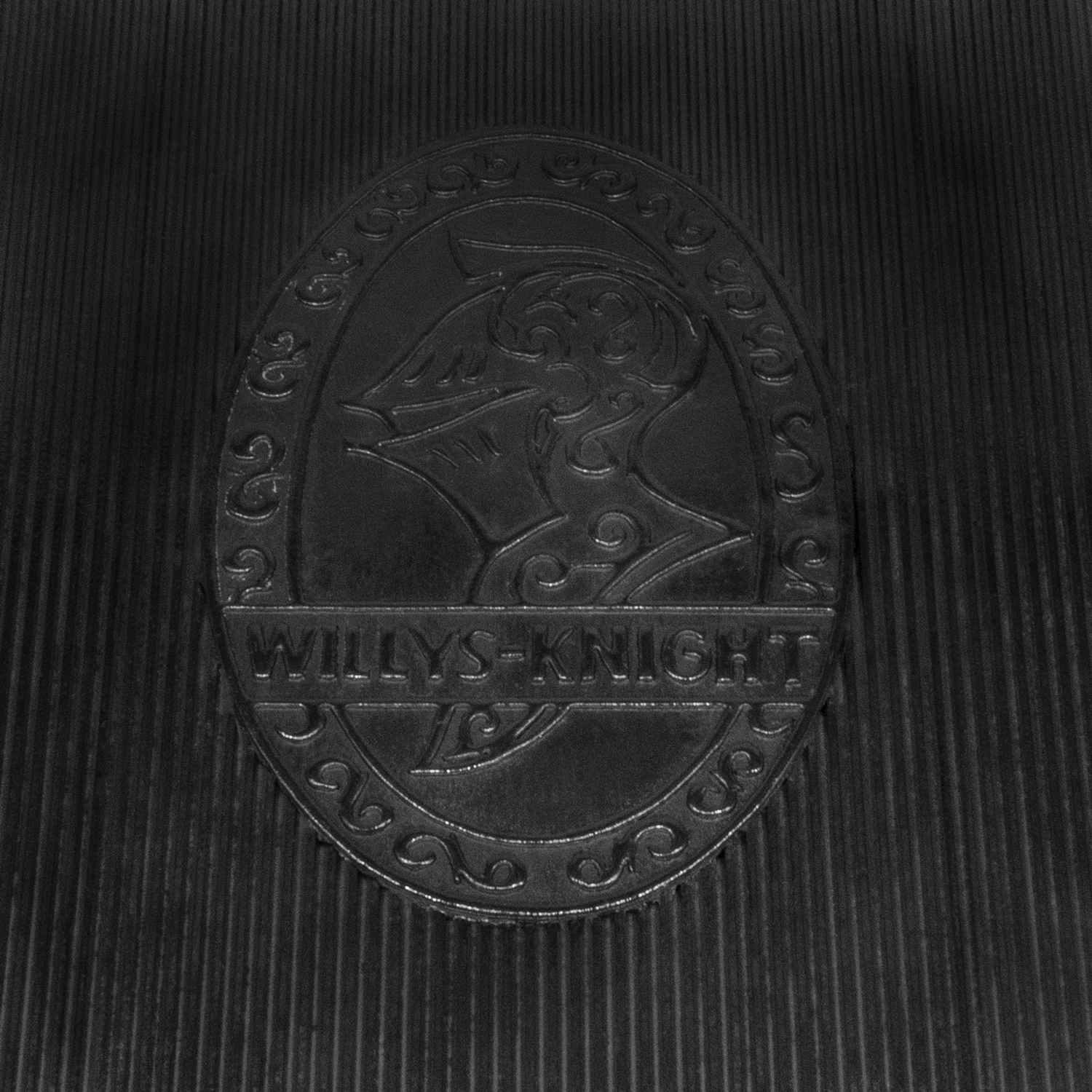 1921 Willys Knight Model 20 Accessory Floor Mat - 12"X17"-AC 51Accessory Floor Mat - made of high quality black rubber with molded original emblem. Also designed to be sewn into new carpets. 12"X17", Each
Why Choose Metro?
For over 100 years, Metro Moulded Parts has been the pinnacle of quality in classic car restoration parts. Our commitment to precision and authenticity in every component ensures a perfect fit and an OEM-level appearance.
- Expert Craftsmanship & Quality: Each part is a testament to our dedication to reliability and perfection, crafted from original designs and thoroughly tested.
- Advanced Technology: We use cutting-edge techniques to create flawless, long-lasting parts that surpass others in performance.
- SuperSoft Sponge – The Ultimate Door Seal: Not only are our door seals 30% softer than competitors', but they're also guaranteed to never leak. They effectively reduce wind and road noise, enhancing your classic car's comfort and driving experience.
- Proudly American: Our parts are a product of American craftsmanship, made in the USA with a spirit of excellence and heritage.
- Unrivaled Warranty: We back our products with a 30-year industry-leading warranty, a testament to our confidence in their quality.
Join us in preserving the legacy of classic cars with parts that are crafted for perfection, not just made.