

Image of 1922 Willys Knight Model 20, Note: These illustrations use artistic license and may differ from actual historical models.
Performance Metrics
Fundamental Metrics
Emotional Appeal
MMP Rating
| Engine Specifications | |
|---|---|
| Engine Options: | Inline 4-cylinder engine |
| Displacement Range: | 2.7L |
| Horsepower Range: | Estimated 20-30 HP |
| Torque: | Not available |
| Compression Ratio: | Not available |
| Ignition System: | Battery and coil |
| Cooling System: | Water-cooled |
| Performance Specifications | |
| 0-60 Time: | Not available |
| 1/4 Mile Time: | Not available |
| Top Speed: | 45 mph |
| Transmission and Drive | |
| Drive Type: | Rear-wheel drive |
| Transmission Type: | 3-speed manual |
| Fuel and Efficiency | |
| Fuel System Type: | Carburetor |
| MPG: | Not available |
| Dimensions and Brakes | |
| Brakes: | Mechanical drum brakes |
| Wheelbase: | 112 inches |
| Weight: | Estimated 2,400 lbs |
Note: Specifications for classic cars are given to the best of our ability, considering the limited and variant data available.
1922 Willys-Knight Model 20: A Quietly Different Classic
The 1922 Willys-Knight Model 20 made its case with a sound many motorists of the day barely expected from a car: a remarkably subdued engine. Built by Willys-Overland in Toledo, Ohio, it used a Knight sleeve-valve powerplant rather than the conventional poppet-valve engine found in most cars of its era. That unusual design gave the Model 20 a distinctive place in the crowded 1920s market, where buyers wanted refinement but still had to contend with rough roads and developing automotive technology.
Willys-Overland was one of America’s major early automakers. The company produced the more affordable Overland as well as the better-appointed Willys-Knight line, which John North Willys promoted as a smoother, more refined alternative. The Model 20 sat toward the accessible end of the Willys-Knight range, bringing the marque’s signature engine technology to buyers who did not need a large, high-priced luxury car.
Its most intriguing feature was not a special body or a racing pedigree, but what was happening inside the engine. Instead of opening and closing conventional valves, sliding sleeves in each cylinder controlled the flow of fuel mixture and exhaust. The result was an engine known for quiet, smooth operation, though it also demanded lubrication and maintenance practices that differed from those of an ordinary engine.
Exterior Design and Cabin Details
The Model 20 wore the upright, purposeful proportions typical of an early-1920s automobile. A tall radiator and long, flat hood gave the front end a formal look, while separate fenders curved over narrow tires and running boards linked the front and rear of the body. Large headlamps, exposed hardware, and a slim windshield reinforced its pre-streamlined character. It was designed to look substantial and respectable rather than sleek by modern standards.
Open body styles offered the most direct connection to the road. Touring cars had seating for several passengers and a folding fabric top, while roadsters put a sportier emphasis on the driver and front passenger. Closed bodies, including coupe and sedan variants depending on the catalog and market, provided better shelter from weather. Body availability could vary, so a particular surviving car should be judged by its own factory literature and build details rather than by assuming every style was offered in every configuration.
Materials reflected the car’s position as a refined but attainable automobile. Open cars commonly used leather upholstery, while closed models could have cloth or broadcloth seating. Painted metal, finished wood, and straightforward trim provided a practical cabin rather than the elaborate ornamentation of top-tier luxury cars. The driver faced large, legible instruments and a relatively simple control layout, though operating an early car still required more physical involvement than driving a modern vehicle.
Paint choices were not necessarily identical across every body style or model year. Period buyers could encounter dark, formal colors such as black, deep blue, maroon, and gray, with exact availability dependent on the body and factory offering. Black was a common practical choice, while richer dark colors suited the Model 20’s dignified appearance. On surviving cars, an older repaint may obscure the original finish, so restoration decisions are best guided by paint traces and period documentation.
Sleeve-Valve Technology Explained
The Model 20’s defining innovation was its Knight sleeve-valve engine. In a conventional engine, poppet valves move in and out of the cylinder head. In the Knight system, a sleeve moved within the cylinder, and openings in the sleeve lined up with ports to admit the fuel mixture and release exhaust gases. With fewer familiar valve-train sounds, the engine could run notably quietly and smoothly.
Period specifications vary, but the Model 20 is generally associated with a four-cylinder engine of roughly 170 to 180 cubic inches and a nominal output in the neighborhood of 40 horsepower. It sent power through a manual transmission, typically a three-speed unit, to the rear wheels. These figures describe a car built for composed road travel, not quick acceleration or high-speed competition.
The technology had a trade-off. Sleeve-valve engines relied on careful lubrication, and oil consumption could be higher than owners expected from a conventional engine. The sleeves and related components also called for specialist knowledge when worn. The design was a genuine engineering alternative, but it was not a maintenance-free shortcut.
Why the Model 20 Mattered
The Willys-Knight Model 20 was part of a broader early-automotive search for quieter, smoother engines. Its sleeve-valve design set it apart from the mass of cars using conventional valve gear and helped give Willys-Knight a clear identity. Buyers could choose a car with a noticeably different mechanical character without stepping all the way up to the most expensive luxury marques.
The Model 20 also illustrates a turning point in the industry. Cars were becoming more usable for ordinary travel, but comfort, reliability, and ease of service were still active engineering challenges. The sleeve-valve concept promised refinement, yet its upkeep requirements helped limit its long-term appeal as manufacturing methods and conventional engines improved. Its lasting influence is therefore less about a design copied by every automaker and more about the range of ideas manufacturers explored while making the automobile quieter and more civilized.
Willys-Knight’s reputation for smoothness became an important part of the marque’s identity. The Model 20 carried that reputation into a smaller and more approachable package. It was not the only sleeve-valve car of its time, but it remains one of the best-known American examples of the system.
Road Performance and Driving Feel
Exact performance figures for a 1922 Model 20 are difficult to pin down because period testing was not standardized and surviving cars vary in condition, gearing, tires, and body style. A reasonable estimate for a healthy example is a top speed in the range of about 50 to 60 mph. Reaching 60 mph would depend heavily on the car’s condition and the road; it was not a machine built for brisk modern-style acceleration. A rough 0-to-60 estimate might be around 30 to 45 seconds, and some cars may take longer or not comfortably reach 60 at all.
On a smooth, open road, the Model 20 would feel steady and deliberate. Its engine’s quietness could make the car seem more refined than its age suggests, but the driver would still hear wind, tire, and body noise. The manual gearbox required attentive shifts, and the steering and braking systems demanded anticipation. This was not a car for late braking or sudden lane changes.
On bumps, the tall tires and period suspension helped absorb some road imperfections, but the body could pitch and sway more than a modern driver expects. Narrow tires and relatively basic chassis design also meant that winding roads called for measured speeds and smooth steering inputs. The car’s strongest impression was likely its relaxed rhythm: a gentle engine note, a steady mechanical hum, and the need to plan ahead rather than hurry.
Living With a Willys-Knight
In its own day, a Model 20 could serve as family transportation, a touring car, or a respectable town car, depending on its body style. Today, it is primarily a collector vehicle, used for local shows, club events, tours, and occasional short drives. Its historic design makes it an appealing conversation piece, but its age and specialized engine mean it is less suitable as an everyday driver than a more common prewar car.
Maintenance is manageable for a mechanically experienced owner who has access to the right parts and technical guidance. Routine work still includes attention to ignition, fuel delivery, cooling, chassis lubrication, tires, and brakes. The sleeve-valve engine adds a specialist dimension: correct oiling is essential, and internal repairs may require a shop familiar with Knight engines. An ordinary general repair garage may not have the knowledge or components needed for a major overhaul.
Reliability depends greatly on restoration quality and how the car has been stored and operated. A properly maintained example can be driven, but owners should monitor oil use, keep up with lubrication, and avoid treating the car like a modern vehicle. Parts availability is more limited than for popular Ford models of the same period, so joining a marque club or connecting with experienced Willys-Knight owners can make ownership far easier.
Willys-Knight Facts and Myths
The sleeve-valve engine is often described as unusually quiet for its time, and that is the feature most closely associated with Willys-Knight. The design was not exclusive to Willys. Other manufacturers also used Knight-type engines, including several European luxury automakers. Willys-Overland’s achievement was making the technology a recognizable part of an American car line.
The Model 20 is not widely known for a major speed record, racing victory, or single headline-making historical event. Its significance is more representative: it shows how a major American manufacturer tried to distinguish its products through a different kind of engine technology. The model’s appeal today comes from that engineering story and from the comparatively uncommon sight of a Willys-Knight on the road.
Common criticisms are practical rather than stylistic. Sleeve-valve engines can use considerable oil, specialist repairs can be costly, and the car’s pace and braking feel modest by modern standards. Parts and qualified service are not as easy to find as they are for more popular early classics. Those drawbacks are real, but they are also part of what makes the Model 20 an engaging piece of automotive history rather than simply an old car with familiar mechanicals.
Collector Value and Rarity
There is no dependable, widely accepted production total for the 1922 Model 20 alone. Based on its position in the Willys-Knight range and the scale of production at the time, a broad estimate of a few thousand cars for the model year is reasonable, but it should be treated as an informed estimate rather than a confirmed factory figure. Surviving examples are uncommon, and cars with complete histories, correct components, and documented body styles are harder to find than a simple production estimate might suggest.
Condition, body style, completeness, and the quality of any engine work drive value. As a general current-market guide, a project car may fall around $5,000 to $12,000, a usable but imperfect example around $15,000 to $30,000, and a well-restored car around $30,000 to $55,000 or more. These are broad estimates, not guaranteed sale prices. A particularly attractive body style, exceptional restoration, or rare documented specification can command more, while a car needing sleeve-valve engine work may be worth substantially less.
Values for specialist prewar cars tend to be selective. The Model 20 has a strong historical story, but its smaller buyer pool and maintenance demands can restrain prices compared with more familiar classics. In nominal terms, good examples may hold value or appreciate gradually, while inflation-adjusted performance is less certain. Buyers should focus on condition and mechanical inspection rather than assuming rarity alone guarantees a rising price.
A Distinctive Chapter in Willys History
The 1922 Willys-Knight Model 20 combined upright early-automobile styling, practical body choices, and an engine design that pursued quietness in an unconventional way. It was not fast by modern standards, and its sleeve-valve powerplant asks more of an owner than a conventional engine, but those very qualities make it a compelling classic.
For collectors, the Model 20 is a chance to experience an alternative path in automotive engineering, from the measured pace of its driving to the soft mechanical character of its engine. It stands as a reminder that the history of the automobile was shaped not only by the ideas that won out, but also by bold experiments that made the journey more interesting.
1922 Willys Knight Model 20 Catalog of Parts
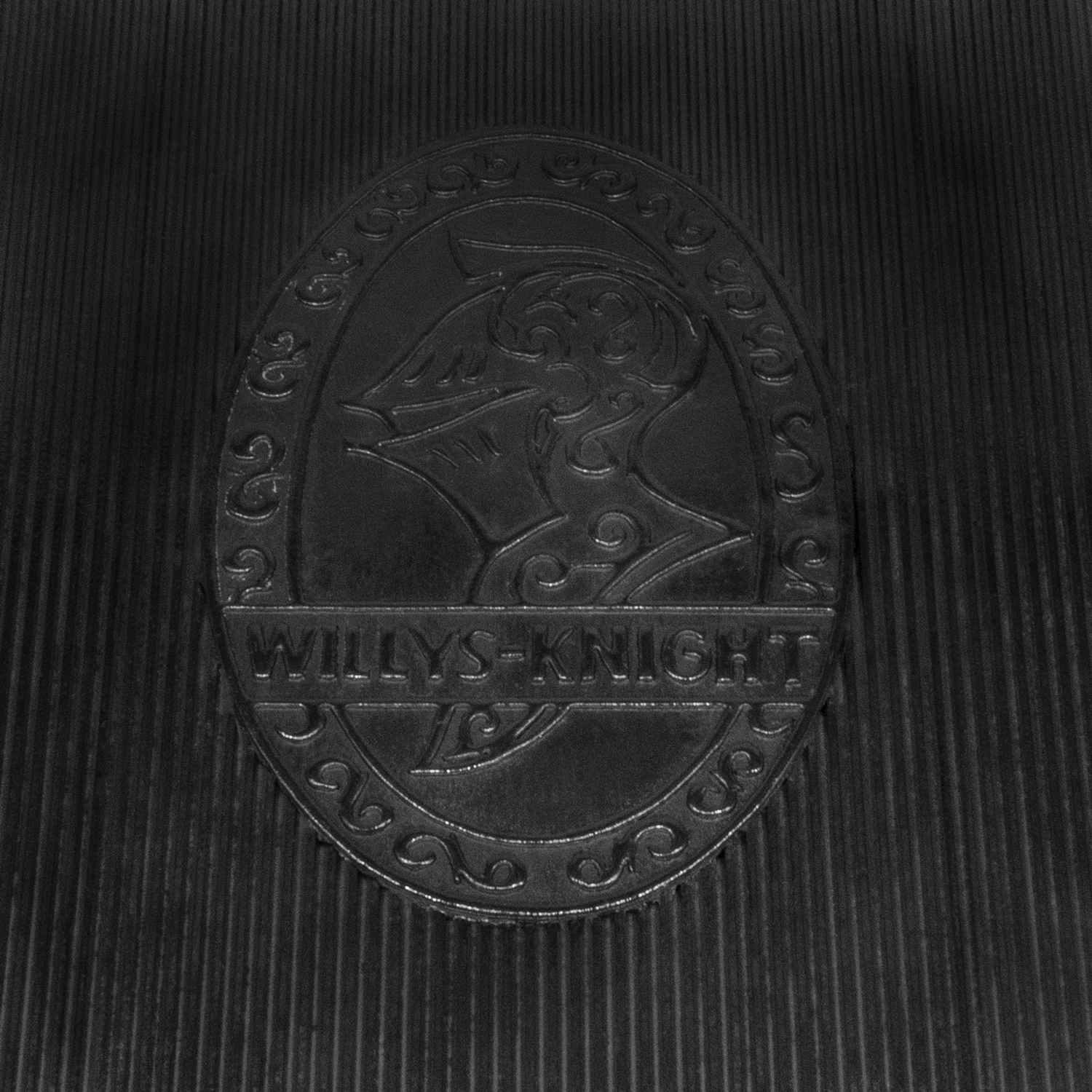 1922 Willys Knight Model 20 Accessory Floor Mat - 12"X17"-AC 51Accessory Floor Mat - made of high quality black rubber with molded original emblem. Also designed to be sewn into new carpets. 12"X17", Each
Why Choose Metro?
For over 100 years, Metro Moulded Parts has been the pinnacle of quality in classic car restoration parts. Our commitment to precision and authenticity in every component ensures a perfect fit and an OEM-level appearance.
- Expert Craftsmanship & Quality: Each part is a testament to our dedication to reliability and perfection, crafted from original designs and thoroughly tested.
- Advanced Technology: We use cutting-edge techniques to create flawless, long-lasting parts that surpass others in performance.
- SuperSoft Sponge – The Ultimate Door Seal: Not only are our door seals 30% softer than competitors', but they're also guaranteed to never leak. They effectively reduce wind and road noise, enhancing your classic car's comfort and driving experience.
- Proudly American: Our parts are a product of American craftsmanship, made in the USA with a spirit of excellence and heritage.
- Unrivaled Warranty: We back our products with a 30-year industry-leading warranty, a testament to our confidence in their quality.
Join us in preserving the legacy of classic cars with parts that are crafted for perfection, not just made.