

Image of 1925 Willys Knight Model 65, Note: These illustrations use artistic license and may differ from actual historical models.
Performance Metrics
Fundamental Metrics
Emotional Appeal
MMP Rating
| Engine Specifications | |
|---|---|
| Engine: | Inline 6-cylinder engine |
| Displacement: | 3.3L |
| Horsepower: | Estimated 50-60 HP |
| Torque: | Not available |
| Compression Ratio: | Not available |
| Ignition System: | Battery and coil |
| Cooling System: | Water-cooled |
| Performance Specifications | |
| 0-60 Time: | Not available |
| 1/4 Mile Time: | Not available |
| Top Speed: | 50-60 mph |
| Transmission and Drive | |
| Drive Type: | Rear-wheel drive |
| Transmission Type: | 3-speed manual |
| Fuel and Efficiency | |
| Fuel System Type: | Carburetor |
| MPG: | Not available |
| Dimensions and Brakes | |
| Brakes: | Mechanical drum brakes |
| Wheelbase: | 112 inches |
| Weight: | Estimated 2,800 lbs |
Note: Specifications for classic cars are given to the best of our ability, considering the limited and variant data available.
1925 Willys-Knight Model 65: A Quietly Unusual Classic
The 1925 Willys-Knight Model 65 made its impression not with a roar, but with an unusually smooth, quiet engine. Built by Willys-Overland, one of the major American automakers of the early twentieth century, the Model 65 combined substantial touring-car proportions with Knight sleeve-valve technology, a design that set it apart from the more familiar poppet-valve engines of its day.
Willys-Overland had grown rapidly under industrialist John North Willys, and its Willys-Knight line served buyers seeking a more refined car than the company’s mass-market Overland models. The Model 65 belonged to a period when manufacturers were competing through engineering as well as styling. Its distinctive engine was the headline feature: instead of conventional valves opening and closing in the cylinder head, sliding sleeves controlled the flow of fuel and exhaust.
That unusual arrangement gave the Willys-Knight a reputation for quiet operation. It also came with a maintenance trade-off, since sleeve-valve engines could consume oil and required knowledgeable servicing. The Model 65 is therefore both a handsome example of 1920s motoring and a reminder that automotive innovation can be rewarding without being simple.
Long Lines and Coachbuilt Character
The Model 65 has the upright, formal stance associated with a substantial 1920s automobile. Its tall radiator, prominent hood, separate fenders, running boards, and exposed lamps give it a purposeful profile, while large wire wheels and narrow tires emphasize its period-correct proportions. Details varied by body style and equipment, but the overall effect is elegant rather than sporty.
Inside, the cabin was designed for comfort and presentation. Depending on the body and trim, occupants could find leather or durable fabric upholstery, polished wood accents, and a broad, upright dashboard with clear, period-style instruments. The seating was generous by the standards of the time, and enclosed models offered welcome shelter from dust, rain, and cold. Materials and finishes could vary between factory bodies, coachwork, and individual cars, so surviving examples are not all trimmed alike.
Electric starting and lighting were important conveniences on a car of this era, when many motorists still associated motoring with hand cranks and kerosene lamps. The Model 65 also used a conventional manual transmission and mechanical controls, so it remains a hands-on machine by modern standards. Its sleeve-valve engine, rather than electronic equipment or elaborate accessories, was its most distinctive piece of engineering.
Buyers could choose from several open and closed body styles, with availability dependent on the sales offering and production schedule. Touring cars and roadsters suited open-air motoring, while coupes and sedans offered more protection and a more formal appearance. The four-door sedan is among the most recognizable choices today because its enclosed body displays the Model 65’s full, dignified profile. Factory color choices could vary by body and year; dark, conservative finishes were common on period cars, but a surviving example’s original paint specification should be checked against its own records rather than assumed.
The Sleeve-Valve Difference
The Model 65’s defining feature was its Knight-type sleeve-valve engine. In a conventional poppet-valve engine, mushroom-shaped valves open and close to let the fuel-air mixture in and exhaust gases out. In a sleeve-valve design, a pair of moving sleeves around the piston shifts openings into alignment with the cylinder’s intake and exhaust passages.
The result could be notably smooth and quiet running, qualities that suited a refined touring car. The design also avoided some of the familiar valve noise of the period. But it was mechanically more specialized than a standard engine, and oil use and wear in the sleeves could become concerns. This blend of refinement and complexity is what makes the Willys-Knight interesting to engineers and collectors alike.
Willys-Knight was part of a wider international interest in sleeve-valve engines. Other manufacturers, including luxury-car makers in Europe, explored similar ideas. The Model 65 did not make the sleeve valve the industry standard, but it brought the technology to American buyers at a time when manufacturers were actively searching for quieter, smoother engines. Its lasting importance lies less in changing the direction of mass production than in showing how varied early automotive engineering could be.
Road Manners and Period Performance
The Model 65 is generally associated with a six-cylinder sleeve-valve engine of roughly 246 cubic inches and about 60 horsepower, though specifications should be checked against the particular car and its reference material. Contemporary ratings and equipment could differ, and the condition of a century-old engine has a major effect on real-world performance.
There is no dependable, widely cited factory 0-to-60 mph figure for the Model 65. A reasonable modern estimate for a sound, correctly tuned example is roughly 25 to 35 seconds, but that should be treated as an approximation, not a verified test result. Top speed is often estimated in the neighborhood of 60 to 65 mph. In practice, a car this old is best driven at a pace that suits its brakes, tires, gearing, and mechanical condition, rather than pushed to a theoretical maximum.
On the road, the engine’s quietness is a major part of the experience. Instead of a sharp, busy exhaust note, a well-running sleeve-valve car tends to feel smooth and subdued. The tall driving position, large steering wheel, manual gearbox, and period braking system demand more attention than a modern car. Its long wheelbase can help it settle over gentle undulations, but narrow tires, a high center of gravity, and vintage suspension mean that rough roads and tight bends call for a measured pace. Crosswinds can also be more noticeable in a tall-bodied sedan.
Owning and Maintaining a Model 65
Today, the Model 65 is best suited to touring, club events, museum displays, and careful local drives. It is not an ideal everyday commuter. Modern traffic moves faster, replacement parts are not as readily available as they are for more common classics, and many examples deserve preservation rather than constant use.
Maintenance is manageable for an experienced vintage-car owner, but the sleeve-valve engine makes specialist knowledge especially valuable. Buyers should look for evidence of regular oil attention, correct lubrication, and competent engine work. A pre-purchase inspection should cover compression and running condition, oil consumption, cooling, transmission, brakes, steering, wheel and tire condition, and the availability of model-specific parts. A basic repair may be straightforward for a skilled owner, but internal engine work is not a casual weekend job if the mechanic has never encountered a sleeve-valve design.
Reliability depends heavily on condition and upkeep. A restored, well-sorted car can be an enjoyable tourer, while a neglected engine may need costly specialist attention. Before buying, it is wise to speak with a marque club or mechanic familiar with Willys-Knight cars and to confirm that the car is complete. Missing specialized components can be harder to replace than ordinary wear items.
Notable Details and Common Complaints
The Model 65’s most memorable talking point is its engine. Many visitors expect an old car to be noisy and mechanically familiar, then discover that the Willys-Knight’s quiet sleeve-valve design is quite different from the engines they know. It is an excellent conversation starter at a classic-car gathering, especially when the owner can explain how the moving sleeves work.
There is no widely recognized speed, endurance, or mass-production record associated specifically with the 1925 Model 65. Nor is it chiefly remembered for a famous competition victory or a single celebrity owner. Its appeal is more technical and historical: it represents a serious American attempt to make a smoother, quieter touring car using an alternative engine design.
The common criticisms are practical. Sleeve-valve engines can use more oil than owners expect, repairs require specialized knowledge, and parts availability can be challenging. The car’s size and period controls also make it less nimble and less convenient than a modern vehicle. For enthusiasts who value originality and engineering character, those drawbacks are part of the ownership challenge, not reasons to overlook the car.
Collector Values and Availability
Exact production figures for the 1925 Model 65 are not consistently documented in the sources most commonly available to collectors. As a working estimate rather than a confirmed factory total, it is reasonable to think in terms of several thousand Model 65 cars produced, not tens of thousands. The number surviving in complete, usable condition is much smaller, and availability varies by body style and region.
Values depend sharply on completeness, mechanical condition, restoration quality, and body style. As a broad current-market estimate, a project car might fall around $5,000 to $15,000, a usable or partially restored example around $15,000 to $35,000, and a strong, well-restored car around $35,000 to $60,000 or more. Exceptional examples with documented history or rare coachwork can exceed that range, while cars needing major sleeve-valve engine work may sell for less. These are general guide figures, not an appraisal, and actual sale prices can differ substantially.
Like many prewar classics, the Model 65 has a specialized collector audience. Its value is supported by its unusual engineering and period presence, but the limited pool of buyers and the cost of expert repairs can constrain prices. Well-documented, correctly restored cars are likely to hold interest better than incomplete projects. In broad terms, desirable examples have potential to appreciate gradually, but condition and provenance matter more than short-term market movement.
Why the Willys-Knight Still Matters
The 1925 Willys-Knight Model 65 is a substantial American touring car with an uncommon technical story. Its formal styling, roomy cabin, and notably quiet sleeve-valve engine distinguish it from more familiar classics, while its maintenance demands reveal the compromises behind that refinement.
For collectors, it offers more than nostalgic looks. It is a rolling example of an era when engineers were willing to challenge convention in pursuit of a smoother ride and a quieter engine. A Model 65 may ask for specialist care, but when its sleeves glide and its straight-six settles into an even rhythm, it makes a compelling case for remembering the Willys-Knight as one of the most distinctive cars of the 1920s.
1925 Willys Knight Model 65 Catalog of Parts
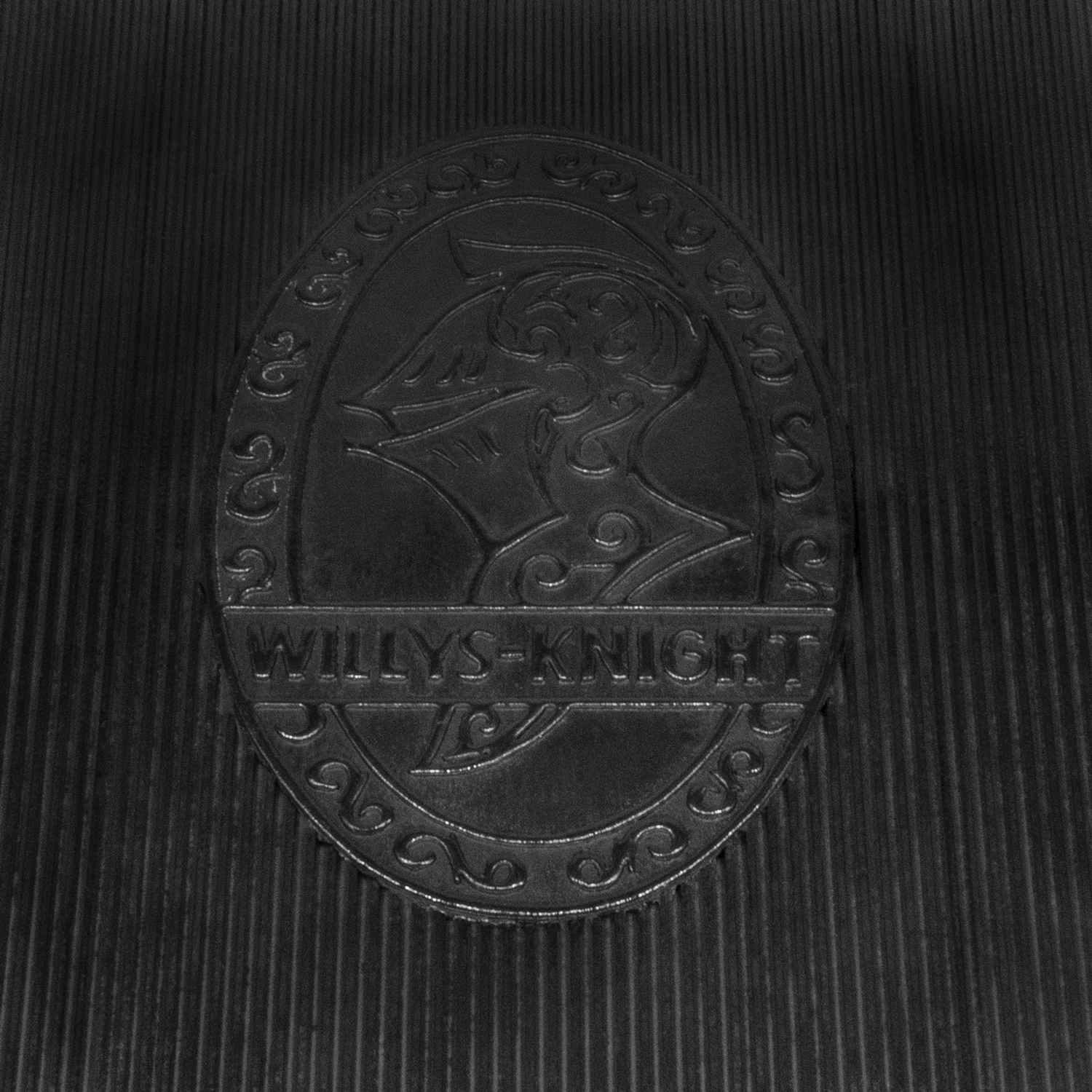 1925 Willys Knight Model 65 Accessory Floor Mat - 12"X17"-AC 51Accessory Floor Mat - made of high quality black rubber with molded original emblem. Also designed to be sewn into new carpets. 12"X17", Each
Why Choose Metro?
For over 100 years, Metro Moulded Parts has been the pinnacle of quality in classic car restoration parts. Our commitment to precision and authenticity in every component ensures a perfect fit and an OEM-level appearance.
- Expert Craftsmanship & Quality: Each part is a testament to our dedication to reliability and perfection, crafted from original designs and thoroughly tested.
- Advanced Technology: We use cutting-edge techniques to create flawless, long-lasting parts that surpass others in performance.
- SuperSoft Sponge – The Ultimate Door Seal: Not only are our door seals 30% softer than competitors', but they're also guaranteed to never leak. They effectively reduce wind and road noise, enhancing your classic car's comfort and driving experience.
- Proudly American: Our parts are a product of American craftsmanship, made in the USA with a spirit of excellence and heritage.
- Unrivaled Warranty: We back our products with a 30-year industry-leading warranty, a testament to our confidence in their quality.
Join us in preserving the legacy of classic cars with parts that are crafted for perfection, not just made.