

Image of 1925 Willys Knight Model 66, Note: These illustrations use artistic license and may differ from actual historical models.
Performance Metrics
Fundamental Metrics
Emotional Appeal
MMP Rating
| Engine Specifications | |
|---|---|
| Engine Options: | Inline 6-cylinder |
| Displacement Range: | 3.3L |
| Horsepower Range: | Estimated 50-60 HP |
| Torque: | Not available |
| Compression Ratio: | Not available |
| Ignition System: | Battery and coil |
| Cooling System: | Water-cooled |
| Performance Specifications | |
| 0-60 Time: | Not available |
| 1/4 Mile Time: | Not available |
| Top Speed: | 60 mph |
| Transmission and Drive | |
| Drive Type: | Rear-wheel drive |
| Transmission Type: | 3-speed manual |
| Fuel and Efficiency | |
| Fuel System Type: | Carburetor |
| MPG: | Not available |
| Dimensions and Brakes | |
| Brakes: | Mechanical drum brakes |
| Wheelbase: | 130 inches |
| Weight: | Estimated 3500 lbs |
Note: Specifications for classic cars are given to the best of our ability, considering the limited and variant data available.
1925 Willys-Knight Model 66: A Quietly Unusual Classic
The 1925 Willys-Knight Model 66 did away with the familiar poppet valves found in most engines of its day, giving it an unusually quiet, smooth-running character. Built by Willys-Overland in Toledo, Ohio, it combined substantial American-car proportions with Charles Knight’s distinctive sleeve-valve technology. It was a premium automobile from a manufacturer better known for practical, affordable cars, and it offered a very different route to refinement.
The Model 66 belongs to the Willys-Knight line created by industrialist John North Willys and powered by an engine design developed by Charles Yale Knight. The marque was aimed above Willys-Overland’s mass-market offerings. Its signature engineering feature was also its most intriguing one: instead of conventional valves opening and closing in the cylinder head, sliding sleeves around the pistons controlled the flow of fuel and exhaust gases. The result was notably quiet operation, though the system demanded careful lubrication and specialized maintenance.
In the mid-1920s, American motorists could choose from a rapidly expanding range of cars, and closed bodies were becoming more attainable. The Model 66 sat in the more upscale part of that market, competing on smoothness, equipment, and appearance rather than bargain pricing. Its sleeve-valve engine made it a mechanical curiosity even when new, and it remains one of the most distinctive features of the car today.
Elegant Lines and Period Comfort
The Model 66 had the upright, formal look typical of a substantial 1920s automobile. A tall radiator and narrow vertical grille anchored the front, while a long hood gave the car a dignified profile. Separate fenders swept around the wheels, and running boards connected the front and rear sections of the body. Depending on body style and equipment, details such as headlamps, cowl lamps, wheel type, and top treatment could vary.
Open versions showed off the car’s long hood and graceful proportions especially well. Touring cars and roadsters usually had folding fabric tops, exposed seating, and side curtains for weather protection. Closed models had a more formal presence, with upright windows and a fully enclosed passenger compartment. The exact body lineup could vary by model year and catalog, but touring, roadster, coupe, and sedan forms are associated with the Model 66 range. Touring models were among the most recognizable choices, while sedans appealed to buyers seeking greater weather protection and privacy.
Interiors were finished to suit the car’s upscale positioning. Open cars typically used leather upholstery, while closed bodies could feature fabric or mohair-style trim. Wood framing supported the body, and polished wood details might appear inside closed cars. The cabin was spacious by the standards of the day, but its furnishings were functional rather than lavish by modern luxury-car standards. Instruments were generally straightforward, with a period dashboard layout and controls that required more driver involvement than a modern car.
Paint choices depended on body style, production timing, and customer specification. Dark blues, greens, maroons, and black were all characteristic period colors, often paired with contrasting trim or pinstriping. There is no single color combination that defines every Model 66, so the most authentic choice for a restoration is usually guided by factory records, surviving paint evidence, or documentation tied to that specific car.
Sleeve-Valve Engineering Explained
The Model 66’s defining technology was its Knight sleeve-valve engine. Thin sleeves moved within the cylinders, with ports in the sleeves aligning to admit the fuel-air mixture and release exhaust. Because the engine did not rely on the familiar opening and closing of conventional poppet valves, it could run with a notably subdued mechanical sound. That quietness was a major selling point in an era when many engines were noisy and rough by modern standards.
Contemporary specifications vary across references and configurations, but the Model 66 is generally associated with a six-cylinder engine of roughly 260 cubic inches and output in the neighborhood of 60 to 65 horsepower. Treat those figures as approximate rather than universal: ratings and equipment could differ, and surviving cars may have been modified over the decades. The car also used the period’s electrical and mechanical systems, including electric starting and lighting. Some specifications list four-wheel mechanical brakes, but equipment should be verified against the individual car.
The sleeve-valve layout was ingenious, but it was not a simple upgrade over conventional valves. Its sliding parts needed dependable lubrication, and oil use could be higher than in a well-maintained poppet-valve engine. The design also made the Willys-Knight more specialized to service. It offered a compelling kind of refinement, but it required owners and mechanics to understand its particular needs.
Why the Model 66 Matters
The Model 66 illustrates how varied automotive engineering was before the industry settled around the conventional overhead- and side-valve layouts that became dominant. Sleeve-valve engines were not exclusive to Willys-Knight, but Willys-Overland made the technology a central part of its identity. The company used the quiet-running engine to distinguish its higher-priced cars from ordinary six-cylinder competitors.
That distinction was meaningful, but it did not make sleeve valves the industry standard. As manufacturing methods improved and conventional engines became smoother, cheaper, and easier to maintain, the sleeve-valve system lost its commercial advantage. Willys-Knight’s importance is therefore less about shaping the long-term architecture of the modern engine and more about preserving a fascinating alternative from an inventive period in automotive history.
The Model 66 also reflects a broader change in American motoring. Buyers increasingly expected more comfort, more enclosed body styles, and better equipment. The car’s combination of a smooth six-cylinder engine and substantial bodywork suited that move toward touring in greater comfort. Its lasting appeal comes from the way it brings together familiar 1920s styling and a genuinely unusual mechanical layout.
Road Manners, Speed, and Driving Feel
A Model 66 in sound condition was built for steady road travel, not modern traffic. With roughly 60 to 65 horsepower, a heavy chassis, and period gearing, it could cruise comfortably at sensible speeds for its time. A top speed around 60 mph is a reasonable general estimate for a properly running example, though gearing, body style, engine condition, tires, and road conditions all matter. It is not a speed figure to test casually in a century-old car.
There is no dependable, standardized 0-to-60 mph figure for the 1925 Model 66. Based on its approximate power and weight, acceleration to 60 mph would likely take well over 25 seconds, and a heavily loaded or poorly tuned car might struggle to reach that speed at all. The more useful measure is how confidently the car can maintain a period-appropriate cruising pace.
On rough roads, the Model 66’s long wheelbase and substantial chassis help soften sharp bumps, though its suspension and tires cannot match modern ride control. Steering is manual, so low-speed maneuvering takes more effort, especially in a large-bodied sedan. On winding roads, drivers need to plan ahead: the car’s size, narrow tires, high seating position, and period brakes reward smooth, deliberate inputs rather than quick corrections.
Behind the wheel, the sleeve-valve engine’s subdued note is part of the appeal. Instead of the sharper mechanical clatter associated with many contemporary engines, a well-adjusted example tends to sound softer and more even. The ride is gently floating by modern standards, and the driver remains closely involved through the steering, clutch, gear changes, and braking. It feels less like a fast old car than a composed touring machine that asks to be driven with patience.
Living With a Willys-Knight
Today, a Model 66 is best suited to touring events, local shows, museum displays, and occasional pleasure drives. It can be driven on the road, but it is not an ideal daily commuter. Modern traffic moves faster, drivers expect stronger braking, and the car’s lighting, tires, and safety equipment reflect another era. A well-restored example can be enjoyable on appropriate roads when driven with care.
Maintenance is manageable for an experienced vintage-car owner, but the sleeve-valve engine makes this a more specialized proposition than a common 1920s Ford or Chevrolet. Routine attention to lubrication, cooling, ignition, fuel delivery, and brakes is essential. Before buying, ask about engine work and oil consumption, and find out whether a mechanic familiar with Knight engines is available. Parts and expertise can take more effort to locate than for mass-produced cars, particularly if major engine work is needed.
Reliability depends heavily on the quality of past repairs and the car’s current condition. A Model 66 that has been carefully maintained may be a dependable vintage tourer within its limits. One with neglected sleeves, poor lubrication, or improvised repairs can become expensive quickly. For an average owner, basic upkeep is possible, but specialist engine work is best left to someone who knows the design.
Model 66 Facts and Common Criticisms
The most memorable fact about the Willys-Knight is that its engine’s valves were effectively built into moving sleeves around the pistons. That engineering choice made quiet operation a selling point, but it also helps explain why the cars are less straightforward to maintain than many contemporaries.
The Model 66 is not especially known for a single headline speed record or a celebrated racing career. Its reputation rests more on its distinctive engine and upscale touring character. Individual Willys-Knight cars may have appeared in period advertisements, travel accounts, and local events, but claims about famous owners or specific historic appearances should be checked against documentation for the particular car rather than assumed for the model as a whole.
The common criticisms are practical ones: sleeve-valve engine work can be costly, parts and knowledgeable mechanics are less plentiful than for more common cars, and fuel and oil consumption can be significant. The large size and period braking and steering also call for a different driving style. In return, owners get a car with unusual engineering, a refined engine note, and a presence that stands apart from the more familiar classics of the decade.
Collector Value and Rarity
There is no widely cited, definitive factory total for 1925 Model 66 production by body style. As a working estimate rather than an audited figure, production for the year may have been in the several-thousand to low-five-figure range. That estimate should be treated cautiously. Willys-Knight was a significant marque, but exact model-year totals are not as readily established as they are for some mass-market competitors. Surviving Model 66s are uncommon, especially in complete, well-documented condition, though they are not necessarily one-off rarities.
For the current collector market, a rough U.S. value guide might place a project or incomplete car around $8,000 to $18,000, a usable driver or older restoration around $20,000 to $40,000, and a high-quality, well-documented example around $40,000 to $65,000 or more. Body style, originality, engine condition, restoration quality, and provenance can move a price substantially. These are broad estimates, not an appraisal, and specialist auction results may fall outside the range.
Values appear more selective than uniformly rising. The Model 66’s unusual engineering and period charm attract knowledgeable collectors, but the specialist maintenance can narrow the buyer pool. Exceptional cars may hold or improve their value, while cars needing extensive sleeve-valve work can be difficult to sell at a premium. For a prospective owner, condition and documentation matter more than a seller’s claim that every example is rare.
A Distinctive 1920s Touring Car
The 1925 Willys-Knight Model 66 brings together formal 1920s styling, a smooth six-cylinder engine, and one of the era’s most unusual valve systems. It was not the simplest car to own, nor did its technology become the industry norm. Its significance lies in its character: a serious American touring car that pursued quietness through a genuinely different mechanical solution.
For today’s enthusiast, the Model 66 offers more than vintage looks. It is a reminder that automotive history was shaped by experiments that did not always win, but still left memorable machines behind. Hear its sleeve-valve six settle into a quiet rhythm, and the car’s appeal becomes clear: the Willys-Knight is a classic with a story you can hear in the way it runs.
1925 Willys Knight Model 66 Catalog of Parts
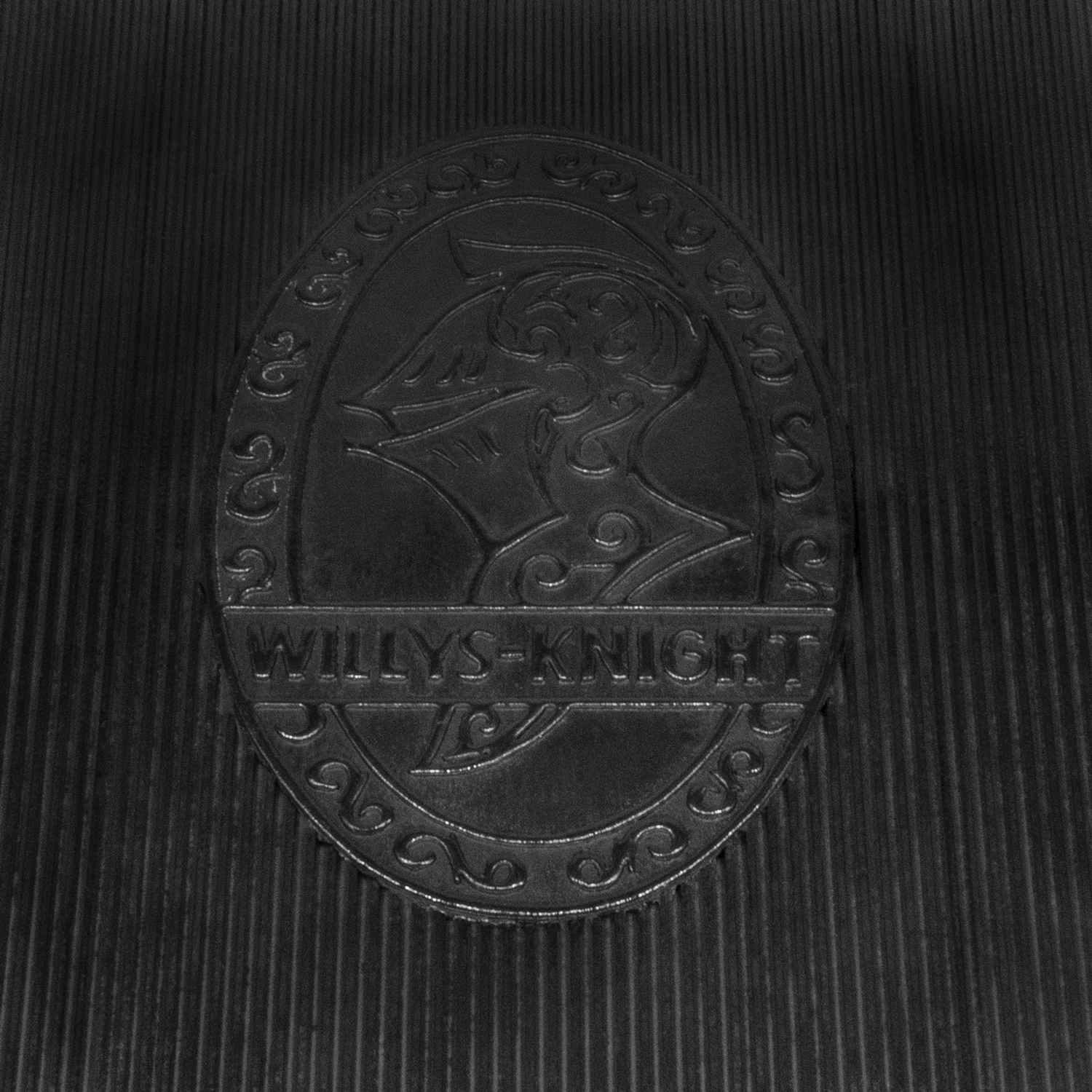 1925 Willys Knight Model 66 Accessory Floor Mat - 12"X17"-AC 51Accessory Floor Mat - made of high quality black rubber with molded original emblem. Also designed to be sewn into new carpets. 12"X17", Each
Why Choose Metro?
For over 100 years, Metro Moulded Parts has been the pinnacle of quality in classic car restoration parts. Our commitment to precision and authenticity in every component ensures a perfect fit and an OEM-level appearance.
- Expert Craftsmanship & Quality: Each part is a testament to our dedication to reliability and perfection, crafted from original designs and thoroughly tested.
- Advanced Technology: We use cutting-edge techniques to create flawless, long-lasting parts that surpass others in performance.
- SuperSoft Sponge – The Ultimate Door Seal: Not only are our door seals 30% softer than competitors', but they're also guaranteed to never leak. They effectively reduce wind and road noise, enhancing your classic car's comfort and driving experience.
- Proudly American: Our parts are a product of American craftsmanship, made in the USA with a spirit of excellence and heritage.
- Unrivaled Warranty: We back our products with a 30-year industry-leading warranty, a testament to our confidence in their quality.
Join us in preserving the legacy of classic cars with parts that are crafted for perfection, not just made.