

Image of 1926 Willys Knight Model 66, Note: These illustrations use artistic license and may differ from actual historical models.
Performance Metrics
Fundamental Metrics
Emotional Appeal
MMP Rating
| Engine Specifications | |
|---|---|
| Engine: | Inline 6-cylinder engine |
| Displacement: | 3.3L |
| Horsepower: | Estimated 50-60 HP |
| Torque: | Not available |
| Compression Ratio: | Not available |
| Ignition System: | Battery and coil |
| Cooling System: | Water-cooled |
| Performance Specifications | |
| 0-60 Time: | Not available |
| 1/4 Mile Time: | Not available |
| Top Speed: | 60 mph |
| Transmission and Drive | |
| Drive Type: | Rear-wheel drive |
| Transmission Type: | 3-speed manual |
| Fuel and Efficiency | |
| Fuel System Type: | Carburetor |
| MPG: | Not available |
| Dimensions and Brakes | |
| Brakes: | Mechanical drum brakes |
| Wheelbase: | 125 inches |
| Weight: | Estimated 3,000 lbs |
Note: Specifications for classic cars are given to the best of our ability, considering the limited and variant data available.
1926 Willys-Knight Model 66: A Quietly Different Classic
The 1926 Willys-Knight Model 66 offered something unusual for its day: a large, refined car whose engine was famous for running with a remarkably quiet, smooth character. It was built by Willys-Overland Motors of Toledo, Ohio, the company best known for practical, affordable cars and, later, the Jeep. The Knight name came from engineer Charles Yale Knight and the distinctive sleeve-valve engine design Willys-Overland licensed for its higher-grade cars.
The Model 66 arrived during a period when American motorists were embracing enclosed bodies, more powerful engines, and increasingly capable road cars. It sat above the basic transportation that made Willys-Overland famous, giving the company a way to compete for buyers who wanted comfort and prestige without stepping into the costliest luxury-car class.
Its most intriguing feature was hidden inside the engine. Rather than using conventional poppet valves, the Knight engine used sliding sleeves around the cylinders to control the flow of air and fuel. The design was noted for its silence and smoothness, qualities that helped give Willys-Knight cars a reputation quite different from that of ordinary production cars.
Exterior Design and Model 66 Styling
The Model 66 carried the substantial, upright proportions typical of a mid-1920s automobile. Its long hood, tall radiator, sweeping fenders, and separate running boards gave it a formal profile. Brass fittings had largely given way to nickel or chrome-plated trim by this period, while large headlamps and a prominent radiator shell announced the car’s presence on the road.
Like many cars of its era, the Model 66 was offered in more than one body configuration, with open touring-style bodies and enclosed options such as sedans available across the Willys-Knight range. Exact offerings and trim could vary by model year and market. The sedan was a natural choice for buyers seeking year-round comfort, while open bodies offered the breezy, sociable motoring experience that remained popular in the 1920s.
Factory color choices depended on the specific body and year. Period cars commonly appeared in restrained dark finishes, often paired with contrasting trim or upholstery, but surviving examples and period specifications show that colors were not necessarily identical across every body style. A buyer restoring a Model 66 should consult factory literature or reliable paint references rather than assume that one modern color scheme was universal.
A Comfortable Cabin for the 1920s
Inside, the Model 66 aimed for a more substantial feel than a basic runabout. Depending on body style and equipment, occupants could expect generous seating, a wood-trimmed or carefully finished dashboard, and upholstery selected to suit the car’s price and specification. Leather was a desirable choice on higher-grade or open cars, while enclosed models could use durable cloth or other period upholstery materials.
The driving position was upright, with a large steering wheel and clearly arranged controls. Glass, doors, and weather protection made a closed body much more practical in cold or wet conditions than an open touring car. Comfort was still interpreted by 1920s standards: there was no modern climate control, and the driver did the work of managing the car through a manual gearbox, mechanical controls, and a comparatively large steering wheel.
Knight Sleeve-Valve Engineering
The Model 66’s defining technology was its Knight sleeve-valve engine. In a conventional engine, valves open and close to admit the fuel-air mixture and release exhaust. In a Knight engine, sliding sleeves with carefully positioned ports performed that job. The arrangement could produce an unusually quiet engine, with less of the familiar clatter associated with many contemporary valve trains.
That refinement came with trade-offs. Sleeve-valve engines needed proper lubrication and could consume more oil than owners accustomed to conventional engines expected. They were also mechanically specialized, so repairs demanded knowledge of the design and access to suitable parts. The technology was impressive, but it was not automatically simpler or cheaper to maintain.
Model 66 specifications can differ in surviving references and by year or body configuration, so precise engine output and performance figures should be checked against documentation for the individual car. Period descriptions generally emphasize smoothness and quiet operation rather than headline horsepower. That emphasis tells much of the story: Willys-Knight sold refinement as a distinctive engineering benefit.
Why the Model 66 Mattered
The Model 66 represents an alternative path in early automotive engineering. Most manufacturers refined conventional poppet-valve engines, while Willys-Overland invested in sleeve-valve technology to distinguish its upper-range cars. The result was a car that could feel notably hushed and polished for its time, giving Willys-Knight a technical identity of its own.
The sleeve-valve concept was not exclusive to Willys-Knight, and it ultimately lost ground to conventional engines. Poppet-valve designs became easier to produce, service, and improve, while the Knight system’s oil use and maintenance demands limited its appeal. Even so, the Model 66 demonstrates how automakers experimented with different solutions before the industry settled on the familiar engine architecture that would dominate later decades.
It also reflects Willys-Overland’s broader ambitions. The company was not only building inexpensive transportation. Through the Knight line, it sought customers who valued comfort, quietness, and technical distinction. That contrast between everyday Willys products and the more sophisticated Willys-Knight range is part of the Model 66’s historical interest.
Road Manners and Period Performance
Reliable factory acceleration figures for an individual 1926 Model 66 are not commonly documented in the way modern performance data is. A precise 0-to-60-mph time would therefore be misleading. The car was designed for smooth touring, not quick launches, and its acceleration would feel measured by today’s standards. Depending on engine condition, gearing, body weight, and road conditions, reaching 60 mph may have been possible for some examples, but it was not the sort of benchmark that defined the car.
Top speed also depends on the specific engine, gearing, body, and mechanical condition. A healthy Model 66 would be best understood as a capable touring car for the roads of its day, rather than a high-speed machine. Modern owners should avoid assuming that a century-old car can safely sustain its theoretical maximum speed, especially if the brakes, tires, steering, or cooling system have not been thoroughly inspected.
On a bumpy road, the Model 66’s substantial chassis and long-wheelbase proportions would have helped it feel composed, though its suspension cannot match the isolation of a modern car. On winding roads, the driver would need to plan ahead. Steering and braking require more effort and anticipation, and the car’s weight and tall body encourage a smooth, deliberate pace rather than sharp cornering.
The engine’s muted character is a major part of the experience. Instead of a loud valve train, a well-maintained sleeve-valve engine can deliver a subdued, steady mechanical note. The driver remains closely involved through the manual transmission, period controls, and direct feel of the road. It is less about speed than about the distinctive rhythm of 1920s motoring.
Owning and Maintaining a Willys-Knight
Today, a Model 66 is primarily a collector and touring car, not a practical daily driver. It may appear at antique-car shows, local parades, and vintage motoring events. Owners who tour in one generally plan shorter routes, keep speeds moderate, and carry basic tools and spares suited to the car.
Maintenance is a key part of ownership. The sleeve-valve engine needs correct lubrication and attentive monitoring of oil consumption. Cooling, ignition, fuel delivery, brakes, tires, and steering also deserve careful inspection on any car of this age. Some ordinary service work is familiar to an experienced vintage-car mechanic, but internal engine work is specialized. Parts availability can be limited, and a repair that would be routine on a common American car may require patience, specialist knowledge, or custom sourcing here.
Reliability depends heavily on the quality of the restoration and the car’s maintenance history. A properly rebuilt and regularly exercised example can be enjoyable, but neglect is costly. Before purchase, a buyer should seek an inspection by someone familiar with Knight engines, verify that the engine turns and runs properly, and review documentation for previous mechanical work.
Willys-Knight Model 66 Facts and Myths
The Model 66’s best-known talking point is its engine’s unusual sleeve-valve layout and quiet operation. That feature makes it a conversation starter at a show, especially when compared with the more familiar engines in other American cars of the same era.
There is no widely recognized speed, endurance, or sales record that defines the Model 66. Its significance is more technical and historical than record-breaking. Nor is it best known for celebrity ownership or a single famous historical event. Its claim to attention is the uncommon engineering choice that shaped the driving character of the Willys-Knight line.
Common criticisms are practical ones: sleeve-valve engines can use oil, specialized repairs may be difficult, and replacement parts are less accessible than for more common vintage cars. The car also lacks modern safety features, including contemporary braking performance, seat belts, and crash protection. These are important considerations for owners, even though they do not diminish the Model 66’s historical appeal.
Collector Value and Availability
Exact production figures for the 1926 Model 66 are difficult to establish from commonly available summaries, and totals can be confused with figures for other Willys-Knight models or nearby model years. As a broad estimate rather than a confirmed factory count, production was likely in the several-thousand range, perhaps roughly 5,000 to 10,000 cars across the Model 66 production run. The number surviving today is much smaller, and complete, well-documented examples are not easy to find.
Values vary widely according to body style, originality, restoration quality, mechanical condition, and provenance. As a general present-day guide, a project or incomplete car might fall around $8,000 to $18,000, while a sound driver or older restoration could bring roughly $20,000 to $40,000. A high-quality, fully sorted restoration or especially desirable body style could reach approximately $45,000 to $70,000 or more, though actual sale prices depend on the market and the specific car.
Like many brass- and nickel-era classics, the Model 66 has a relatively specialized buyer pool. Values are not guaranteed to rise steadily, and the cost of restoring a rare engine can exceed the car’s resale value. Over the long term, exceptional, authentic examples may benefit from their scarcity and engineering interest, but condition and documentation remain more important than rarity alone. For buyers, a well-maintained car with a known engine history is usually a better value than a cheaper example needing major sleeve-valve work.
A Distinctive Chapter in Willys History
The 1926 Willys-Knight Model 66 combined formal 1920s styling, a comfortable touring-car character, and one of the era’s most unusual engine designs. Its quiet sleeve-valve motor set it apart from more conventional rivals, while its specialized maintenance needs explain why the technology did not become the industry standard.
For collectors, the Model 66 is more than an old car with uncommon badges. It is a reminder that automotive progress was shaped by experimentation as much as by the designs that ultimately prevailed. When its engine settles into its soft, steady rhythm, the Willys-Knight tells that story in a way no museum label quite can.
1926 Willys Knight Model 66 Catalog of Parts
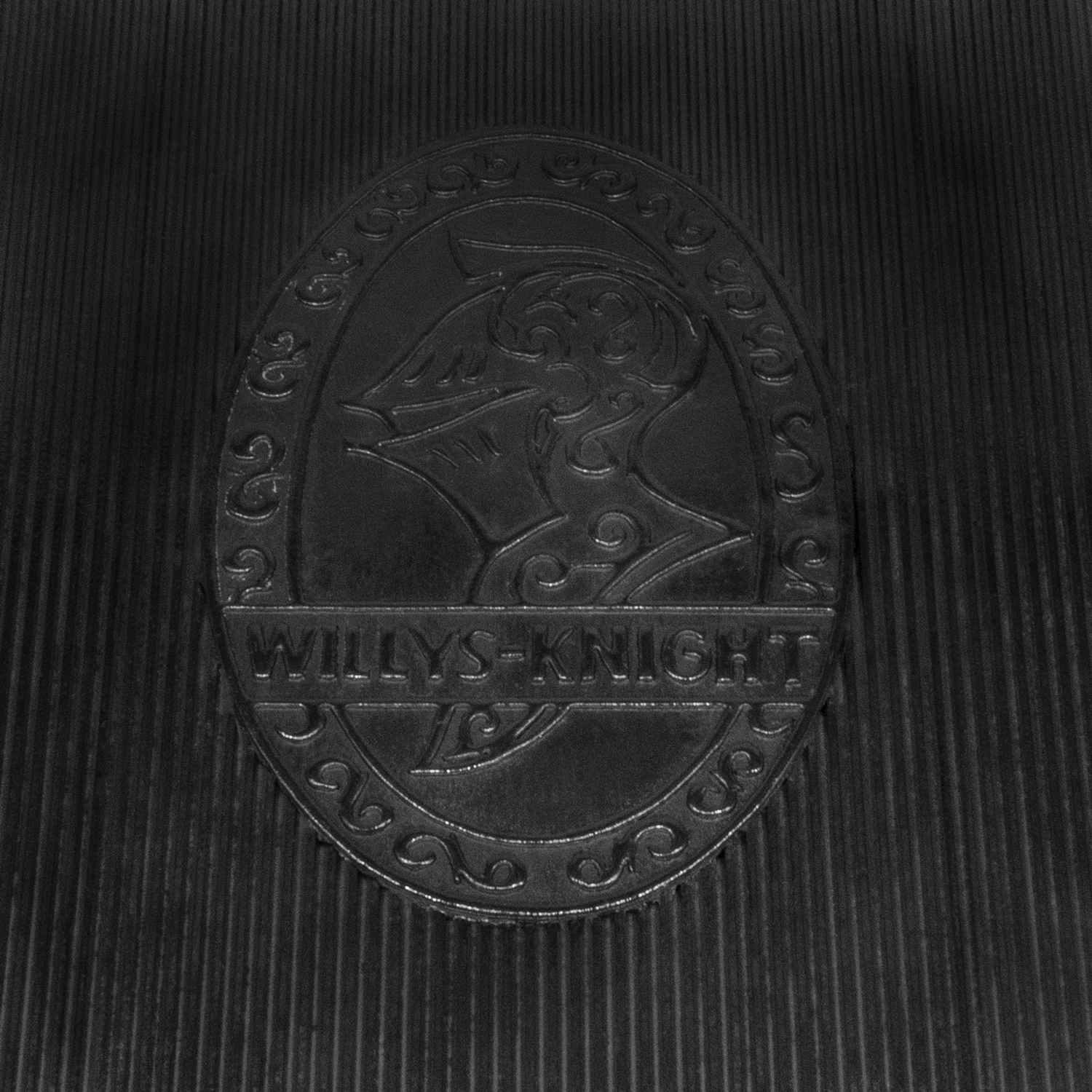 1926 Willys Knight Model 66 Accessory Floor Mat - 12"X17"-AC 51Accessory Floor Mat - made of high quality black rubber with molded original emblem. Also designed to be sewn into new carpets. 12"X17", Each
Why Choose Metro?
For over 100 years, Metro Moulded Parts has been the pinnacle of quality in classic car restoration parts. Our commitment to precision and authenticity in every component ensures a perfect fit and an OEM-level appearance.
- Expert Craftsmanship & Quality: Each part is a testament to our dedication to reliability and perfection, crafted from original designs and thoroughly tested.
- Advanced Technology: We use cutting-edge techniques to create flawless, long-lasting parts that surpass others in performance.
- SuperSoft Sponge – The Ultimate Door Seal: Not only are our door seals 30% softer than competitors', but they're also guaranteed to never leak. They effectively reduce wind and road noise, enhancing your classic car's comfort and driving experience.
- Proudly American: Our parts are a product of American craftsmanship, made in the USA with a spirit of excellence and heritage.
- Unrivaled Warranty: We back our products with a 30-year industry-leading warranty, a testament to our confidence in their quality.
Join us in preserving the legacy of classic cars with parts that are crafted for perfection, not just made.