

Image of 1927 Willys Knight Model 66a, Note: These illustrations use artistic license and may differ from actual historical models.
Performance Metrics
Fundamental Metrics
Emotional Appeal
MMP Rating
| Engine Specifications | |
|---|---|
| Engine Options: | Inline 6-cylinder engine |
| Displacement Range: | 4.7L |
| Horsepower Range: | Estimated 70-80 HP |
| Torque: | Not available |
| Compression Ratio: | Not available |
| Ignition System: | Battery and coil |
| Cooling System: | Water-cooled |
| Performance Specifications | |
| 0-60 Time: | Not available |
| 1/4 Mile Time: | Not available |
| Top Speed: | 60-70 mph |
| Transmission and Drive | |
| Drive Type: | Rear-wheel drive |
| Transmission Type: | 3-speed manual |
| Fuel and Efficiency | |
| Fuel System Type: | Carburetor |
| MPG: | Not available |
| Dimensions and Brakes | |
| Brakes: | Mechanical drum brakes |
| Wheelbase: | 125 inches |
| Weight: | Estimated 3500 lbs |
Note: Specifications for classic cars are given to the best of our ability, considering the limited and variant data available.
1927 Willys-Knight Model 66A: A Quietly Different Classic
The 1927 Willys-Knight Model 66A offered something unusual for a luxury car of its day: an engine designed to run without conventional poppet valves. Built by Willys-Overland in Toledo, Ohio, the 66A paired substantial six-cylinder power with the distinctive sleeve-valve technology that gave Willys-Knight cars their reputation for smooth, quiet operation.
Willys-Overland was one of America’s major automakers, best known for practical cars and, later, the Willys-Overland Whippet. The Willys-Knight sat higher in the company’s range. Its engine came from technology developed by American inventor Charles Yale Knight, whose design was adopted by several automakers seeking a quieter alternative to the noisy valve trains of the period.
One intriguing detail is that the 66A’s unusual engine could be an advantage and a challenge at the same time. Its quietness was a selling point, but the sleeve-valve design required a different approach to lubrication and servicing than the familiar engines in many rival cars.
Art Deco Before Its Time: Styling and Cabin
The Model 66A has the upright, formal stance that defines many late-1920s automobiles. A tall radiator shell anchors the front, while a long hood leads back to a passenger compartment set high above the road. Sweeping fenders, prominent headlamps, running boards and wire wheels complete the period look. The overall effect is dignified rather than sporty, with the car’s proportions emphasizing presence and comfort.
Inside, the 66A followed the conventions of an upper-range American car. Depending on body style and trim, buyers could find broadcloth or mohair upholstery, leather in some seating areas, carpeting, and polished wood or wood-finished trim. The dashboard was functional and formal, with clear instruments and controls arranged for the driver. Compared with a modern cabin, it was simple, but period materials and careful trim gave it a more substantial feel than a basic utility car.
Factory paint choices varied by body style and production details, and a complete, verified color list for every 66A configuration is difficult to establish. Like many cars of the era, it was offered in restrained colors suited to its upscale character, including dark shades and classic black. Restorers should check period sales literature or surviving paint evidence before assuming a particular color was factory-correct.
Willys-Knight cars were sold in several body configurations across the model range, including closed sedans and more open touring or coupe-style bodies. The formal sedan best suits the 66A’s luxury image and is among the most recognizable shapes today. Exact body availability could vary by year and market, so a specific car’s original configuration is best confirmed from factory documentation or historical records.
The Sleeve-Valve Difference
The 66A’s most important engineering feature was its Knight sleeve-valve engine. Instead of using the familiar spring-loaded poppet valves found in most contemporary engines, it used sliding sleeves around the pistons. Ports in the sleeves opened and closed as they moved, controlling the flow of air and exhaust gases.
In practice, the design’s appeal was its smooth, quiet operation. Without conventional valve gear opening and closing above the cylinders, the engine avoided much of the mechanical clatter associated with its rivals. The sleeve-valve concept was not exclusive to Willys-Knight, but Willys-Overland made it central to the marque’s identity and used it to distinguish its cars in the luxury market.
The trade-off was complexity. Sleeve-valve engines needed appropriate lubrication and careful attention to wear and oil consumption. They also demanded mechanics familiar with the design. The Model 66A is therefore a reminder that automotive innovation is not always a simple march toward easier maintenance: an idea could be technically impressive and still be more demanding to keep in top condition.
Performance and Road Manners
The Model 66A is generally associated with a six-cylinder engine of roughly 246 cubic inches and about 60 horsepower, though specifications can vary across references and model-year descriptions. Period manufacturers did not typically publish standardized 0-to-60-mph figures, so modern acceleration numbers should be treated as estimates rather than factory claims.
With its substantial weight and gearing intended for comfortable touring, a sound example might reach approximately 60 to 65 mph under favorable conditions. A reasonable modern estimate for 0-to-60-mph acceleration is around 25 to 30 seconds, depending on body style, mechanical condition, gearing and road conditions. These are broad estimates, not guarantees for a particular car.
On the road, the 66A is best understood as a relaxed touring car, not a performance machine. Its long wheelbase and substantial chassis should help it take ordinary bumps in a composed manner, though its period suspension cannot match the control or isolation of a modern vehicle. On winding roads, the driver needs to plan ahead: steering, braking and tire technology are all firmly of the 1920s, and the car rewards smooth inputs rather than quick direction changes.
The engine’s character is part of the experience. A well-maintained sleeve-valve six is known for a muted, even sound rather than a sharp valve-train rattle. From the driver’s seat, the high seating position, large steering wheel and direct mechanical controls make the car feel deliberate and hands-on. It is a machine to enjoy at a measured pace, listening to the engine and taking in the view over the hood.
Why the 66A Matters
The Model 66A represents a distinctive branch of early American automotive engineering. While most manufacturers standardized around poppet-valve engines, Willys-Knight continued to promote the sleeve-valve alternative as a route to refinement. That gave the car a clear identity in a crowded market of six-cylinder touring cars and sedans.
Its lasting influence is less about a design adopted by the entire industry and more about the way it illustrates the period’s appetite for experimentation. Automakers were trying different ways to improve smoothness, power and comfort. The sleeve valve eventually lost out to simpler, more economical conventional engines, but the Willys-Knight remains a notable example of a serious attempt to take a different road.
The car also reflects Willys-Overland’s ambitions beyond the mass market. The company used the Knight name and its unusual engine to offer buyers something more exclusive than a basic transportation car. That distinction helps explain why the 66A attracts enthusiasts today: it is not simply an old sedan, but a representative of a technology that became rare.
Living With a Willys-Knight
Today, a Model 66A is most likely to serve as a show car, a touring car for organized antique-vehicle events, or a prized piece in a collection. It is not an easy choice for routine modern commuting. Its speed, braking, lighting and protection are appropriate to its era, not current traffic, and regular use calls for careful route planning and attentive driving.
Maintenance is manageable for an experienced vintage-car owner, but the sleeve-valve engine changes the equation. Parts and specialist knowledge can be harder to find than for a common Ford or Chevrolet of the same period. Before buying, have a mechanic familiar with Knight engines inspect the sleeves, lubrication system, cooling system and signs of excessive oil use. A car that starts and runs is not necessarily a car whose unusual engine is healthy.
Body, upholstery and chassis work are more familiar restoration territory, although correct trim and model-specific parts may still take time to locate. As with any prewar car, condition and completeness matter enormously. A well-documented, running example is usually a safer proposition than an incomplete project, especially when specialized engine work may be required.
Willys-Knight Facts and Myths
The Model 66A does not have a widely recognized land-speed, endurance or sales record. Its claim to fame is more mechanical than competitive: it belonged to a marque that built its identity around the Knight sleeve-valve engine. There is also no broadly documented celebrity-owner story that defines this particular model, so claims of famous ownership should be checked against reliable records.
A common criticism of Willys-Knight cars is that sleeve-valve engines can consume oil and require more specialized care than conventional engines. That criticism has a real basis, but it does not mean every example is unreliable. A properly maintained engine can provide the smooth, quiet character the design promised. The key is finding knowledgeable service and understanding the car’s needs rather than judging it by modern ownership expectations.
Collector Value and Rarity
Reliable production figures for the 1927 Model 66A alone are difficult to pin down, and published totals for Willys-Knight vehicles do not always separate individual model years and body styles. A reasonable working estimate is that 66A production was in the low thousands, perhaps roughly 2,000 to 5,000 cars. That is an informed estimate, not a confirmed factory total.
Surviving cars are uncommon on the open market, and listings may appear only occasionally. As a broad U.S. collector-market estimate, a project or incomplete car might fall around $5,000 to $15,000; a presentable, running example could bring roughly $15,000 to $35,000; and an exceptional, correctly restored car may reach $40,000 to $50,000 or more. Body style, originality, restoration quality, documentation and the condition of the sleeve-valve engine can move the price substantially.
Values for unusual prewar cars tend to be selective rather than uniformly rising. The Model 66A’s rarity and engineering interest appeal to specialist collectors, but its maintenance requirements can narrow the buyer pool. Over the long term, especially well-restored examples may hold or improve their value, while neglected cars can be expensive to bring back. For this model, condition and mechanical history matter more than a general claim that all classic cars are appreciating.
A Distinctive Chapter in American Motoring
The 1927 Willys-Knight Model 66A combined formal styling, a comfortable touring-car character and one of the most unusual engine designs of its time. Its sleeve-valve six made it quieter and more distinctive than many conventional rivals, while also demanding specialist care that has become part of its ownership story.
For today’s enthusiast, the 66A is not just a handsome survivor from the 1920s. It is a rolling example of an automotive idea that almost disappeared, and a reminder that the road to modern motoring was shaped by bold experiments as well as familiar successes.
1927 Willys Knight Model 66a Catalog of Parts
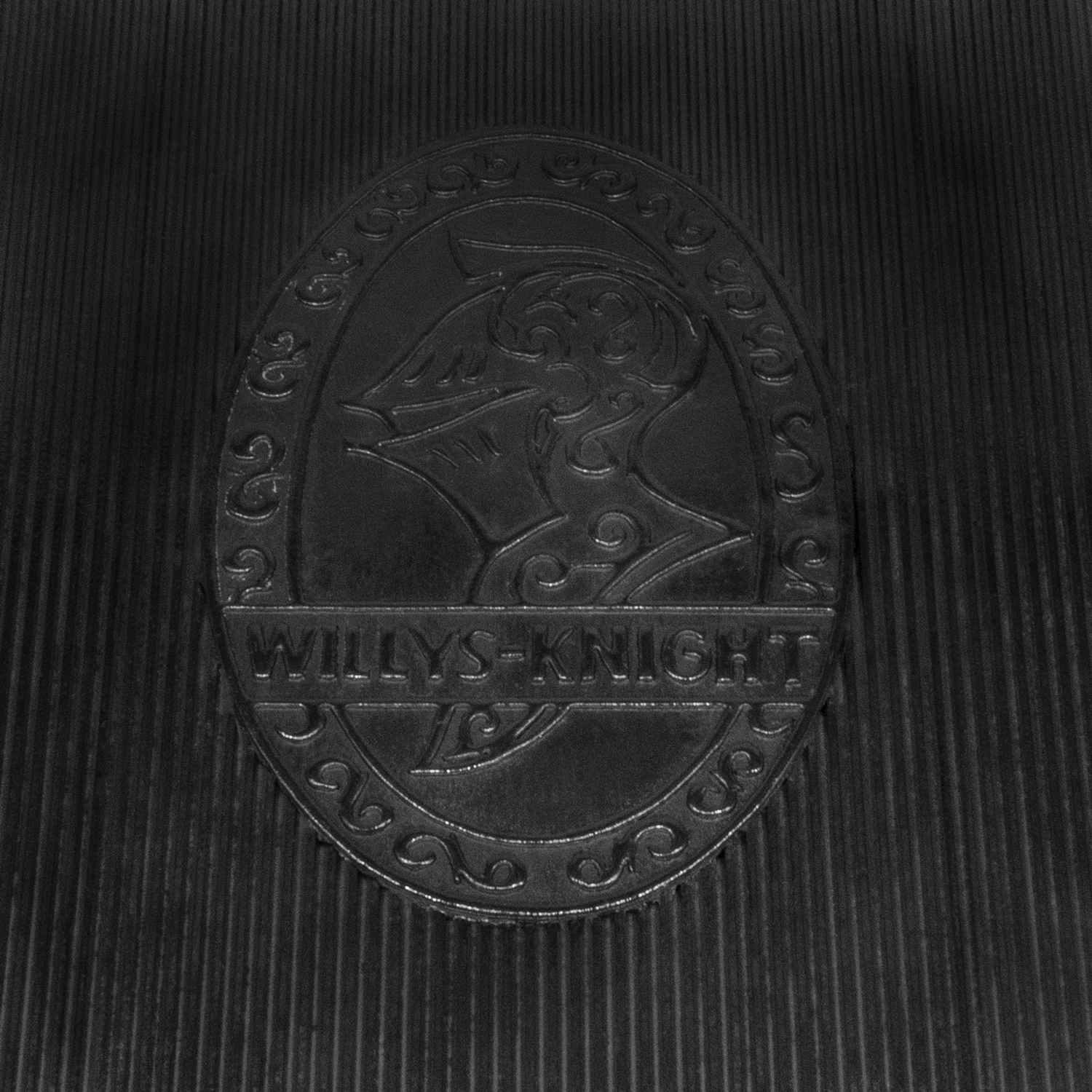 1927 Willys Knight Model 66A Accessory Floor Mat - 12"X17"-AC 51Accessory Floor Mat - made of high quality black rubber with molded original emblem. Also designed to be sewn into new carpets. 12"X17", Each
Why Choose Metro?
For over 100 years, Metro Moulded Parts has been the pinnacle of quality in classic car restoration parts. Our commitment to precision and authenticity in every component ensures a perfect fit and an OEM-level appearance.
- Expert Craftsmanship & Quality: Each part is a testament to our dedication to reliability and perfection, crafted from original designs and thoroughly tested.
- Advanced Technology: We use cutting-edge techniques to create flawless, long-lasting parts that surpass others in performance.
- SuperSoft Sponge – The Ultimate Door Seal: Not only are our door seals 30% softer than competitors', but they're also guaranteed to never leak. They effectively reduce wind and road noise, enhancing your classic car's comfort and driving experience.
- Proudly American: Our parts are a product of American craftsmanship, made in the USA with a spirit of excellence and heritage.
- Unrivaled Warranty: We back our products with a 30-year industry-leading warranty, a testament to our confidence in their quality.
Join us in preserving the legacy of classic cars with parts that are crafted for perfection, not just made.