

Image of 1929 Willys Knight Model 66a, Note: These illustrations use artistic license and may differ from actual historical models.
Performance Metrics
Fundamental Metrics
Emotional Appeal
MMP Rating
| Engine Specifications | |
|---|---|
| Engine: | Inline 6-cylinder engine |
| Displacement: | 3.3L |
| Horsepower: | Estimated 70-80 HP |
| Torque: | Not available |
| Compression Ratio: | Not available |
| Ignition System: | Battery and coil |
| Cooling System: | Water-cooled |
| Performance Specifications | |
| 0-60 Time: | Not available |
| 1/4 Mile Time: | Not available |
| Top Speed: | 60-70 mph |
| Transmission and Drive | |
| Drive Type: | Rear-wheel drive |
| Transmission Type: | 3-speed manual |
| Fuel and Efficiency | |
| Fuel System Type: | Carburetor |
| MPG: | Not available |
| Dimensions and Brakes | |
| Brakes: | Mechanical drum brakes |
| Wheelbase: | 125 inches |
| Weight: | 3,500 lbs |
Note: Specifications for classic cars are given to the best of our ability, considering the limited and variant data available.
1929 Willys-Knight Model 66A: A Different Kind of Luxury Car
The 1929 Willys-Knight Model 66A offered luxury buyers something unusual beneath its long hood: an engine that breathed through sliding sleeves instead of conventional poppet valves. Built by Willys-Overland Motors of Toledo, Ohio, the Model 66A belonged to a line of refined cars powered by the Knight sleeve-valve engine, a design prized for its smooth, quiet operation.
Willys-Overland was best known for practical, affordable cars, but its Willys-Knight division aimed higher. The company licensed the Knight engine design and used it to compete in the premium market. The Model 66A arrived in 1929, just as the American boom years were ending. Its combination of substantial engineering, polished presentation, and distinctive powertrain made it a memorable alternative to more conventional luxury cars.
One detail that still intrigues enthusiasts is the engine’s valve system. Rather than opening and closing traditional valves, sliding sleeves in the cylinders controlled the intake and exhaust ports. The result was an engine often described as exceptionally quiet and smooth, giving the Willys-Knight a character quite unlike that of its rivals.
Model 66A Styling and Cabin Details
The Model 66A wore the upright, formal proportions associated with late-1920s luxury automobiles. A tall radiator shell and long hood gave the front end a commanding presence, while sweeping front fenders, running boards, and large wire or disc-style wheels completed its stately profile. Depending on body style and equipment, details such as bright metal trim, lamps, and luggage fittings added further distinction.
Inside, the car emphasized comfort and craftsmanship over sportiness. Owners could expect a broad bench seat, quality upholstery, wood or wood-finished trim, and a carefully arranged instrument panel. Materials and fittings varied with body style and specification, but the cabin was designed to feel substantial and well finished. Compared with a basic family car of the period, it offered a more formal, quieter place to travel.
Factory colors could vary by body and order, and surviving cars do not point to one universally dominant shade. Dark colors such as black, deep blue, maroon, and green suited the car’s formal character, while contrasting fenders or trim could provide a more tailored look. Buyers choosing a particular Model 66A should verify its original color from factory records, surviving paint layers, or period documentation rather than assume a single standard palette.
The 66A was offered in closed and open body configurations during the era, with sedan and coupe forms among the most recognizable. Open touring or phaeton-style bodies and convertible-like choices were also part of the broader Willys-Knight range, though exact availability depended on the model year and catalog specification. The four-door sedan is perhaps the most emblematic version today: it makes the most of the car’s formal proportions and suits its role as a comfortable touring automobile.
Sleeve-Valve Engineering and Historical Importance
The Knight engine was the car’s defining innovation. Its moving sleeves formed the ports that let the fuel-air mixture enter and exhaust gases leave the cylinders. With no conventional valve train clattering above the engine, sleeve-valve powerplants earned a reputation for unusually quiet running. Willys-Knight used that characteristic as a point of distinction in a competitive luxury market.
The design also had trade-offs. Sleeve-valve engines were mechanically intricate, and their lubrication requirements could be more demanding than those of a conventional engine. They could use more oil, and maintaining them required familiarity with their specialized construction. As manufacturing methods and poppet-valve engines improved, the sleeve-valve design became harder to justify on cost and serviceability. The Model 66A therefore represents an important chapter in automotive experimentation, as well as a technology that ultimately gave way to simpler alternatives.
What set the Willys-Knight apart was not just the engine. It offered a distinctive engineering story in a handsome, well-appointed package from a manufacturer better known for mainstream cars. The car reflects an era when automakers explored very different solutions to smoothness, power, and prestige. Its influence was less about inspiring a lasting mass-market design than about demonstrating how far manufacturers were willing to go to make a luxury car feel refined.
Model 66A Performance and Road Manners
Published specifications for individual Model 66A examples can differ, but period references commonly associate the car with a six-cylinder sleeve-valve engine of roughly 246 cubic inches and about 70 horsepower. That figure was respectable for a substantial luxury car of its day. A reasonable period-style estimate for top speed is around 65 mph, depending on body, gearing, condition, and tires.
Reliable factory acceleration figures are difficult to establish. Given the car’s weight and period power output, a 0-to-60-mph time in the neighborhood of 25 to 30 seconds is a practical estimate, not a confirmed manufacturer rating. The Model 66A was built for dignified touring rather than quick launches or racing.
On the road, the sleeve-valve engine’s smoothness is central to the experience. Instead of a sharp mechanical clatter, a well-maintained engine tends to produce a muted, steady sound. The car’s long-wheelbase proportions and substantial chassis help it settle over ordinary road imperfections, though its suspension and tires are products of their time. On rough surfaces, the ride can feel firm or busy by modern standards, and narrow period tires offer less grip than contemporary rubber.
On winding roads, the Model 66A rewards measured driving. Its size, steering effort, and braking performance call for anticipation, especially compared with a modern car. The driver sits high, works with a large steering wheel and period controls, and feels directly involved in every shift and turn. It is best enjoyed at a relaxed touring pace, where the engine’s quiet character and the car’s formal presence can take center stage.
Living with a Willys-Knight Today
In its own era, a Model 66A could serve as a family’s principal automobile, a comfortable touring car, or a prestige vehicle for business and social travel. Today, most examples are maintained as collector cars. They are more likely to appear at antique-car shows, club events, and carefully planned tours than in everyday traffic.
Maintenance is a major part of ownership. The sleeve-valve engine is not necessarily impossible to service, but it is specialized. Parts availability, lubrication needs, and the condition of the sleeves can make work more involved than on a common flathead engine. An owner with general mechanical skills can handle routine tasks, but major engine work is best entrusted to a mechanic familiar with Knight engines. Before buying, inspect the engine’s running condition and seek advice from a marque specialist.
Reliability depends heavily on preservation and maintenance. A sound, correctly serviced car can tour, but age, infrequent use, and the scarcity of knowledgeable repair support can turn minor faults into lengthy projects. A pre-purchase inspection should include the engine, cooling system, transmission, brakes, chassis, and electrical system. Originality matters, but sound mechanical condition is essential if the car will be driven.
Willys-Knight 66A Facts and Myths
The sleeve-valve engine is often remembered as almost silent, but “quiet” does not mean maintenance-free. Its smoothness was a genuine selling point, while oil consumption and more involved servicing were practical considerations. Those competing qualities help explain why the technology remains fascinating to enthusiasts even though it did not become the industry standard.
The Model 66A is not widely associated with a major speed record, racing victory, or celebrity ownership. Its significance lies instead in its distinctive engineering and its place in Willys-Overland’s attempt to compete in the premium market. As with many cars of the period, individual examples may have interesting local histories, but claims of famous ownership should be supported by documentation.
Common criticisms include the complexity of the engine, the challenge of sourcing specialist parts, and the car’s slower pace compared with later automobiles. The same qualities that make it unusual also make it less convenient to own. For collectors, however, that difference is part of the appeal.
Collector Value, Rarity, and Market Outlook
Exact production figures for the Model 66A are not consistently documented in readily available sources, so any total should be treated as an estimate. A reasonable working guess is that several thousand were built, perhaps around 3,000 to 6,000, though the actual number could differ. Surviving examples are much scarcer than that estimate suggests, particularly cars with sound sleeve-valve engines, original details, and clear histories.
As a broad current-market estimate, a project car or incomplete example might sell for roughly $8,000 to $18,000. A usable, presentable car could fall around $20,000 to $40,000, while a highly restored or exceptional example might reach approximately $45,000 to $70,000 or more. Body style, originality, restoration quality, provenance, and mechanical condition all affect value. These are guide ranges rather than formal appraisals, and comparable sales can be limited because the cars appear on the market infrequently.
Values for unusual prewar cars tend to move gradually rather than follow the sharp swings seen in more familiar muscle cars. The Model 66A’s rarity and engineering appeal support collector interest, but its specialist maintenance needs can limit the buyer pool. Well-restored examples may hold their value best, while poorly maintained cars can be expensive to bring back to dependable condition. A long-term appreciation trend is possible, but it is not guaranteed.
Why the 1929 Willys-Knight Model 66A Still Matters
The 1929 Willys-Knight Model 66A combines formal late-1920s styling with one of the most distinctive engine designs ever offered in a production car. Its six-cylinder sleeve-valve powerplant promised smooth, quiet operation, while its roomy body and substantial road presence made it a convincing luxury tourer. That sophistication came with real compromises in maintenance and mechanical complexity.
For today’s enthusiast, the Model 66A is more than an old automobile. It is a reminder that the history of motoring was shaped by bold engineering experiments, not just by the technologies that ultimately won. A well-preserved example turns every quiet mile into a conversation with a more inventive age of the automobile.
1929 Willys Knight Model 66a Catalog of Parts
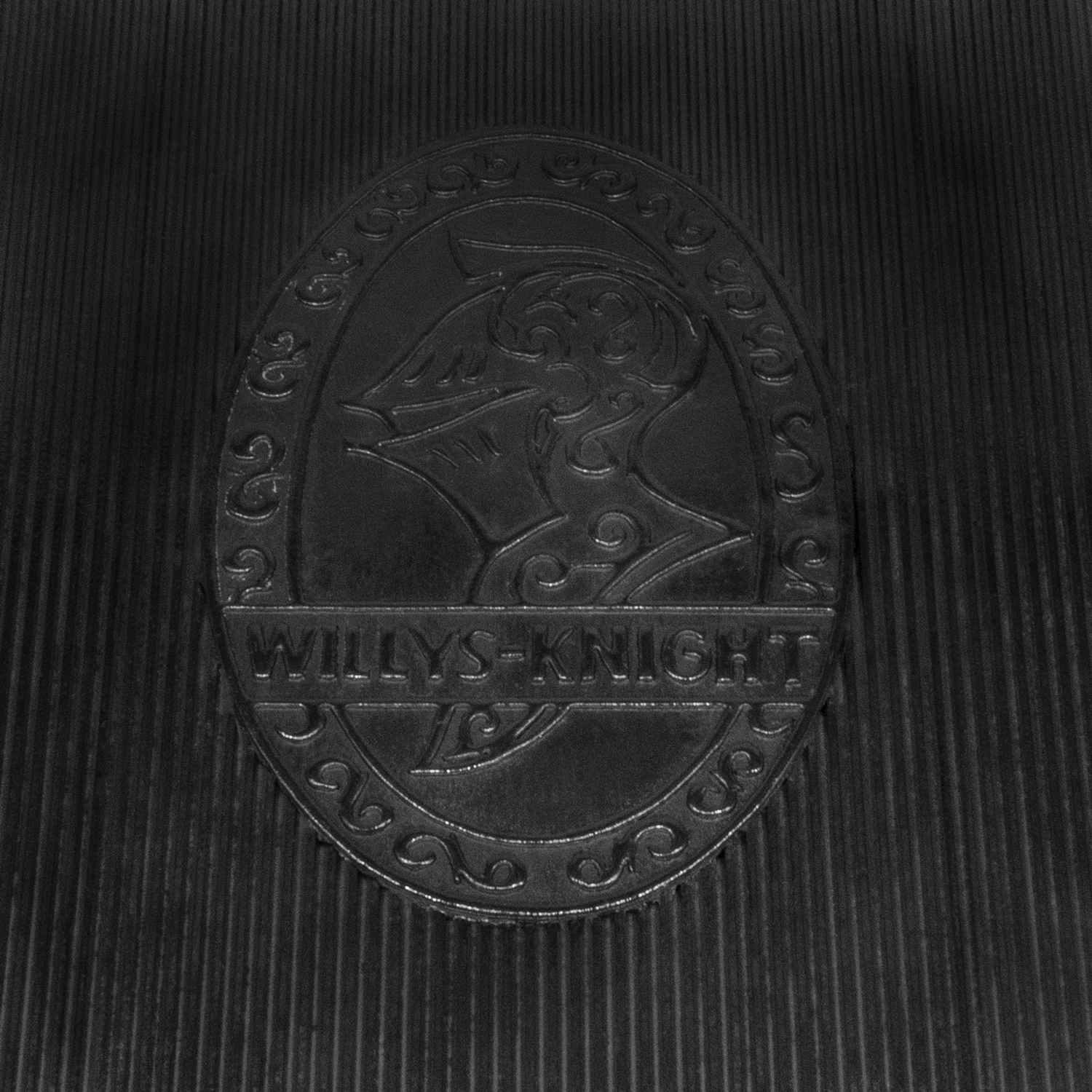 1929 Willys Knight Model 66A Accessory Floor Mat - 12"X17"-AC 51Accessory Floor Mat - made of high quality black rubber with molded original emblem. Also designed to be sewn into new carpets. 12"X17", Each
Why Choose Metro?
For over 100 years, Metro Moulded Parts has been the pinnacle of quality in classic car restoration parts. Our commitment to precision and authenticity in every component ensures a perfect fit and an OEM-level appearance.
- Expert Craftsmanship & Quality: Each part is a testament to our dedication to reliability and perfection, crafted from original designs and thoroughly tested.
- Advanced Technology: We use cutting-edge techniques to create flawless, long-lasting parts that surpass others in performance.
- SuperSoft Sponge – The Ultimate Door Seal: Not only are our door seals 30% softer than competitors', but they're also guaranteed to never leak. They effectively reduce wind and road noise, enhancing your classic car's comfort and driving experience.
- Proudly American: Our parts are a product of American craftsmanship, made in the USA with a spirit of excellence and heritage.
- Unrivaled Warranty: We back our products with a 30-year industry-leading warranty, a testament to our confidence in their quality.
Join us in preserving the legacy of classic cars with parts that are crafted for perfection, not just made.