

Image of 1932 Willys Knight Model 66d, Note: These illustrations use artistic license and may differ from actual historical models.
Performance Metrics
Fundamental Metrics
Emotional Appeal
MMP Rating
| Engine Specifications | |
|---|---|
| Engine Options: | Inline 6-cylinder |
| Displacement Range: | 3.3L |
| Horsepower Range: | Estimated 70-85 HP |
| Torque: | Not available |
| Compression Ratio: | Not available |
| Ignition System: | Battery and coil |
| Cooling System: | Water-cooled |
| Performance Specifications | |
| 0-60 Time: | Not available |
| 1/4 Mile Time: | Not available |
| Top Speed: | 70 mph |
| Transmission and Drive | |
| Drive Type: | Rear-wheel drive |
| Transmission Type: | 3-speed manual |
| Fuel and Efficiency | |
| Fuel System Type: | Carburetor |
| MPG: | Not available |
| Dimensions and Brakes | |
| Brakes: | Mechanical drum brakes |
| Wheelbase: | 125 inches |
| Weight: | 3,200 lbs |
Note: Specifications for classic cars are given to the best of our ability, considering the limited and variant data available.
A 1932 Willys-Knight Model 66D offered a different sort of luxury: instead of the familiar chug of a conventional engine, its unusual sleeve-valve six delivered power with a notably quiet, smooth character.
Willys-Knight 66D: An American Alternative
The Model 66D came from Willys-Overland, the Toledo, Ohio, automaker founded by John North Willys. The company built cars under several names, including the premium Willys-Knight line, which used engines based on a design developed by British engineer Charles Yale Knight. Willys-Knight models were aimed at buyers who wanted refinement and distinctive engineering, not simply basic transportation.
By 1932, however, the company was navigating the Great Depression. Demand for expensive cars had fallen sharply, and Willys-Overland was under serious financial pressure. The Model 66D therefore belongs to the final chapter of the Willys-Knight story. Production of the marque ended in the early 1930s, making the surviving cars uncommon reminders of a bold engineering experiment.
Its most intriguing detail is hidden inside the engine. Rather than opening and closing conventional poppet valves, the Knight design used sliding sleeves around the pistons to control the intake and exhaust ports. The result was famous for quiet operation, and it gave the Willys-Knight a character quite unlike that of the more familiar straight-six cars of its day.
Art Deco Presence and Comfortable Appointments
The 66D wore the substantial, upright proportions typical of a fine early-1930s American automobile. A tall radiator shell, long hood, sweeping front fenders, separate running boards, and rear-mounted spare tires gave it a formal, carefully balanced appearance. Its body was not streamlined in the modern sense, but the curved fenders and flowing lines softened the car’s boxier passenger compartment.
Inside, the emphasis was on comfort and craftsmanship. Period Willys-Knight interiors typically used upholstered bench seating, a broad dashboard, polished trim, and durable woven or leather upholstery depending on body and specification. Materials and equipment could vary, so an individual car’s original trim should be checked against its build records or period literature. The cabin was designed for relaxed touring rather than sporty driving, with generous space and a commanding view over the hood.
Factory color choices varied by year, body, and market, and a definitive paint list for every 66D is not readily established. Buyers could choose from period solid colors and, in some cases, contrasting finishes. Dark blue, black, maroon, and two-tone schemes suit the car’s formal character, although those should be treated as period-appropriate possibilities rather than a guaranteed 66D color chart.
The Model 66D designation identifies a particular series and configuration, but surviving references do not always agree on the full body-style menu. Willys-Knight catalogs offered several kinds of closed and open coachwork across the marque’s range, including sedans and coupe-style bodies. A well-preserved sedan is among the most recognizable forms today, while the exact body options available for a specific 66D should be confirmed from factory literature or the car’s history.
Sleeve-Valve Engineering in Context
The Knight engine was the feature that set this car apart. Its sliding sleeves controlled gas flow through ports in the cylinder walls, avoiding the poppet valves and valve springs used in most contemporary engines. With fewer familiar valve-train noises, a well-maintained sleeve-valve engine could run with an unusually smooth, hushed sound.
This was a serious alternative to conventional engine design, not a novelty fitted only to a low-volume curiosity. Willys-Knight promoted the quietness and smoothness of its engines, and other manufacturers also experimented with sleeve valves during the period. Yet the system had drawbacks: it was mechanically complex, demanded careful lubrication, and could consume more oil than a conventional engine. As engine design advanced, the simpler and more economical poppet-valve layout became the industry standard.
The 66D’s significance is therefore less about a feature copied by every later car and more about the range of engineering ideas automakers were willing to explore. It represents a time when manufacturers competed not only on horsepower and styling, but also on how an engine sounded and felt.
Six-Cylinder Power and Road Manners
Published specifications commonly associate the Model 66D with a six-cylinder Knight sleeve-valve engine of about 255 cubic inches, or 4.2 litres, producing roughly 87 horsepower. Exact figures can differ among references and model-year listings, so a car’s engine number and original documentation are the best guides to its specification. Power went to the rear wheels through a manual transmission, with a conventional chassis and period braking system.
There is no dependable factory 0-to-60 mph figure for the 66D. Based on its displacement, power, weight, gearing, and period performance, a reasonable modern estimate is around 25 to 30 seconds or longer. A sound example could plausibly reach roughly 65 to 75 mph, but that is an estimate, not a recommended cruising speed for a nearly century-old car. Condition, gearing, tires, and mechanical setup make a major difference.
On the road, the car’s strengths are smoothness and stately progress. The engine’s subdued note and the long-wheelbase ride help it glide over ordinary road imperfections, although the suspension cannot erase sharp bumps or rough surfaces. On winding roads, its size, period steering, and tall body call for measured inputs rather than quick direction changes. Crosswinds can also make a large, upright car feel less settled than a modern sedan.
Driving one is an active experience. The driver works a manual gearbox, manages the car’s weight, and allows plenty of room for period brakes and tires. When the engine is in good condition, its soft mechanical murmur is part of the appeal. It feels less like a modern performance car than a quiet, deliberate touring machine.
Living With a Willys-Knight
Today, the Model 66D is best suited to touring, club events, museum displays, and concours-style gatherings. It is not an ideal daily driver in modern traffic, where its braking distances, visibility, speed, and lack of contemporary safety equipment can be limiting. A mechanically sound car can still enjoy occasional road use, but careful route planning and conservative driving are essential.
Maintenance is one of the car’s biggest ownership considerations. Sleeve-valve engines need an owner or specialist who understands their lubrication requirements and internal construction. Parts are less common than those for high-volume Ford or Chevrolet models, and repairs can require specialist knowledge or custom sourcing. Routine attention to oil, cooling, ignition, brakes, tires, and the drivetrain is essential.
That makes a Model 66D more challenging to maintain than an ordinary early-1930s car, but not impossible. The average owner can handle basic care with suitable manuals and tools, while engine work is best entrusted to someone familiar with Knight engines. Before buying, inspect the engine carefully, confirm that it turns freely, and seek advice from a marque specialist. A cheap car with a damaged sleeve-valve engine can become a costly project.
Rare Details and Common Criticisms
Willys-Knight’s defining trivia is also its defining talking point: the engine was designed to avoid the familiar tapping associated with conventional valves. Its quietness was a genuine selling point, but the design’s oil use and service demands helped give it a mixed reputation. Owners and mechanics who understood the system valued its smoothness; those expecting ordinary valve-engine maintenance could find it perplexing.
The Model 66D is not known for a major speed record or a headline-grabbing racing achievement. Its story is more closely tied to the evolution of engine design and to the difficult economics of the Depression-era car market. No widely documented celebrity ownership or single famous historical event defines the model, and claims of that kind should be supported by evidence specific to an individual car.
Its most common criticism is practical: the Knight engine’s complexity and oil consumption can make upkeep demanding. The car is also heavy and unhurried by modern standards. Those drawbacks are real, but they are part of what makes the 66D interesting to collectors. It was built around a different idea of refinement, one measured in smoothness and quiet rather than speed.
Collector Values and Availability
There is no widely accepted production tally for the 1932 Model 66D alone. Given the period’s economic conditions and the limited survival of Willys-Knight cars, a cautious estimate is that production was likely in the hundreds to perhaps low thousands, rather than tens of thousands. That is a reasoned estimate, not a confirmed factory figure. Complete, well-documented examples are scarce, and cars may go years without appearing on the open market.
As a broad U.S. market estimate, a project car might sell for roughly $10,000 to $20,000, depending heavily on completeness and engine condition. A presentable, running example could fall around $20,000 to $40,000, while a high-quality restoration or especially attractive body style may reach approximately $40,000 to $70,000 or more. These are general ranges, not an appraisal: provenance, originality, restoration quality, and the health of the sleeve-valve engine can move the price substantially.
Values for rare prewar cars tend to be selective rather than uniformly rising. Exceptional, authentic examples can attract dedicated collectors, but the limited buyer pool and specialist maintenance needs can restrain prices. Over time, a complete car with sound mechanicals and documented history is likely to hold its appeal better than a poorly restored or incomplete project.
Why the 1932 Model 66D Still Matters
The Willys-Knight Model 66D combines formal early-1930s styling with an engine that took a remarkably different route to smoothness. Its sleeve-valve six, quiet touring character, and connection to Willys-Overland’s Depression-era struggle make it more than a rare old sedan. It is a rolling example of how inventive, and sometimes complicated, the search for a better automobile could be.
For collectors, the 66D rewards curiosity as much as preservation. It may not be the fastest or easiest classic to own, but it offers a distinctive experience that conventional-valve cars cannot quite duplicate. When its engine settles into that subdued, even rhythm, the Willys-Knight’s unusual idea becomes its most memorable feature.
1932 Willys Knight Model 66d Catalog of Parts
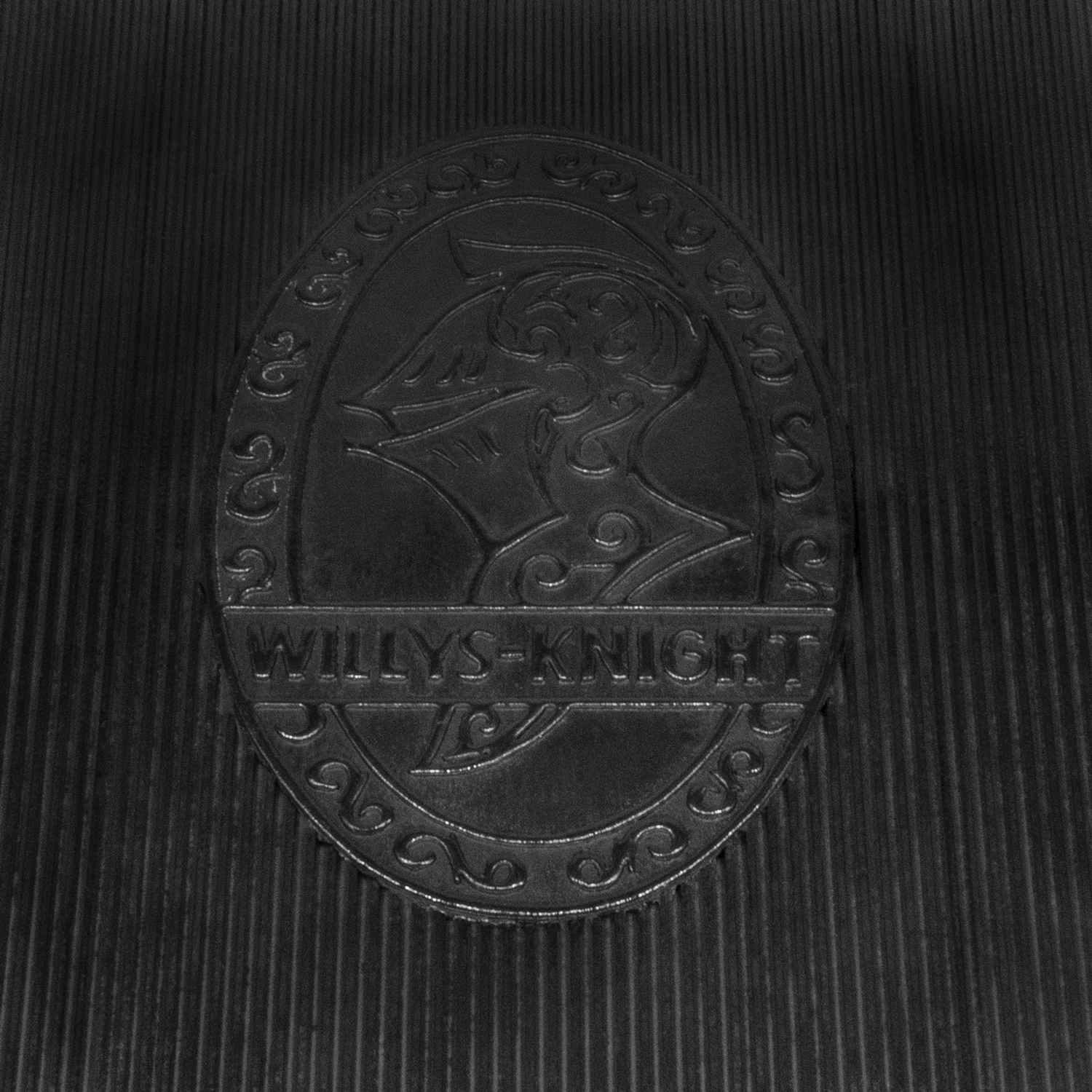 1932 Willys Knight Model 66D Accessory Floor Mat - 12"X17"-AC 51Accessory Floor Mat - made of high quality black rubber with molded original emblem. Also designed to be sewn into new carpets. 12"X17", Each
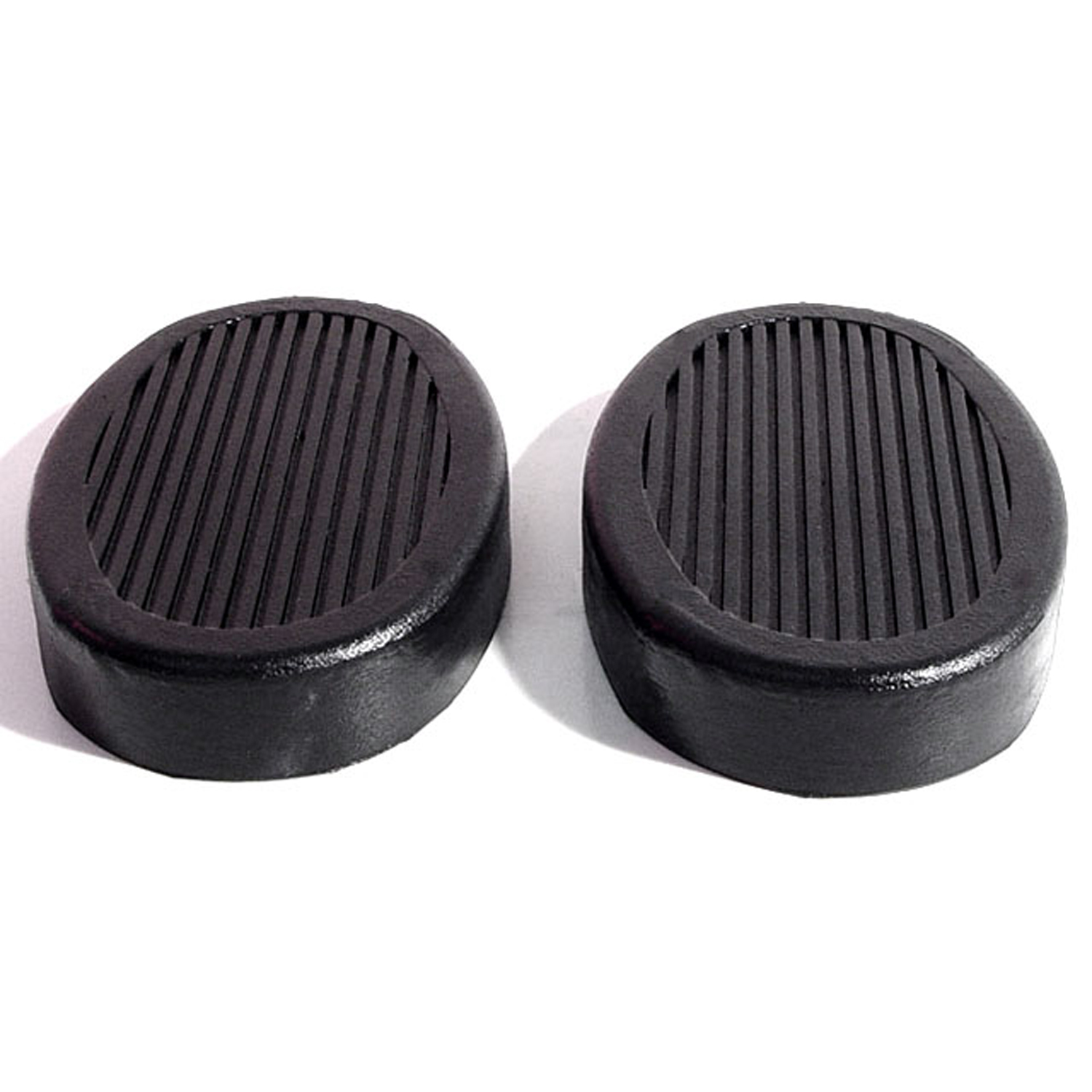 1932 Willys Knight Model 66D Clutch and Brake Pedal Pads. Exact reproduction-CB 96Clutch and Brake Pedal Pads. Exact reproduction. 2-3/16" wide X 3-5/16" long. Pair
 1932 Willys Knight Model 66D Hood Ornament Pad. 2-5/8" wide X 7-1/2" long. Each-MP 1304Hood Ornament Pad. 2-5/8" wide X 7-1/2" long. Each
 1932 Willys Knight Model 66D Headlight Bar Pads. 4-1/2" wide X 4-1/4" long. Pair-MP 1308Headlight Bar Pads. 4-1/2" wide X 4-1/4" long. Pair
Why Choose Metro?
For over 100 years, Metro Moulded Parts has been the pinnacle of quality in classic car restoration parts. Our commitment to precision and authenticity in every component ensures a perfect fit and an OEM-level appearance.
- Expert Craftsmanship & Quality: Each part is a testament to our dedication to reliability and perfection, crafted from original designs and thoroughly tested.
- Advanced Technology: We use cutting-edge techniques to create flawless, long-lasting parts that surpass others in performance.
- SuperSoft Sponge – The Ultimate Door Seal: Not only are our door seals 30% softer than competitors', but they're also guaranteed to never leak. They effectively reduce wind and road noise, enhancing your classic car's comfort and driving experience.
- Proudly American: Our parts are a product of American craftsmanship, made in the USA with a spirit of excellence and heritage.
- Unrivaled Warranty: We back our products with a 30-year industry-leading warranty, a testament to our confidence in their quality.
Join us in preserving the legacy of classic cars with parts that are crafted for perfection, not just made.