

Image of 1932 Willys Model 8-80d, Note: These illustrations use artistic license and may differ from actual historical models.
Performance Metrics
Fundamental Metrics
Emotional Appeal
MMP Rating
| Engine Specifications | |
|---|---|
| Engine Options: | Inline 6-cylinder |
| Displacement Range: | 3.2L |
| Horsepower Range: | Estimated 65-75 HP |
| Torque: | Not available |
| Compression Ratio: | Not available |
| Ignition System: | Distributor and coil |
| Cooling System: | Water-cooled |
| Performance Specifications | |
| 0-60 Time: | Not available |
| 1/4 Mile Time: | Not available |
| Top Speed: | 70 mph |
| Transmission and Drive | |
| Drive Type: | Rear-wheel drive |
| Transmission Type: | 3-speed manual |
| Fuel and Efficiency | |
| Fuel System Type: | Carburetor |
| MPG: | Not available |
| Dimensions and Brakes | |
| Brakes: | Mechanical drum brakes |
| Wheelbase: | 113 inches |
| Weight: | Estimated 2,500 lbs |
Note: Specifications for classic cars are given to the best of our ability, considering the limited and variant data available.
1932 Willys 8-80D: A Rare Straight-Eight from Willys-Overland
The 1932 Willys 8-80D paired a smooth straight-eight engine with the ambitions of an independent automaker fighting to stay competitive during the Great Depression. Built by Willys-Overland in Toledo, Ohio, it belongs to a short-lived chapter in the company’s history, before Willys became best known for the Jeep. Today, the 8-80D is an uncommon sight, and its exact story can be tricky to pin down: surviving records and later references do not always agree on model-year details or body-code meanings.
The “8-80” name is generally understood to refer to an eight-cylinder engine rated at about 80 horsepower. The “D” suffix appears in vehicle descriptions, but its meaning is not consistently documented in readily available references. For an individual car, the body tag, serial number, and original sales literature are the best evidence of its exact configuration.
Streamlined Style, Traditional Craft
The 8-80D carried the poised proportions expected of an early-1930s American car: a tall, upright grille, separate fenders, sweeping running boards, and a long hood that gave the straight-eight room to make its presence felt. Its styling was formal rather than flamboyant, with bright trim and carefully shaped bodywork lending the car a more substantial appearance than its maker’s financial position might suggest.
Depending on the specific 8-80-series configuration, buyers could find closed bodies such as sedans and coupes, along with open or convertible-style coachwork in the broader range. The exact body styles available for a particular 1932 designation should be verified against period catalogs or the car’s factory identification. Sedans are among the most recognizable surviving forms, though open cars and coupes have their own appeal to collectors.
Inside, the emphasis was on comfort and a sense of occasion. A broad bench seat, large steering wheel, upright instrument panel, and generous glass area made for a familiar prewar driving environment. Upholstery and trim depended on body style and specification. Cloth or broadcloth was typical in enclosed-car interiors of the era, while leather could appear in more upmarket or open configurations. Materials and details vary on surviving cars, so originality is best judged against period documentation rather than assumptions based on a restored example.
Color choices also varied by body and year. Dark, conservative shades were common on period cars, but two-tone combinations and brighter accents could be ordered or used on particular bodies. There is no single color that can be called the definitive 8-80D choice. On a present-day car, paint codes or factory records are more reliable guides than a general list of colors from the era.
Eight Cylinders in a Difficult Decade
The 8-80’s main technical calling card was its straight-eight layout. The engine is commonly cited as a side-valve, or L-head, unit of roughly 220.7 cubic inches, producing about 80 horsepower. A long, straight crankshaft and eight evenly spaced cylinders gave the engine the potential for notably smooth power delivery compared with many four- and six-cylinder rivals.
The rest of the car followed established practice for its time: front-engine, rear-wheel drive, a manual gearbox, and a substantial chassis. It was not a mass-market technological revolution, but it offered buyers the prestige and smoothness of eight cylinders from an independent manufacturer. Equipment and brake specifications should be checked against the individual car’s documentation, as details can differ across model years and versions.
That distinction matters when discussing the 8-80D’s historical significance. Its importance lies less in introducing a technology that transformed the industry than in showing how Willys-Overland tried to compete in a crowded market with an appealing, upscale powertrain. The company was under severe pressure as the Depression reduced demand for new cars. Willys-Overland entered receivership in 1933, but the business survived and eventually built the Jeep that would define its later reputation.
On the Road: Smooth, Measured, and Hands-On
Period performance figures for an individual 8-80D are not as easy to establish as the engine’s commonly quoted horsepower. A healthy, correctly tuned car might reach roughly 65 to 75 mph, depending on body style, gearing, tire condition, and road conditions. A 0-to-60-mph time was not generally a headline factory figure for cars of this age. A reasonable modern estimate would be somewhere around 25 to 30 seconds, but that should be treated as an informed estimate, not a verified test result.
The straight-eight’s character is more about smoothness than urgency. At a steady pace, it should deliver a flowing, mechanical hum, with the engine’s long exhaust note rising as the driver works through the gears. The manual transmission, large steering wheel, and comparatively heavy controls require more effort and attention than a modern car. The driver is part of the machinery, not isolated from it.
On a rough road, the 8-80D’s weight and period suspension provide a composed but distinctly vintage ride. It can absorb ordinary bumps, though sharp potholes and broken pavement make themselves known through the chassis. On winding roads, expect deliberate steering response and noticeable body movement rather than modern precision. Good tires, properly maintained steering and suspension components, and correctly adjusted brakes make a dramatic difference to confidence.
Living with a Willys Eight
Most surviving 8-80Ds are best suited to tours, local shows, and occasional pleasure drives. They can cover a surprising amount of road when properly sorted, but age, parts availability, and the demands of maintaining a prewar car make daily use a specialist choice. A well-preserved example is more likely to be treated as a weekend driver or show car than as everyday transport.
The straightforward layout is a benefit for owners who enjoy hands-on maintenance. Routine jobs such as servicing ignition components, checking fluids, and addressing fuel or cooling-system issues are familiar territory to experienced vintage-car mechanics. The challenge is often not the basic design but finding correct parts, locating a specialist familiar with Willys straight-eights, and avoiding poor-quality replacement components.
Before buying, inspect the engine for oil pressure and signs of overheating, and check the gearbox, differential, steering, brakes, and electrical system. Look closely at the frame and body for corrosion or old repairs. Confirm that major components match the car’s identity, especially if the vehicle is advertised as a specific 8-80D body style. A car that has been stored for years may need extensive recommissioning even if it looks presentable.
Little-Known Details and Common Complaints
The 8-80D’s most intriguing distinction is also its simplest: it represents Willys-Overland’s effort to put a smooth eight-cylinder car in front of buyers during one of the hardest periods in American automotive history. Its rarity today reflects the company’s struggles and the relatively small audience for an expensive car during the Depression.
There is no widely recognized speed, sales, or endurance record associated with the 8-80D, and claims of celebrity ownership should be supported with documentation. Its more meaningful historical connection is to Willys-Overland itself, a manufacturer that survived financial collapse and later became central to the story of the military and civilian Jeep.
Common criticisms are typical of a rare prewar car: parts can be difficult to source, performance is modest by modern standards, and high-speed driving demands care. The body and trim may also be challenging to restore correctly. For collectors, those drawbacks are balanced by the car’s uncommon straight-eight powertrain and its connection to a lesser-known period of a major American automaker.
Collector Value and Availability
The 1932 Willys 8-80D is rare on today’s market, but an exact production total is difficult to state confidently. Publicly available references do not provide a dependable, widely agreed figure for this precise model and body designation. As a cautious estimate, the 8-80 series may have been produced in the low thousands or fewer, with only a small number surviving. That is an estimate, not a factory-confirmed production count.
Condition, completeness, body style, provenance, and the quality of any restoration all have a major effect on value. As a broad North American guide, a project car could fall around $5,000 to $15,000, a usable driver might bring roughly $15,000 to $30,000, and a high-quality restored example could reach about $35,000 to $65,000 or more. Exceptional originality or unusually strong documentation can change the picture, while a non-running car with missing trim may sell for less.
Values for rare prewar cars can be uneven rather than steadily rising. The 8-80D’s scarcity supports collector interest, but its specialized parts and relatively small buyer pool can limit prices. Well-documented, correctly restored examples are generally better positioned than cars with uncertain history or cosmetic work that hides mechanical needs. These ranges are estimates, not a formal appraisal, and actual sale prices depend heavily on location and condition.
Why the 8-80D Still Matters
The 1932 Willys 8-80D is a compelling reminder that the story of American cars is not only about the biggest manufacturers or the longest-running nameplates. Its straight-eight engine, dignified styling, and Depression-era timing capture Willys-Overland’s attempt to reach for the upper end of the market just before the company’s fortunes sharply changed.
Rare, hands-on, and unmistakably of its time, the 8-80D rewards owners who value engineering character as much as easy parts availability. It is more than an obscure prewar sedan: it is a survivor from the chapter before Willys became synonymous with Jeep.
1932 Willys Model 8-80d Catalog of Parts
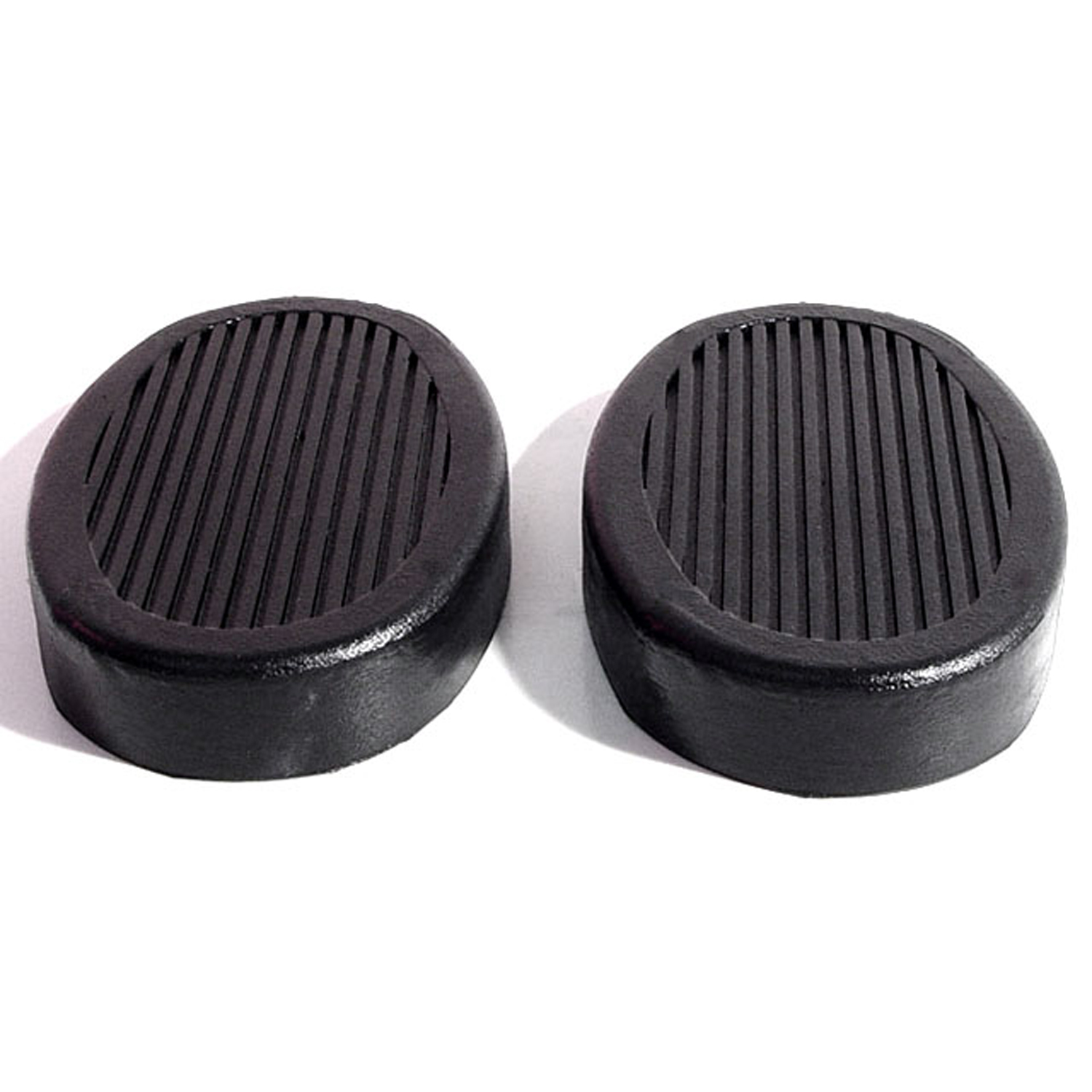 1932 Willys Model 8-80D Clutch and Brake Pedal Pads. Exact reproduction-CB 96Clutch and Brake Pedal Pads. Exact reproduction. 2-3/16" wide X 3-5/16" long. Pair
 1932 Willys Model 8-80D Hood Ornament Pad. 2-5/8" wide X 7-1/2" long. Each-MP 1304Hood Ornament Pad. 2-5/8" wide X 7-1/2" long. Each
 1932 Willys Model 8-80D Headlight Bar Pads. 4-1/2" wide X 4-1/4" long. Pair-MP 1308Headlight Bar Pads. 4-1/2" wide X 4-1/4" long. Pair
Why Choose Metro?
For over 100 years, Metro Moulded Parts has been the pinnacle of quality in classic car restoration parts. Our commitment to precision and authenticity in every component ensures a perfect fit and an OEM-level appearance.
- Expert Craftsmanship & Quality: Each part is a testament to our dedication to reliability and perfection, crafted from original designs and thoroughly tested.
- Advanced Technology: We use cutting-edge techniques to create flawless, long-lasting parts that surpass others in performance.
- SuperSoft Sponge – The Ultimate Door Seal: Not only are our door seals 30% softer than competitors', but they're also guaranteed to never leak. They effectively reduce wind and road noise, enhancing your classic car's comfort and driving experience.
- Proudly American: Our parts are a product of American craftsmanship, made in the USA with a spirit of excellence and heritage.
- Unrivaled Warranty: We back our products with a 30-year industry-leading warranty, a testament to our confidence in their quality.
Join us in preserving the legacy of classic cars with parts that are crafted for perfection, not just made.