

Image of 1932 Willys Model 8-88 Silver Streak, Note: These illustrations use artistic license and may differ from actual historical models.
Performance Metrics
Fundamental Metrics
Emotional Appeal
MMP Rating
| Engine Specifications | |
|---|---|
| Engine Options: | Inline 6-cylinder |
| Displacement Range: | 3.2L |
| Horsepower Range: | Estimated 65-85 HP |
| Torque: | Not available |
| Compression Ratio: | Not available |
| Ignition System: | Distributor and coil |
| Cooling System: | Water-cooled |
| Performance Specifications | |
| 0-60 Time: | Not available |
| 1/4 Mile Time: | Not available |
| Top Speed: | 70 mph |
| Transmission and Drive | |
| Drive Type: | Rear-wheel drive |
| Transmission Type: | 3-speed manual |
| Fuel and Efficiency | |
| Fuel System Type: | Carburetor |
| MPG: | Not available |
| Dimensions and Brakes | |
| Brakes: | Mechanical drum brakes |
| Wheelbase: | 113 inches |
| Weight: | Estimated 2,500 lbs |
Note: Specifications for classic cars are given to the best of our ability, considering the limited and variant data available.
1932 Willys 8-88 Silver Streak: First, a Name Check
The 1932 Willys 8-88 is a rare American straight-eight from a company fighting to stay alive during the Great Depression. One detail needs clearing up before we get under the hood: “Silver Streak” is not a consistently documented factory model name for the 1932 Willys 8-88. The term is more famously associated with Pontiac styling introduced later in the 1930s. The Willys name is the soundest one to use when identifying the car, though “Silver Streak” may appear in later descriptions, listings, or references to a particular car’s trim.
Willys-Overland was based in Toledo, Ohio, and had built its reputation on practical, competitively priced cars. The 8-88 represented a more ambitious side of the business: a full-size automobile powered by an eight-cylinder engine. Its arrival came at a difficult moment. The Depression had slashed demand for new cars, and Willys-Overland would enter receivership in 1933. That makes the 8-88 an intriguing snapshot of the company just before it turned toward the more affordable models that helped keep the Willys name alive.
Streamlined Style and Straight-Eight Presence
The 8-88 wore the formal proportions expected of an early-1930s American car, but with the visual confidence of a larger, more expensive machine. Its tall radiator, long hood, sweeping fenders, and upright passenger cabin gave it a strong road presence. Running boards joined the front and rear fenders, while external headlamps and brightwork framed the front end. The overall effect was substantial rather than sleek by modern standards, but the gently flowing fender lines already hinted at the more integrated body shapes that would become popular later in the decade.
Inside, buyers found a conventional, carefully finished cabin rather than a stripped-down economy interior. Depending on body style and equipment, the passenger compartment could feature broad upholstered seats, a wood-trimmed or wood-grain instrument panel, and polished metal controls. Materials and detailing varied with specification and age, so a surviving car’s cabin may have been altered or retrimmed over the years. Original upholstery and trim are especially valuable to collectors because period-correct replacements can be difficult to source.
Factory color availability is not well documented in the way it is for many better-known collector cars. Willys offered period paint and trim choices, but the exact combinations depended on body style, production run, and dealer order. Dark, formal colors were common on luxury-minded cars of the period, while contrasting fender or wheel finishes could add visual interest. A bright or “silver” detail on an individual car should not, by itself, be taken as proof that “Silver Streak” was an official trim package.
The 8-88 was offered in closed and open body configurations, with sedan and coupe forms among the types associated with the range. Exact availability could vary by model year and source, and surviving examples are scarce enough that individual cars are sometimes described inconsistently. The four-door sedan is the most recognizable practical configuration, while a coupe or open car has extra visual appeal for collectors. Before buying, verify the body style against the car’s identification details and period documentation.
Eight Cylinders in a Depression-Era Market
The 8-88’s central feature was its inline-eight engine, rated at approximately 88 horsepower. That smooth-running layout was a selling point in an era when many mainstream cars still used four- or six-cylinder engines. An eight-cylinder engine could deliver a more refined feel, especially at cruising speeds, and helped Willys present the 8-88 as a more prestigious offering than its modest sales position might suggest.
The car was not a mass-market styling revolution, but it showed how smaller manufacturers tried to compete above their weight. Willys combined a large-car appearance and an eight-cylinder powerplant at a time when buyers were becoming exceptionally cautious with their money. Its significance lies less in a single industry-changing invention than in this contrast: an ambitious, refined automobile launched just as the economic climate made such cars increasingly hard to sell.
The 8-88 also belongs to the final chapter of Willys-Overland’s prewar struggle. The company’s later success would come from a different direction, particularly with affordable cars and, eventually, military and civilian Jeep models. The 1932 eight-cylinder Willys is therefore a fascinating counterpoint to the rugged, utilitarian image most people associate with the marque today.
Performance: A Cruiser, Not a Sprinter
Period performance figures are not easy to pin down, and published specifications can differ. With roughly 88 horsepower, the Willys 8-88 had enough power for ordinary road use, but its substantial weight and period gearing meant acceleration was leisurely by modern standards. A reasonable estimate for 0 to 60 mph is somewhere around 25 to 30 seconds, though that should be treated as an approximation rather than a verified factory test. Depending on condition, gearing, tires, and body style, top speed may have been in the neighborhood of 70 to 80 mph. Sustained high-speed driving is not advisable in an unrestored example.
On the road, the straight-eight’s character is likely to be more notable than outright speed. Expect a measured build of power, a mellow mechanical note, and a strong sense of mass. The suspension and tall tires were designed for the roads of the early 1930s, not for sharp modern cornering. On rough surfaces, the car’s long chassis and soft ride can make it feel composed, but worn springs, old shock absorbers, and aged tires can quickly turn that comfort into wallow. On winding roads, smooth steering inputs and generous braking distances are essential.
Driving a 1932 car also means taking an active role behind the wheel. Steering effort, braking response, visibility, gear changes, and pedal feel are all products of another era. The experience is less about rushing from corner to corner and more about hearing the engine settle into a steady rhythm while the car rolls along at a relaxed pace.
Owning and Maintaining a Willys 8-88
Today, an 8-88 is primarily a collector car, restoration project, or show-field curiosity rather than a daily driver. Its size, age, limited parts supply, and comparatively delicate supply of original components make regular modern commuting impractical. A well-sorted example can still be driven on local tours and club events, where its unusual straight-eight layout is sure to draw questions.
Routine work follows familiar vintage-car principles: maintain the ignition and fuel systems, keep the cooling system in good order, inspect the brakes and steering, and use lubricants suitable for the car’s design. The engine itself is mechanically understandable to a capable vintage-car mechanic, but that does not make every repair easy. Unique trim, body panels, engine parts, and interior pieces may require patient searching, specialist help, or careful fabrication. Before purchase, check for overheating, low oil pressure, engine noise, structural rust, and evidence of incomplete or improvised repairs.
Willys 8-88 Facts and Common Myths
A frequent source of confusion is the “Silver Streak” label. Pontiac used Silver Streak as a distinctive styling theme beginning in 1935, so the phrase is often more firmly tied to Pontiac than to Willys. Unless supported by a period Willys brochure, build record, or other reliable documentation, it is safest to describe a car as a 1932 Willys 8-88 and treat “Silver Streak” as an informal or later-added designation.
The 8-88 is notable for being an eight-cylinder Willys, but it is not widely associated with a major land-speed record, famous endurance run, or signature racing victory. Its historical interest comes from its rarity and timing: it was a comparatively ambitious car from a manufacturer approaching a financial crisis. There is no dependable, widely accepted production total for the 1932 8-88, so exact numbers repeated in informal listings should be treated cautiously.
Its main criticisms are practical ones. The car is thirsty by modern standards, parts can be hard to find, and its performance and braking are modest compared with later classics. Those drawbacks are balanced by its individuality. Unlike a more common Ford or Chevrolet of the same era, an 8-88 is likely to be a conversation starter wherever it appears.
Collector Value and Availability
The 1932 Willys 8-88 is rare on today’s market, and sales are infrequent enough that condition and documentation matter more than a simple price guide. As a broad 2026 estimate, a project car may fall around $10,000 to $25,000, a usable but imperfect driver around $25,000 to $45,000, and a professionally restored example roughly $45,000 to $75,000 or more. An exceptional, highly original car with strong provenance could exceed that range, while an incomplete or poorly documented example may sell for considerably less.
These figures are estimates, not guaranteed market values. The small pool of buyers and the scarcity of direct comparable sales can make prices uneven. Over the long term, rare and well-restored examples may hold or gain value, but restoration costs can easily outrun resale value. For most owners, the appeal is historical and personal rather than a promise of investment returns. Production was likely limited by the Depression-era market; a rough guess of perhaps 1,000 to 3,000 8-88s for the 1932 model year is possible, but should not be mistaken for a confirmed factory figure.
Why the 1932 Willys 8-88 Still Matters
The 1932 Willys 8-88 combines a smooth eight-cylinder engine, formal early-1930s styling, and the story of a company facing extraordinary economic pressure. It is not famous for racing records or revolutionary engineering, and the “Silver Streak” name needs careful qualification. Its real distinction is that it represents Willys-Overland reaching for refinement at exactly the moment the market was turning against expensive ambition.
For collectors, that makes the 8-88 more than an uncommon old car. It is a rare reminder that the Willys story began with far more than Jeeps, and that even a manufacturer on the brink could build something with real presence, character, and historical depth.
1932 Willys Model 8-88 Silver Streak Catalog of Parts
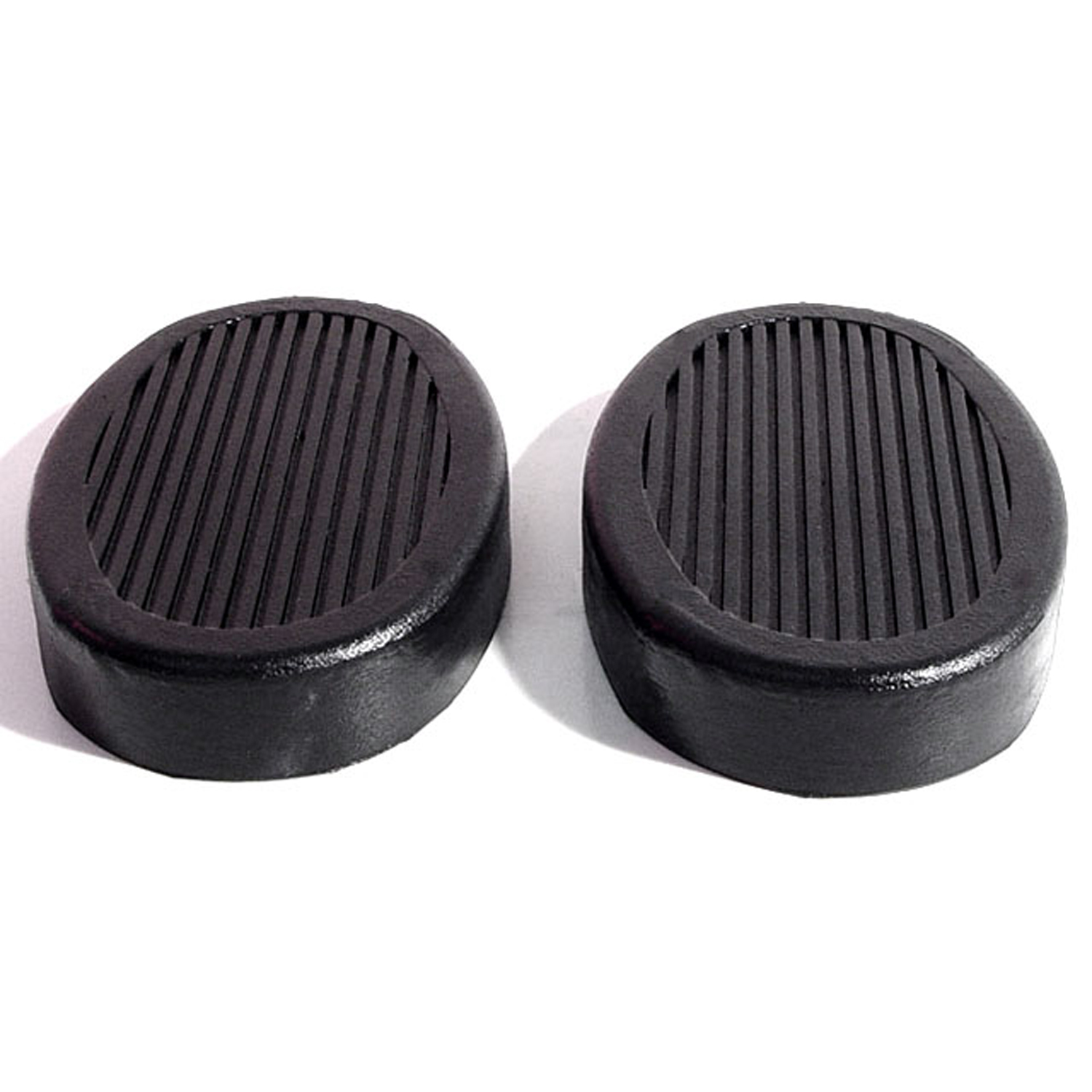 1932 Willys Model 8-88 Silver Streak Clutch and Brake Pedal Pads. Exact reproduction-CB 96Clutch and Brake Pedal Pads. Exact reproduction. 2-3/16" wide X 3-5/16" long. Pair
 1932 Willys Model 8-88 Silver Streak Hood Ornament Pad. 2-5/8" wide X 7-1/2" long. Each-MP 1304Hood Ornament Pad. 2-5/8" wide X 7-1/2" long. Each
 1932 Willys Model 8-88 Silver Streak Headlight Bar Pads. 4-1/2" wide X 4-1/4" long. Pair-MP 1308Headlight Bar Pads. 4-1/2" wide X 4-1/4" long. Pair
Why Choose Metro?
For over 100 years, Metro Moulded Parts has been the pinnacle of quality in classic car restoration parts. Our commitment to precision and authenticity in every component ensures a perfect fit and an OEM-level appearance.
- Expert Craftsmanship & Quality: Each part is a testament to our dedication to reliability and perfection, crafted from original designs and thoroughly tested.
- Advanced Technology: We use cutting-edge techniques to create flawless, long-lasting parts that surpass others in performance.
- SuperSoft Sponge – The Ultimate Door Seal: Not only are our door seals 30% softer than competitors', but they're also guaranteed to never leak. They effectively reduce wind and road noise, enhancing your classic car's comfort and driving experience.
- Proudly American: Our parts are a product of American craftsmanship, made in the USA with a spirit of excellence and heritage.
- Unrivaled Warranty: We back our products with a 30-year industry-leading warranty, a testament to our confidence in their quality.
Join us in preserving the legacy of classic cars with parts that are crafted for perfection, not just made.