

Image of 1933 Willys Model 8-88a, Note: These illustrations use artistic license and may differ from actual historical models.
Performance Metrics
Fundamental Metrics
Emotional Appeal
MMP Rating
| Engine Specifications | |
|---|---|
| Engine Options: | Inline 4-cylinder |
| Displacement Range: | 134 cu in (2.2 L) |
| Horsepower Range: | Estimated 48-50 hp |
| Torque: | Not available |
| Compression Ratio: | Not available |
| Ignition System: | Distributor and coil |
| Cooling System: | Water-cooled |
| Performance Specifications | |
| 0-60 Time: | Not available |
| 1/4 Mile Time: | Not available |
| Top Speed: | 65 mph |
| Transmission and Drive | |
| Drive Type: | Rear-wheel drive |
| Transmission Type: | 3-speed manual |
| Fuel and Efficiency | |
| Fuel System Type: | Carburetor |
| MPG: | Not available |
| Dimensions and Brakes | |
| Brakes: | Mechanical drum brakes |
| Wheelbase: | 100 inches |
| Weight: | Estimated 2,400 lbs |
Note: Specifications for classic cars are given to the best of our ability, considering the limited and variant data available.
1933 Willys Model 8-88A: A Rare Eight-Cylinder Willys
The 1933 Willys Model 8-88A is a fascinating reminder that Willys-Overland once aimed well beyond affordable family cars. Built during the depths of the Great Depression, this uncommon model belonged to the company’s more ambitious eight-cylinder line, a world away from the compact Willys 77 that would soon become the marque’s best-known survivor of the era.
Willys-Overland was based in Toledo, Ohio, and had grown into one of America’s major automakers during the early twentieth century. By 1933, however, the company was struggling under financial pressure and operating in a market where buyers were wary of expensive cars. The 8-88A came from that difficult transition. Its scarcity today reflects both the economic climate and the limited appeal of a relatively costly car at a time when many households were focused on essentials.
One important note for researchers and prospective buyers: the 8-88A designation is much less consistently documented than Willys names such as the 77. Period references and later listings do not always agree on details, so an individual car’s serial plate, engine number, and original sales literature are especially valuable. The figures below should be treated as period-series estimates rather than a substitute for verifying a specific car.
Art Deco Style and Cabin Details
The 8-88A wore the upright, confident proportions associated with early-1930s American cars. A tall radiator shell, long hood, separate front fenders, and distinct running boards gave it a formal profile. The headlamps sat prominently beside the grille, while the sweeping fenders softened the shape and gave the car a sense of motion even when parked. Its styling was substantial without the overwhelming scale of some luxury cars from larger manufacturers.
Inside, the cabin was designed for comfort and dignity rather than sport. Expect a broad bench seat, a large steering wheel, a straightforward instrument panel, and trim chosen to make the car feel more upscale than a basic economy model. Depending on body style and equipment, upholstery could include cloth or other period-appropriate materials, with painted or wood-grain-finished interior trim. Condition and originality vary widely on surviving examples, so restored cars may not reflect every detail of factory specification.
Color availability depended on body style, trim, and the buyer’s order. Dark greens, blues, maroons, browns, and black were common choices across American cars of the period, often paired with contrasting wheels or interior colors. A deep body color with lighter pinstriping or wheel accents suits the 8-88A particularly well, though an exact factory palette should be confirmed from documentation for the specific model and year.
Like other full-size cars of its time, the Willys eight was offered in closed and open body configurations across the broader series. Sedan and coupe forms are the most plausible styles collectors are likely to encounter or see referenced, while open cars were generally less common. Because surviving records for the 8-88A are thin, body-style claims should be checked against factory literature and vehicle identification details rather than assumed from a listing alone.
Engineering in a Difficult Year
The model’s defining feature was its eight-cylinder powerplant. The 8-88 name is commonly associated with an eight-cylinder Willys rated at roughly 88 horsepower, though published specifications are not uniform. That output put the car in a different category from small four-cylinder economy cars, even if it could not match the prestige or power of the most expensive American straight-eights.
Its engineering reflected the period’s practical approach: a conventional chassis, a front-mounted engine, rear-wheel drive, and mechanical systems that were familiar to contemporary repair shops. The eight-cylinder layout promised smoother power delivery than a typical four-cylinder engine. Hydraulic braking was not yet universal across the industry, and owners should check the exact brake equipment on any surviving car rather than assume modern-style stopping performance.
The 8-88A did not introduce a single innovation that transformed the entire industry. Its significance lies more in what it represents: Willys-Overland’s effort to maintain a broad product range while the Depression was reshaping the market. The company needed prestige and variety, but its long-term survival depended on building cars that ordinary buyers could afford.
Road Manners and Performance
With period power thought to be around 88 horsepower, a sound 8-88A would have felt relaxed at ordinary road speeds, especially compared with smaller cars of the day. A reasonable modern estimate is a top speed in the neighborhood of 75 to 85 mph, with a 0-to-60-mph time somewhere around 25 to 30 seconds. These are estimates, not dependable factory test figures. Actual performance depends on the engine’s condition, gearing, body style, tires, and how the car has been restored.
The driving experience is expected to be distinctly vintage. The engine should deliver a deep, steady note, while the long hood and large steering wheel give the driver a commanding view of the road. Steering will require more effort at low speeds than in a modern car, and the brakes call for anticipation rather than late, hard stops. On rough pavement, the suspension and tall sidewalls of period tires can take the edge off bumps, but the car will still move and sway more than a modern sedan.
On winding roads, the 8-88A is best driven smoothly. Its size, steering, and period tires reward measured inputs, not quick lane changes. In strong crosswinds, the tall body and older suspension design can also demand attention. It is a car for enjoying the route and the machinery, not for chasing modern traffic or testing its limits.
Ownership, Repairs, and Reliability
Today, the 8-88A is best suited to touring, club events, museum displays, and weekend drives. It is not an ideal daily driver unless it has been carefully recommissioned and the owner understands the compromises of prewar motoring. Parts availability is also more challenging than for common Ford, Chevrolet, or later Willys models.
Many mechanical repairs are within the reach of an experienced home mechanic, particularly if the car has been maintained with care. The bigger challenge is finding correct parts and identifying which components are original to the 8-88A. Before buying, inspect the engine, cooling system, brakes, steering, electrical wiring, and frame. Confirm that the engine and chassis identifiers make sense together, and look for evidence of improvised repairs or hard-to-reverse modifications.
Reliability depends heavily on restoration quality. A properly rebuilt engine and sound cooling system can make the car enjoyable on planned outings, but age alone brings risks: deteriorated fuel lines, dried seals, tired wiring, and brake components that may look serviceable but are not safe. A prewar car should receive a thorough mechanical inspection before being driven any distance.
Willys 8-88A Facts and Myths
The most notable fact about the 8-88A is its relative obscurity. It is easy to confuse it with better-known Willys models, especially the Willys 77, but they should not be treated as the same car. The 77 became important as a compact, lower-priced product that helped Willys-Overland rebuild its position. The 8-88A belongs to the rarer eight-cylinder side of the company’s story.
No widely recognized speed, endurance, or sales record is associated with the 8-88A, and claims of celebrity ownership should be supported by documentation. Its strongest historical connection is the turbulent 1933 period, when Willys-Overland was fighting to stay viable amid the Depression. The model’s main criticism today is practical: it is scarce enough that research, parts sourcing, and accurate restoration can take considerable patience.
Collector Value and Rarity
There is no reliable, widely tracked production total for the 1933 Model 8-88A. Given the economic conditions, the limited visibility of the designation in surviving records, and the rarity of examples today, a cautious working estimate would be several hundred to perhaps around 1,500 cars. That is an informed estimate, not a confirmed factory figure.
Value depends enormously on identity, body style, completeness, and restoration quality. As a broad current-market estimate, a project car might bring roughly $10,000 to $25,000, while a usable, partly restored example could fall around $25,000 to $45,000. A high-quality, correctly documented restoration might reach $45,000 to $85,000 or more, especially if it has an unusual body style or strong provenance. These ranges are approximate; a rare car with uncertain identification can be harder to price than a more common model.
The long-term outlook is best described as selective rather than guaranteed appreciation. Well-restored prewar cars with sound documentation remain attractive to marque specialists, but the buyer pool is smaller than for more familiar classics. Condition, authenticity, and access to parts will likely matter more to future value than rarity alone.
Why the 8-88A Still Matters
The 1933 Willys Model 8-88A captures a brief, ambitious chapter in Willys-Overland history. Its eight-cylinder character, formal early-1930s styling, and rarity make it a compelling alternative to the era’s better-known classics. It was built just as economic reality was pushing the company toward simpler, more affordable cars, giving the model an added historical edge.
For collectors, the appeal is not just the engine or the lines. It is the chance to preserve a nearly forgotten Willys and tell a richer story about an automaker navigating one of the hardest years in American automotive history. The 8-88A may be a quiet name in the classic-car world, but its rarity makes every surviving example speak volumes.
1933 Willys Model 8-88a Catalog of Parts
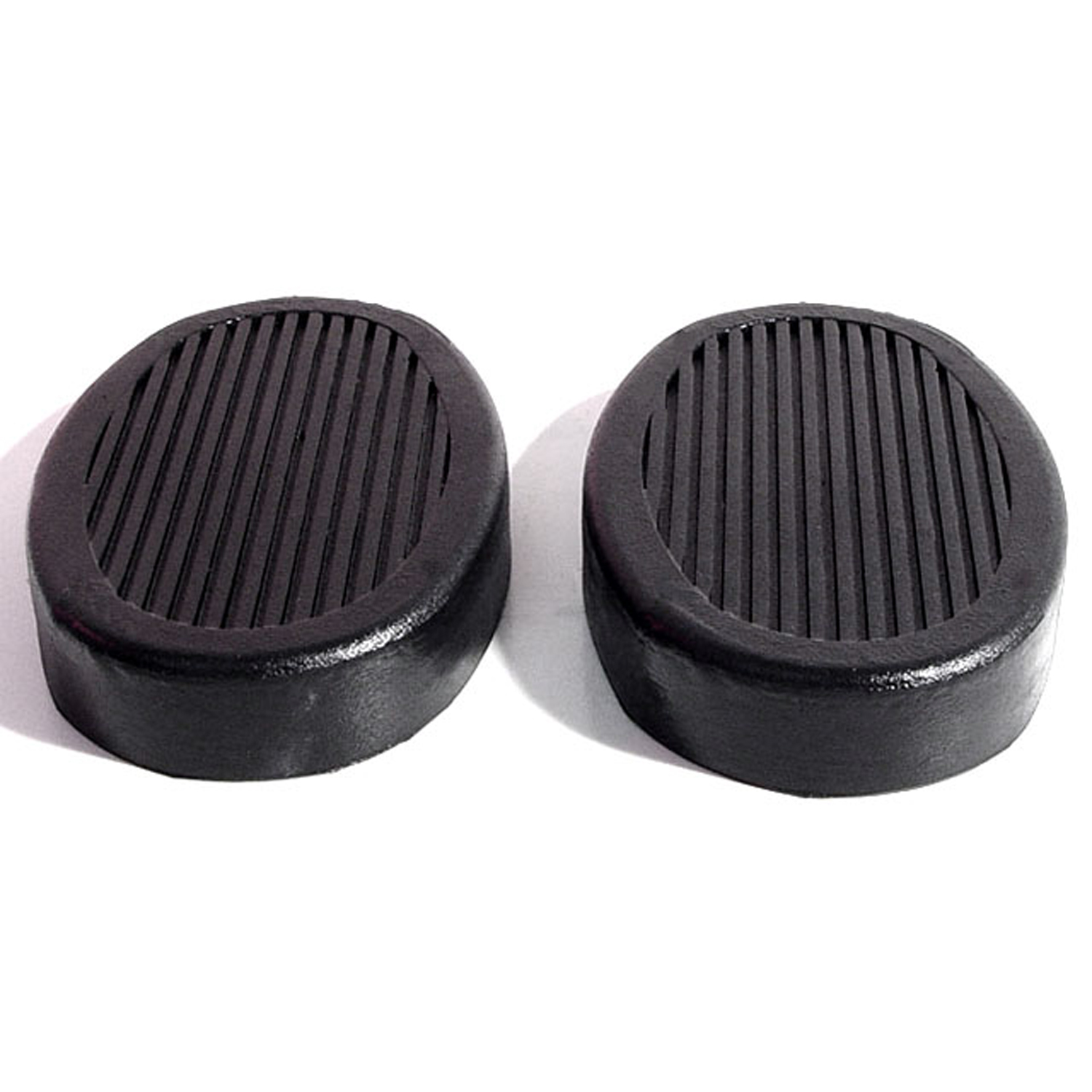 1933 Willys Model 8-88A Clutch and Brake Pedal Pads. Exact reproduction-CB 96Clutch and Brake Pedal Pads. Exact reproduction. 2-3/16" wide X 3-5/16" long. Pair
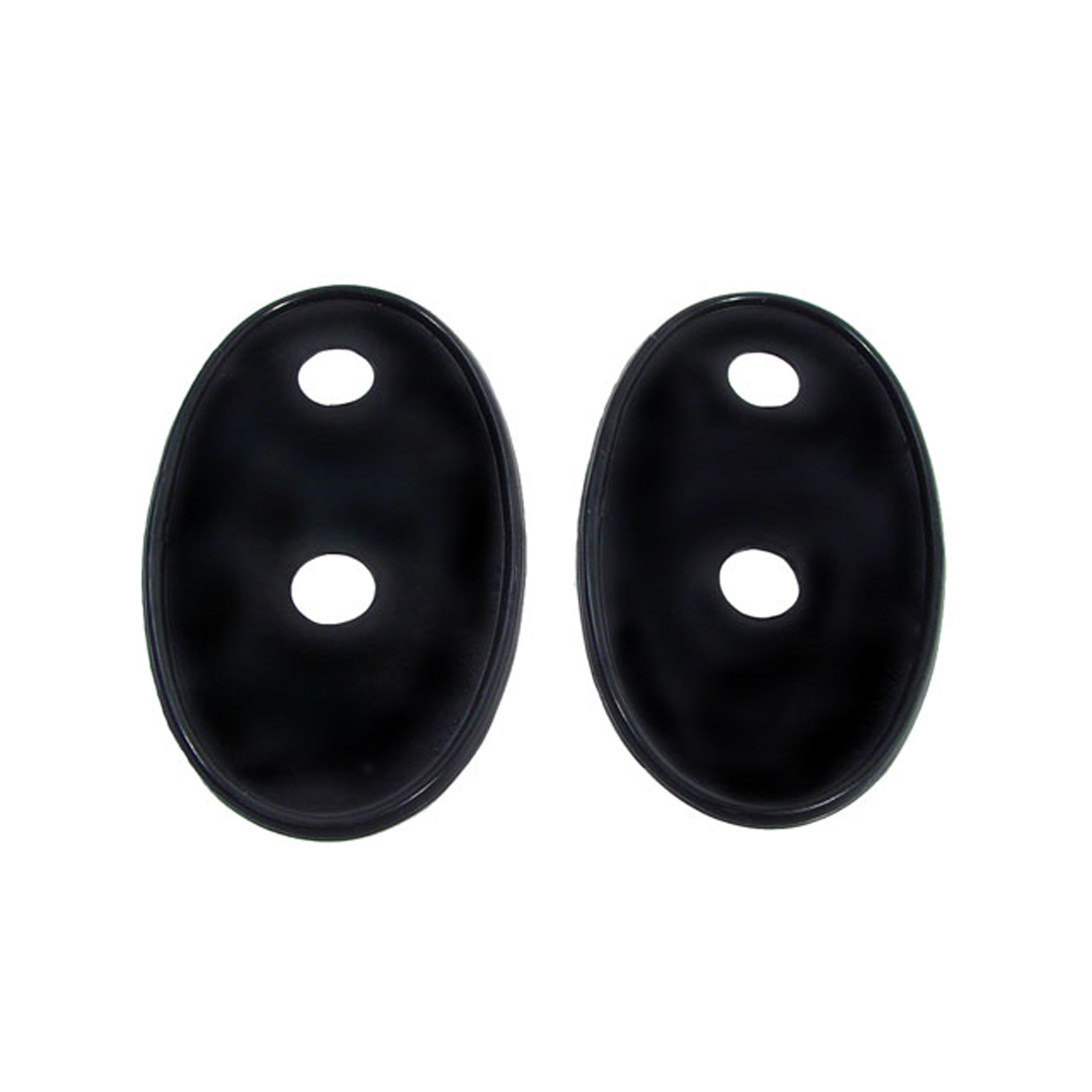 1933 Willys Model 8-88A Tail-light Stand Bases, with Beaded Edge-MP 1304-ATail-light Stand Bases, with Beaded Edge. 2-1/2" wide X 4-1/4" long. Pair
Why Choose Metro?
For over 100 years, Metro Moulded Parts has been the pinnacle of quality in classic car restoration parts. Our commitment to precision and authenticity in every component ensures a perfect fit and an OEM-level appearance.
- Expert Craftsmanship & Quality: Each part is a testament to our dedication to reliability and perfection, crafted from original designs and thoroughly tested.
- Advanced Technology: We use cutting-edge techniques to create flawless, long-lasting parts that surpass others in performance.
- SuperSoft Sponge – The Ultimate Door Seal: Not only are our door seals 30% softer than competitors', but they're also guaranteed to never leak. They effectively reduce wind and road noise, enhancing your classic car's comfort and driving experience.
- Proudly American: Our parts are a product of American craftsmanship, made in the USA with a spirit of excellence and heritage.
- Unrivaled Warranty: We back our products with a 30-year industry-leading warranty, a testament to our confidence in their quality.
Join us in preserving the legacy of classic cars with parts that are crafted for perfection, not just made.