

Image of 1945 Willys Jeep Ma, Note: These illustrations use artistic license and may differ from actual historical models.
Performance Metrics
Fundamental Metrics
Emotional Appeal
MMP Rating
| Engine Specifications | |
|---|---|
| Engine: | Go Devil L134 I4 |
| Displacement: | 134.2 cu in (2.2 L) |
| Horsepower: | 60 hp at 4000 rpm |
| Torque: | 105 lb-ft at 2000 rpm |
| Compression Ratio: | 6.48:1 |
| Ignition System: | 6-volt electrical system |
| Cooling System: | Liquid-cooled |
| Performance Specifications | |
| 0-60 Time: | Not available due to the vehicle's military purpose and age |
| 1/4 Mile Time: | Not available due to the vehicle's military purpose and age |
| Top Speed: | 65 mph |
| Transmission and Drive | |
| Drive Type: | 4WD |
| Transmission Type: | 3-speed manual |
| Fuel and Efficiency | |
| Fuel System Type: | Single barrel carburetor |
| MPG: | 15-20 mpg |
| Dimensions and Brakes | |
| Brakes: | Hydraulic drum brakes |
| Wheelbase: | 80 inches |
| Weight: | 2,293 lbs |
Note: Specifications for classic cars are given to the best of our ability, considering the limited and variant data available.
1945 Willys Jeep MB: The Wartime Original
The 1945 Willys Jeep MB was built for the hard realities of war, not for boulevard cruising. Small, tough, and remarkably capable off-road, it became one of the most recognizable military vehicles ever made and helped establish the blueprint for the modern 4x4.
The name needs a quick clarification: a 1945 production Willys is generally identified as an MB. The Willys MA was an earlier pre-production model from 1941, not the regular 1945 version. Willys-Overland manufactured the MB for the U.S. military during World War II, with production beginning in 1941 and ending in 1945. By the war’s close, Willys had built roughly 359,000 MBs. Ford also produced the closely related GPW under a government contract.
A memorable detail in the Jeep’s story is that the military’s original specification called for a lightweight reconnaissance vehicle, but the MB’s usefulness quickly spread far beyond scouting. It hauled supplies, carried wounded soldiers, pulled trailers, and crossed terrain that stopped many larger vehicles. The compact Jeep became a familiar sight across multiple wartime theaters.
Rugged MB Design and Equipment
The MB’s shape is unmistakable: flat body panels, upright grille, round headlights, a short hood, and a nearly vertical windshield. Its seven-slot grille is now closely associated with the Jeep name, although early production MBs used a stamped steel grille with nine slots before Willys adopted the familiar seven-slot design. The simple, squared-off body was designed for function and ease of manufacture rather than fashion.
Inside, the Jeep is equally straightforward. The cabin has metal surfaces, basic gauges, a large steering wheel, and simple controls that could be operated while wearing gloves. Seating is typically arranged for a driver and three passengers, though the rear bench is compact. There is little sound insulation, no luxury trim, and limited weather protection. A folding windshield and removable canvas top and side curtains offered some shelter, but the cabin remained exposed by modern standards.
For its era, the MB’s most important technology was its four-wheel-drive system. A transfer case allowed the driver to select high- or low-range gearing, while a three-speed manual transmission and low overall gearing helped the Jeep crawl over difficult ground. The windshield could fold forward, and the vehicle’s compact dimensions helped it navigate narrow trails. These were practical innovations, not gadgets: every feature served mobility, visibility, or ease of use.
Olive drab was the signature finish and the color most people associate with a wartime MB. Military vehicles could receive other finishes or markings for particular services and environments, but the MB was not offered with a broad consumer color palette. Its open-body configuration was the iconic standard. Military equipment and field modifications could include items such as a pintle hook, radio equipment, tool storage, and weapon mounts, depending on the vehicle’s assignment.
Why the Willys MB Changed 4x4 History
The MB helped make four-wheel drive familiar to a much wider audience. Before the war, 4x4 vehicles were largely specialized machines. The Jeep demonstrated how a relatively light vehicle with a compact footprint, low-range gearing, and durable mechanicals could serve in reconnaissance, transport, communications, and utility roles.
Its influence continued after the war. Willys adapted the basic formula for civilian use with the CJ series, and later generations of utility vehicles carried forward the Jeep’s mix of short wheelbase, open-air practicality, and off-road capability. The MB also influenced the military’s expectations for light tactical vehicles. Its success showed that a vehicle did not need to be large or powerful to be exceptionally useful.
What set the MB apart from many contemporaries was its combination of standardization and versatility. It was simple enough to maintain in the field, light enough to be transported, and capable enough to handle rough terrain. It was not the only small military 4x4 of the period, but its wartime service and postwar legacy made it the defining example.
Go-Devil Power and Trail Manners
Power comes from Willys’ 134-cubic-inch, L-head “Go-Devil” four-cylinder engine. In typical MB specification, it produced about 60 horsepower at 4,000 rpm and roughly 105 lb-ft of torque at low engine speed. The engine is paired with a three-speed manual transmission, a two-speed transfer case, and four-wheel drive. A typical curb weight is around 2,300 pounds, though equipment and restoration details affect the final figure.
Top speed is commonly quoted at about 60 to 65 mph, but that does not mean the MB is comfortable at that pace. Its gearing, short wheelbase, exposed cabin, and vintage tires all favor steady, moderate driving. There was no modern standardized 0-60 mph test for the vehicle. A healthy example might take roughly 30 seconds or more to reach 60 mph, and many drivers sensibly avoid trying to reproduce that figure.
On a rough trail, the MB feels at home. Its low gearing, light weight, and four-wheel drive help it tackle loose ground, ruts, and modest obstacles. On paved roads, the experience is more physical. The steering is unassisted, the brakes require firm input, and the short wheelbase can make bumps feel abrupt. On winding roads, it rewards measured inputs rather than quick cornering. Its high center of gravity and narrow track are reminders that this is a utility vehicle, not a sports car.
From the driver’s seat, the Go-Devil engine gives off a steady, mechanical putter rather than a polished modern exhaust note. The controls are direct, the cabin is noisy, and the ride is firm. The pleasure comes from feeling connected to the machine: shifting by hand, choosing the right range, and guiding a compact 4x4 through terrain that would challenge a conventional car.
Living With a 1945 Jeep
Today, most MBs are used as historic vehicles, weekend drivers, trail rigs, or show and parade cars. Some owners keep them in military configuration, while others add tasteful safety or reliability upgrades. They can be driven on public roads where local rules allow, but they are best suited to shorter trips and moderate speeds rather than modern highway commuting.
Mechanical simplicity is a major ownership advantage. The engine, gearbox, axles, and body are relatively easy to understand, and many repairs can be handled by an experienced home mechanic with ordinary tools. Parts support is strong because the MB shares much of its basic design with other wartime Jeeps and later civilian models. Replacement parts and reproduction body panels are widely available, though quality can vary.
Age is the main reliability challenge. Buyers should inspect the frame for corrosion or poor repairs, check the engine and gearbox for leaks and wear, and look closely at the body for rust, patch panels, and inaccurate restoration work. The electrical system is generally 6-volt on standard MBs, so careless conversion work or mismatched components can cause problems. A vehicle with a sound chassis and correctly rebuilt drivetrain is usually a better prospect than a shiny restoration hiding structural issues.
Wartime Facts and Common Criticisms
The Willys MB was part of a joint wartime production effort rather than the work of a single manufacturer alone. Willys built the MB, while Ford produced the similar GPW to the same broad military requirements. Together, the two companies made hundreds of thousands of vehicles for Allied service. Their shared design helped keep the fleet practical to supply and maintain.
The Jeep name’s origin remains debated. One popular explanation links it to the military abbreviation “GP,” while another story credits the term to a character from the Popeye comic strip. The word was already being used informally around the vehicle’s early public appearances, but no single origin story is universally accepted.
Common criticisms are easy to understand: the cabin is loud and weather-exposed, the ride is bouncy, the seats are basic, and the brakes and steering demand more effort than those of a modern vehicle. The MB also has limited highway performance and safety equipment by contemporary standards. Those drawbacks are part of its character, but they also mean owners should treat it as a historic machine and drive accordingly.
Collector Value and Availability
There is no single official production figure for 1945 MBs alone that is as widely cited as the total wartime Willys MB run. For context, Willys produced approximately 359,000 MBs from 1941 through 1945, with Ford building roughly 278,000 related GPWs. These totals make the wartime Jeep historically significant but not exceptionally rare compared with many collectible military vehicles. Surviving examples vary greatly in originality, condition, and restoration quality.
As a broad U.S. market estimate, a project vehicle may sell for around $5,000 to $12,000. A running, usable example might fall in the $12,000 to $25,000 range, while a well-restored Jeep commonly reaches about $25,000 to $45,000. Exceptional restorations, highly original vehicles, or examples with compelling documented histories can bring $45,000 to $70,000 or more. These are approximate ranges, and condition, provenance, location, and authenticity can move a price substantially.
Values have generally strengthened over the long term as interest in military history and classic 4x4s has grown. In the near term, prices tend to be stable but selective: buyers pay more for correct details, sound metalwork, and clear documentation, and less for poorly assembled restorations. The best examples are not necessarily the newest-looking ones. A well-preserved, honestly presented Jeep can be more appealing than a heavily restored vehicle with questionable parts.
The Jeep That Earned Its Reputation
The 1945 Willys Jeep MB brought together a simple four-cylinder engine, practical four-wheel drive, lightweight construction, and field-friendly engineering at exactly the moment history demanded those qualities. It served as transport, tool carrier, communications platform, and trail vehicle, then helped shape the civilian Jeep and the broader 4x4 tradition.
It is not fast, quiet, or comfortable by modern standards. Its achievement was more important than any of those things: the MB proved that a compact, thoughtfully engineered vehicle could go almost anywhere and do an extraordinary number of jobs. That is why the wartime Jeep remains more than a collectible. It is one of the machines that defined what a 4x4 could be.
1945 Willys Jeep Ma Catalog of Parts
 1945 Willys JEEP MA Shock Absorber Grommet. 1" bottom O.D-BN 11Shock Absorber Grommet. 1" bottom O.D., 3/4" high, with 5/8" I.D. Each
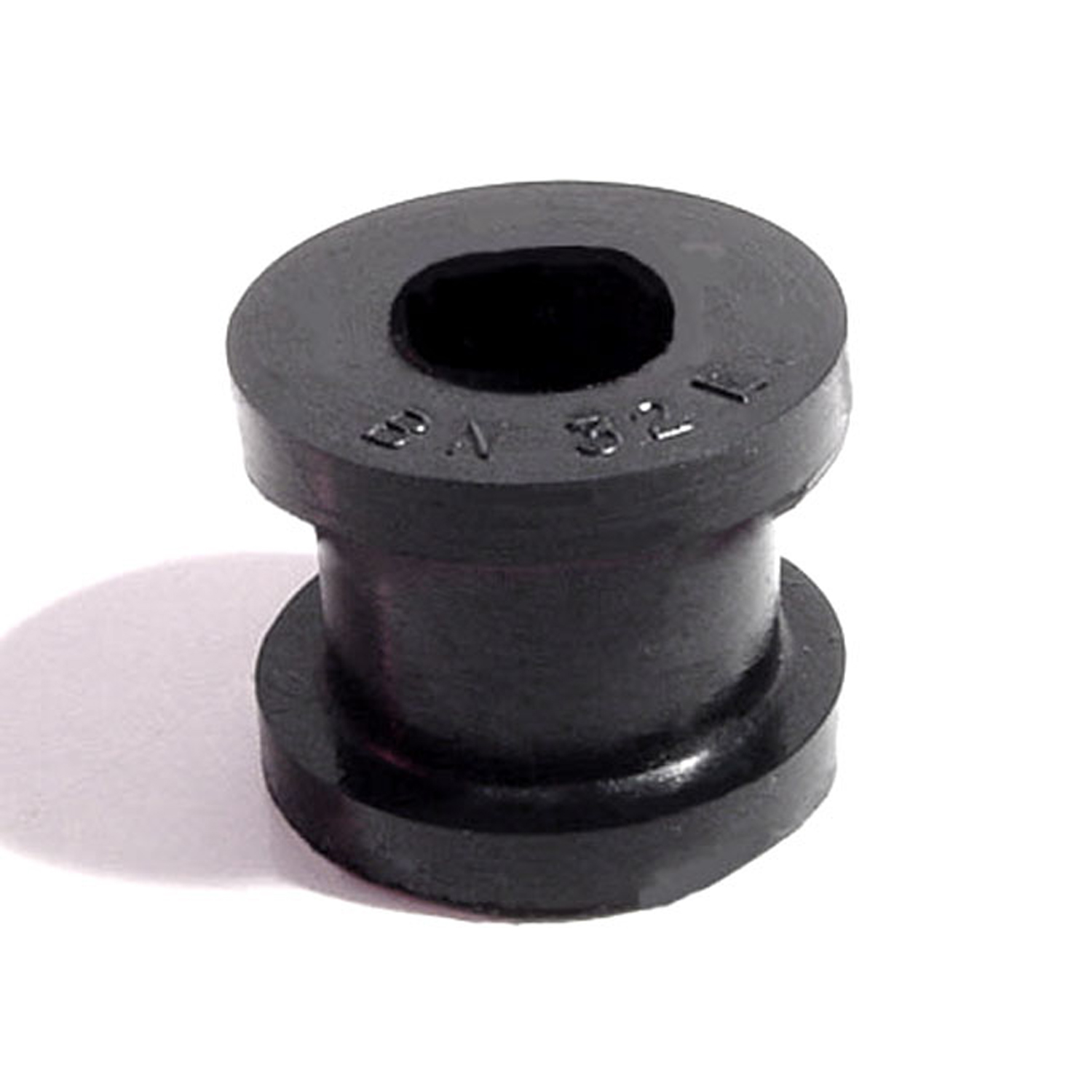 1945 Willys JEEP MA Generator Support Insulator Bushing. Each-BN 32-EGenerator Support Insulator Bushing. Each
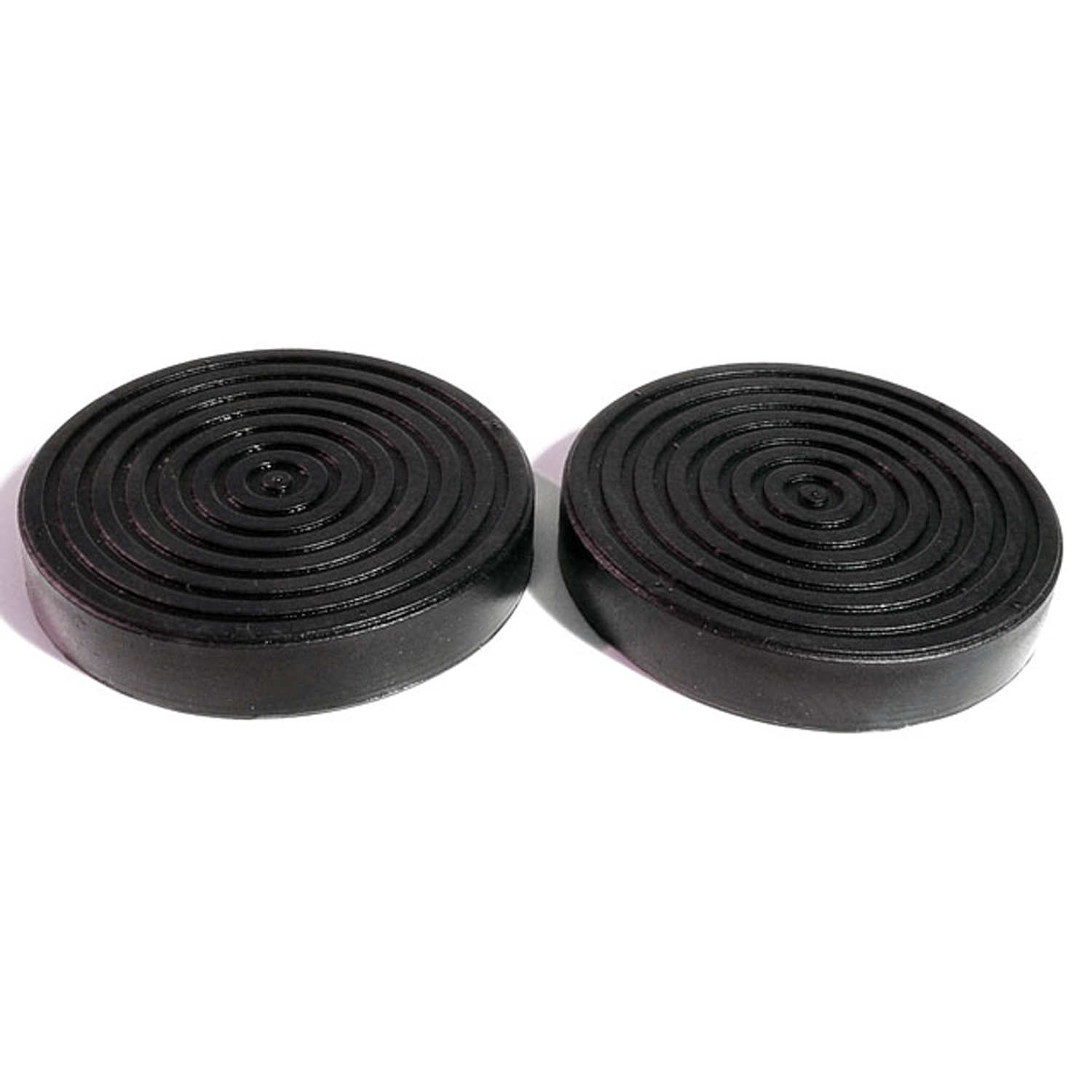 1945 Willys JEEP MA Clutch and Brake Pedal Pads. 3" Diameter. Pair-CB 61Clutch and Brake Pedal Pads. 3" Diameter. Pair
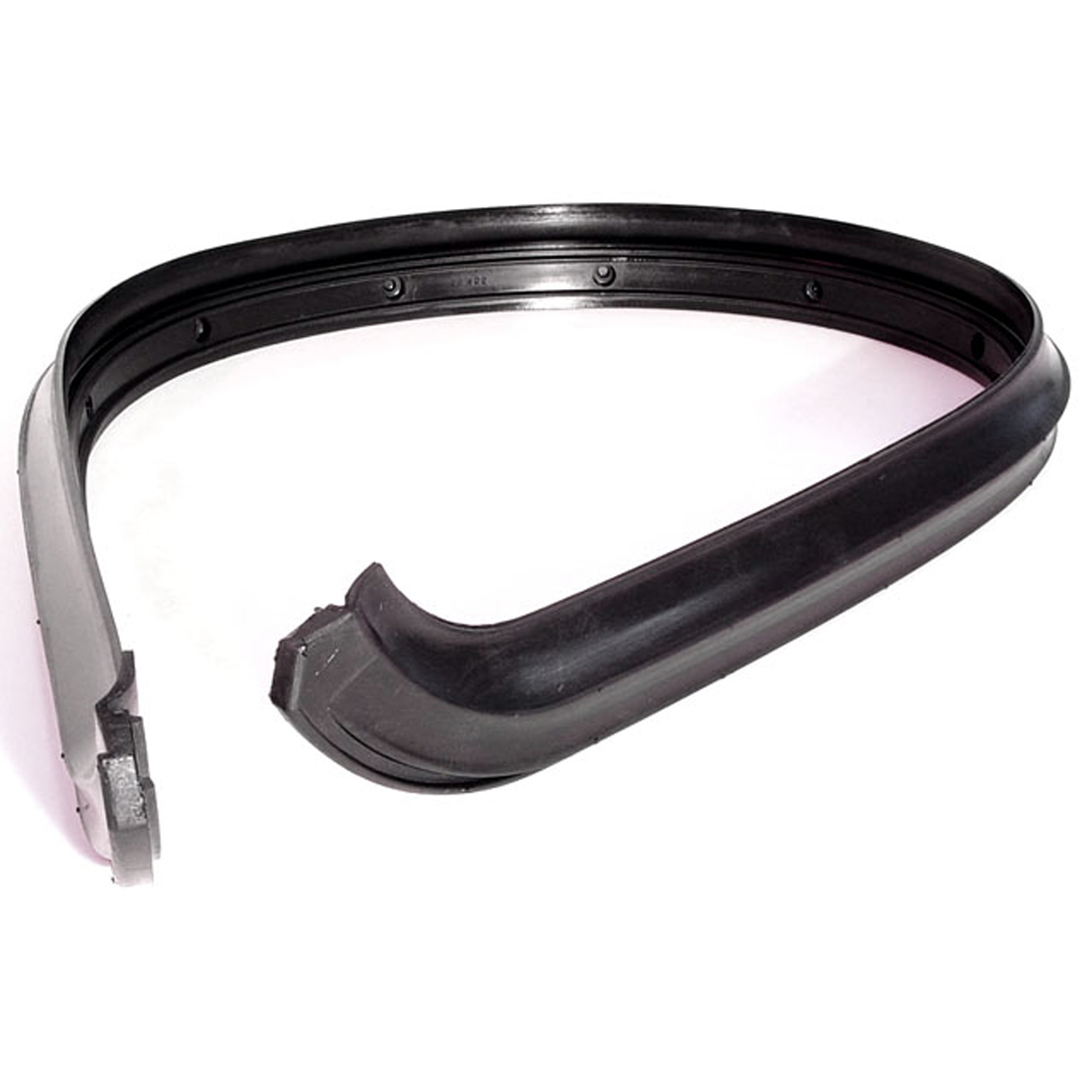 1945 Willys JEEP MA Windshield to Cowl Seal. 55-1/2" long. Each-CS 102Windshield to Cowl Seal. 55-1/2" long. Each
Why Choose Metro?
For over 100 years, Metro Moulded Parts has been the pinnacle of quality in classic car restoration parts. Our commitment to precision and authenticity in every component ensures a perfect fit and an OEM-level appearance.
- Expert Craftsmanship & Quality: Each part is a testament to our dedication to reliability and perfection, crafted from original designs and thoroughly tested.
- Advanced Technology: We use cutting-edge techniques to create flawless, long-lasting parts that surpass others in performance.
- SuperSoft Sponge – The Ultimate Door Seal: Not only are our door seals 30% softer than competitors', but they're also guaranteed to never leak. They effectively reduce wind and road noise, enhancing your classic car's comfort and driving experience.
- Proudly American: Our parts are a product of American craftsmanship, made in the USA with a spirit of excellence and heritage.
- Unrivaled Warranty: We back our products with a 30-year industry-leading warranty, a testament to our confidence in their quality.
Join us in preserving the legacy of classic cars with parts that are crafted for perfection, not just made.