

Image of 1955 Willys Bermuda, Note: These illustrations use artistic license and may differ from actual historical models.
Performance Metrics
Fundamental Metrics
Emotional Appeal
MMP Rating
| Engine Specifications | |
|---|---|
| Engine: | Willys Hurricane F-Head I4 |
| Displacement: | 134 cu in (2.2 L) |
| Horsepower: | Estimated 72-75 hp |
| Torque: | 114 lb-ft |
| Compression Ratio: | Estimated 7.5:1 |
| Ignition System: | Distributor and coil |
| Cooling System: | Liquid-cooled |
| Performance Specifications | |
| 0-60 Time: | Information not available |
| 1/4 Mile Time: | Information not available |
| Top Speed: | Estimated 65-70 mph |
| Transmission and Drive | |
| Drive Type: | Rear-wheel drive |
| Transmission Type: | 3-speed manual |
| Fuel and Efficiency | |
| Fuel System Type: | Carburetor |
| MPG: | Information not available |
| Dimensions and Brakes | |
| Brakes: | Drum brakes |
| Wheelbase: | 108 in |
| Weight: | Estimated 2,800 lbs |
Note: Specifications for classic cars are given to the best of our ability, considering the limited and variant data available.
1955 Willys Bermuda: A Rare Aero-Era Concept
The 1955 Willys Bermuda looks like the kind of practical little wagon that should have been a familiar sight on American roads, but it was anything but ordinary: the Bermuda is remembered as a rare, Brooks Stevens-designed proposal based on the compact Willys Aero. It came from Willys-Overland, the company best known for its military Jeeps, at a time when the automaker was trying to turn its wartime reputation into a stronger civilian-car business.
The Bermuda is generally treated as a prototype or design proposal rather than a regular-production model. That distinction matters: reliable factory specifications, color charts, production totals, and period performance tests are not readily available for the Bermuda itself. Its story is best understood through the Aero platform it drew on and the mid-1950s market it was meant to address.
Willys introduced the Aero in 1952 as a compact alternative to the increasingly large American cars of the period. By 1955, however, the company faced tough competition and financial pressures. A fresh, versatile body style could have helped broaden the Aero’s appeal. The Bermuda’s unusual mix of compact-car proportions and wagon practicality makes it a fascinating glimpse of the directions Willys considered.
Brooks Stevens’ Bermuda Design
The Bermuda’s appeal lies in its combination of utility and style. It was conceived as a two-door wagon, using the Aero’s relatively compact footprint while giving the body a longer, more purposeful profile. Rather than looking like a simple commercial delivery vehicle, it aimed for the character of a personal car that could also carry people and cargo.
Design details associated with the Bermuda include a distinctive roofline and wood-style exterior trim, a popular way in the 1950s to suggest the warmth and leisure-friendly image of a traditional wood-bodied wagon. The Aero platform’s compact proportions would have made the Bermuda noticeably trimmer than many full-size American wagons. Exact trim and body details can vary in descriptions and photographs, so surviving examples or period images should be checked closely before attributing a particular feature to the original design.
Brooks Stevens was one of the era’s most influential industrial designers. His work often balanced practical packaging with a strong visual identity, and the Bermuda reflects that approach. It was not simply a smaller version of a full-size wagon. Its compact base gave it a different, more nimble-looking character.
Because the Bermuda was not a standard showroom model, there was no established factory palette or range of retail trim packages. Period Willys Aero colors provide useful context, but they should not be presented as a confirmed Bermuda order list. The same applies to body styles: the Bermuda is associated with the two-door wagon concept, not a broad production family of sedans, convertibles, and hardtops.
Aero Mechanical Roots
The Bermuda was associated with the Willys Aero, whose compact engineering set it apart from many American cars of the early 1950s. Aero models used a unitized, or “unibody,” structure rather than a separate body mounted on a conventional full-length frame. That construction helped keep the car relatively light and gave Willys a useful platform for a smaller, more efficient passenger car.
Depending on the Aero model and specification, power came from Willys’ six-cylinder engines. A commonly cited engine for late Aero models is the 161-cubic-inch F-head six, often known by the “Hurricane” name. Exact output and equipment depended on the particular model and year, and a Bermuda-specific factory specification sheet is not generally available. It is therefore safer to describe the car as Aero-based than to assign it a definitive engine rating without documentation for the individual vehicle.
The Aero’s compact layout and light weight were important contrasts with the broad, heavy sedans that dominated the American market. The Bermuda concept extended that logic into a wagon format: practical space and useful carrying capacity without necessarily requiring a full-size car.
Performance and Driving Character
There are no dependable, widely published acceleration or top-speed figures for the Bermuda itself. Since it was not a regular-production model with a standard test record, quoting a precise 0-to-60 mph time or maximum speed would create a false sense of certainty. An Aero-powered Bermuda would likely have driven much like a contemporary Willys Aero, but its actual performance would depend on its engine, transmission, weight, gearing, and mechanical condition.
The Aero’s six-cylinder character would have been more about steady, practical motoring than rapid acceleration. Expect a period driving experience with a modest engine note, a manual transmission in many configurations, and steering and braking that feel distinctly older than those in a modern car. On rough pavement, the relatively light compact chassis would not have delivered the insulated, heavy-car ride of a large American sedan. On a winding road, its smaller dimensions could make it feel more manageable, though modern tires and suspension condition would have a major effect.
Those descriptions are informed expectations based on the Aero platform, not claims from a Bermuda road test. Anyone fortunate enough to encounter an authentic car should treat its drivability as an individual matter and have its brakes, tires, steering, and chassis inspected before driving it at speed.
Why the Bermuda Matters
The Bermuda’s significance is not that it changed mass-market automotive engineering or became a sales sensation. It did neither. Its importance is that it shows how Willys and Brooks Stevens explored new ways to make the Aero more appealing at a difficult moment for the company.
By the mid-1950s, the American market was shifting toward larger cars, more elaborate styling, and an expanding range of body types. A compact two-door wagon could have offered a different proposition: easier dimensions and lower-weight construction, paired with the flexibility buyers wanted for family trips and everyday hauling. The Bermuda’s design anticipated the long-running appeal of smaller lifestyle wagons, even though it did not establish a direct production trend of its own.
It also reflects the limits facing an independent automaker. An appealing design still needed manufacturing investment, dealer support, and enough expected sales to justify production. Willys’ passenger-car business was under pressure, and the Bermuda did not become a regular model. The concept is therefore as much a story about business realities as it is about styling.
Living With a Willys Aero-Based Car
A production Aero can be used for touring, local driving, or classic-car events, but a rare Bermuda prototype belongs in a different category. If an authentic example survives, it is best regarded as a preservation or show car rather than a daily driver. Its rarity, unusual bodywork, and potential historical value would make originality especially important.
Many mechanical parts shared with production Willys vehicles may be repairable by a capable classic-car mechanic, but body-specific components are another matter. Glass, trim, wagon panels, and other one-off details could be difficult or impossible to replace with off-the-shelf parts. Before purchasing any claimed Bermuda, buyers should verify its history and identity, inspect the chassis and body closely, and confirm which components are original, reproduced, or adapted.
For ordinary Aero owners, maintenance follows familiar vintage-car principles: keep the cooling and fuel systems in good order, inspect the brakes and suspension regularly, and use a specialist when parts or tuning procedures are unfamiliar. Reliability depends heavily on upkeep and parts quality. A well-sorted example can be enjoyable on suitable roads, but age, limited parts availability, and modest modern safety equipment make it a poor substitute for contemporary transportation.
Rare Willys Bermuda Facts
The most notable fact is its rarity. The Bermuda is commonly described as a prototype or concept, not a production model, and no dependable mass-production total is known. The safest estimate is that it was built in extremely small numbers, possibly as a one-off design or prototype. That is a reasoned estimate, not a verified factory production figure.
There is no widely established Bermuda speed record, sales record, or major competition history. Its appeal comes instead from its connection to Brooks Stevens, the Willys Aero, and the possibility of seeing a little-known design idea that never reached ordinary showrooms. Claims about celebrity ownership or appearances at major historical events should be treated cautiously unless backed by records.
A common criticism is that the Bermuda never had the opportunity to prove itself. Without production figures or extensive period testing, it is difficult to judge how well it would have sold or how it would have compared with established wagon rivals. Another challenge for enthusiasts is separating documented facts from attractive but unsupported stories. With a rare concept car, provenance is part of the car’s value.
Collector Value and Availability
There is no reliable, routine market price for a 1955 Willys Bermuda because it is not a normal production car that appears regularly in classified listings. For context, ordinary Willys Aero values vary widely with model, condition, originality, and restoration quality. A standard Aero might trade for several thousand dollars in project condition, while a well-restored or especially desirable example can reach the tens of thousands.
An authentic Bermuda prototype would be in a different category. As a cautious estimate rather than a confirmed appraisal, a documented example might attract offers in the broad range of roughly $75,000 to $200,000 or more, depending on its condition, completeness, provenance, and the level of interest at auction. A one-of-a-kind car with exceptional documentation could exceed that range, while an uncertain or heavily altered vehicle could be worth substantially less. The estimate is necessarily speculative because comparable public sales are scarce.
Availability is likely to be extremely limited. There is no sound basis for claiming a precise production count; “one-off or very low-volume prototype” is more responsible than assigning a firm number. If a Bermuda appears for sale, expect careful scrutiny of its identity and history. Over time, interest in unusual coachwork, independent American makes, and Brooks Stevens’ design work may support its value, but the market is too thin to call its appreciation steady or guaranteed.
The Willys That Nearly Was
The 1955 Willys Bermuda brings together a compact Aero foundation, Brooks Stevens’ design thinking, and the ambitions of an independent automaker trying to find room in a crowded market. Its two-door wagon concept offered a distinctive alternative to the era’s larger cars, but it never became a familiar production model.
That unrealized potential is exactly what makes the Bermuda compelling. It is not merely a rare Willys; it is a reminder that automotive history is shaped by the ideas that made it to the showroom and the intriguing ones that did not.
1955 Willys Bermuda Catalog of Parts
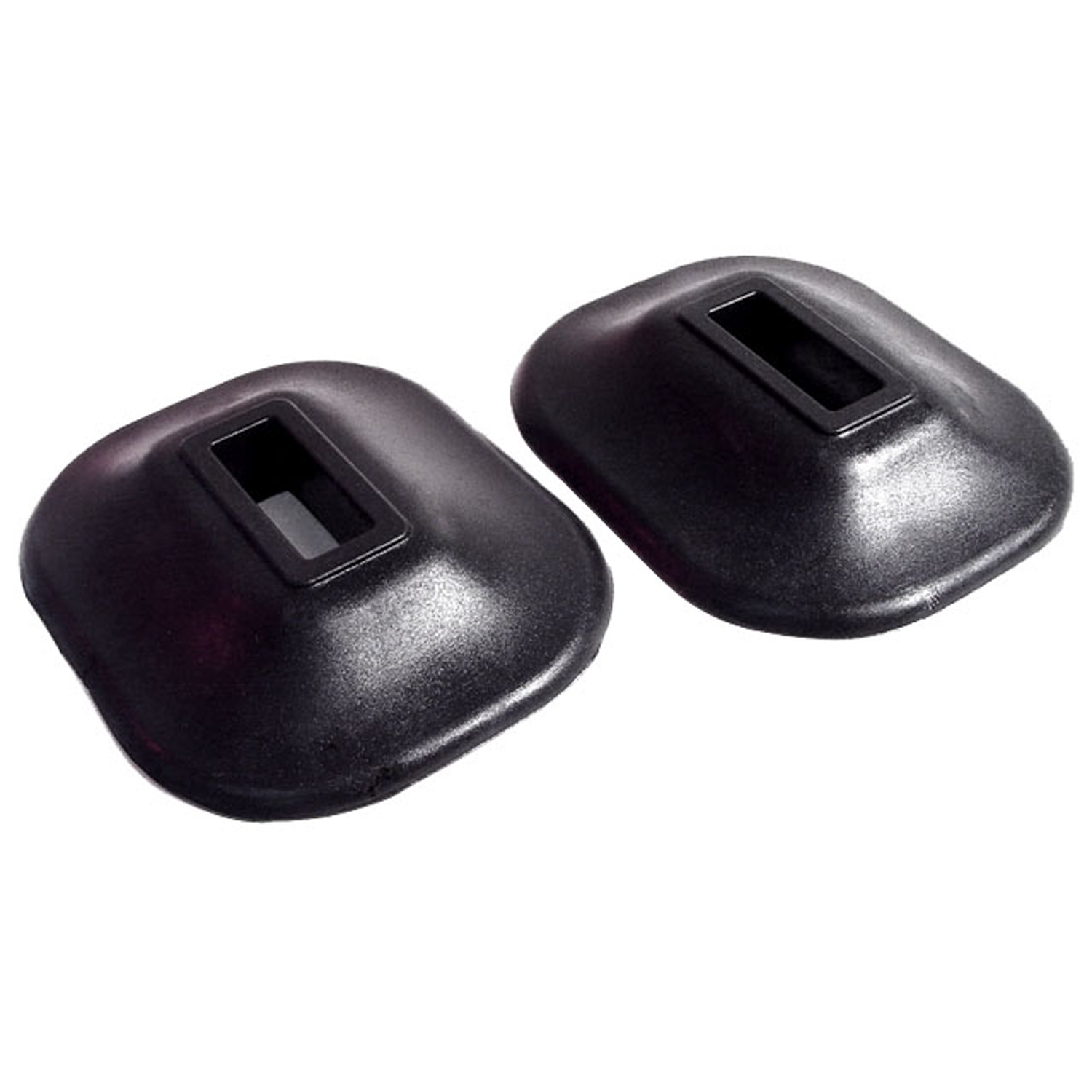 1955 Willys Bermuda Front and Rear Bumper Arm Grommets-BG 62Front and Rear Bumper Arm Grommets. 3-1/8" wide X 3-7/8" long, with 1-3/8" long inner slot. Pair
 1955 Willys Bermuda Shock Absorber Grommet. 1" bottom O.D-BN 11Shock Absorber Grommet. 1" bottom O.D., 3/4" high, with 5/8" I.D. Each
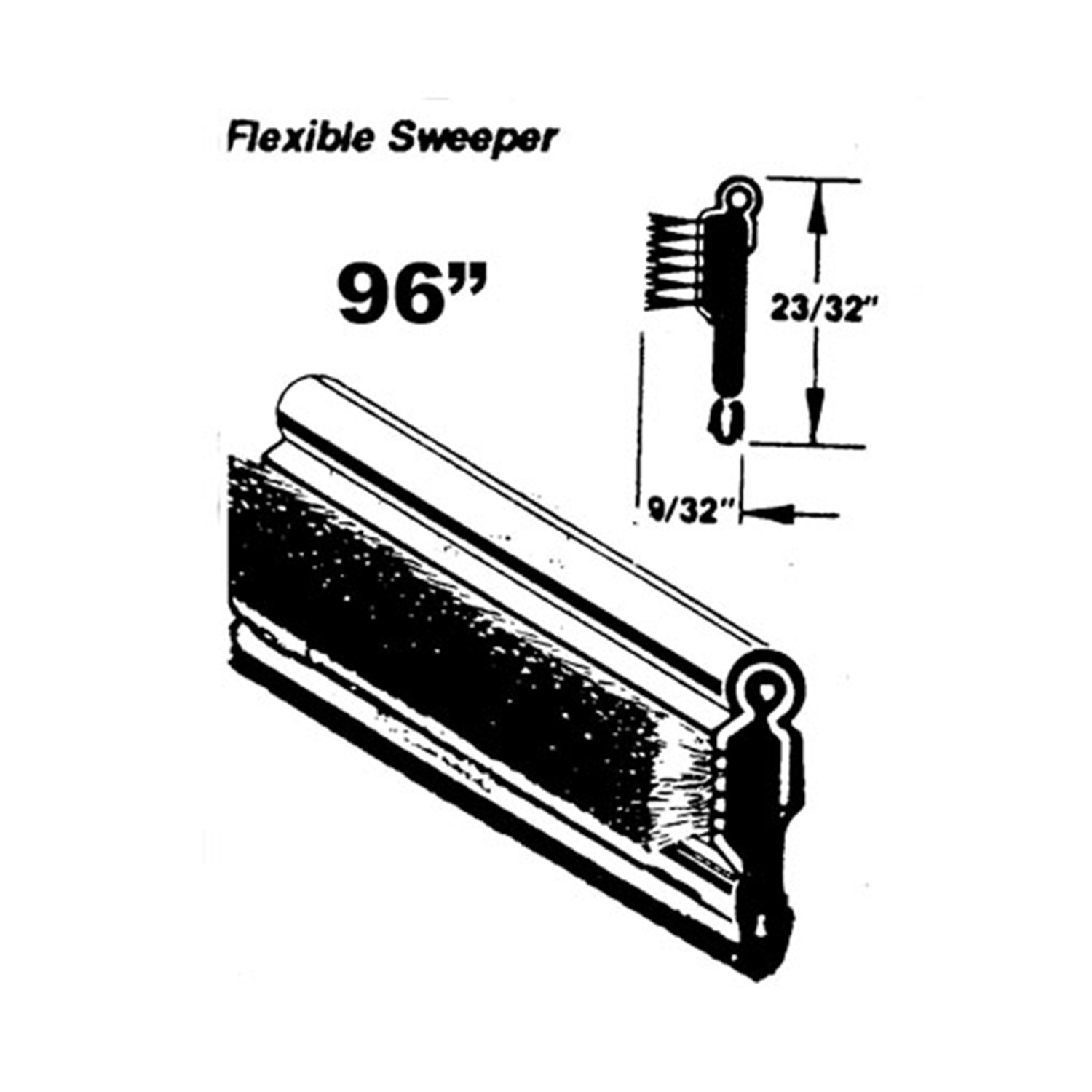 1955 Willys Bermuda Flexible window sweeper. Made with stainless steel bead-WC 4-96Flexible window sweeper. Made with stainless steel bead. 96 in. long. Each. NOTE: $20 special shipping charge applies for domestic orders. Call or email for overseas shipping costs. Part can be sectioned in two or three equal lengths to reduce overseas shipping costs.
Why Choose Metro?
For over 100 years, Metro Moulded Parts has been the pinnacle of quality in classic car restoration parts. Our commitment to precision and authenticity in every component ensures a perfect fit and an OEM-level appearance.
- Expert Craftsmanship & Quality: Each part is a testament to our dedication to reliability and perfection, crafted from original designs and thoroughly tested.
- Advanced Technology: We use cutting-edge techniques to create flawless, long-lasting parts that surpass others in performance.
- SuperSoft Sponge – The Ultimate Door Seal: Not only are our door seals 30% softer than competitors', but they're also guaranteed to never leak. They effectively reduce wind and road noise, enhancing your classic car's comfort and driving experience.
- Proudly American: Our parts are a product of American craftsmanship, made in the USA with a spirit of excellence and heritage.
- Unrivaled Warranty: We back our products with a 30-year industry-leading warranty, a testament to our confidence in their quality.
Join us in preserving the legacy of classic cars with parts that are crafted for perfection, not just made.