

Image of 1956 Willys Station Wagon, Note: These illustrations use artistic license and may differ from actual historical models.
Performance Metrics
Fundamental Metrics
Emotional Appeal
MMP Rating
| Engine Specifications | |
|---|---|
| Engine: | Super Hurricane 6 |
| Displacement: | 226 cu in (3.7 L) |
| Horsepower: | 105 hp |
| Torque: | 190 lb-ft |
| Compression Ratio: | 7.5:1 |
| Ignition System: | Battery Ignition |
| Cooling System: | Liquid-cooled |
| Performance Specifications | |
| 0-60 Time: | Estimated 20 seconds |
| 1/4 Mile Time: | Not available |
| Top Speed: | 75 mph |
| Transmission and Drive | |
| Drive Type: | 4WD |
| Transmission Type: | 3-speed manual |
| Fuel and Efficiency | |
| Fuel System Type: | Carburetor |
| MPG: | 15-20 mpg |
| Dimensions and Brakes | |
| Brakes: | Drum brakes |
| Wheelbase: | 104.5 in |
| Weight: | 3,200 lbs |
Note: Specifications for classic cars are given to the best of our ability, considering the limited and variant data available.
1956 Willys Station Wagon: The Jeep That Made Room for the Family
The 1956 Willys Station Wagon could carry a family, haul farm supplies, and head down a muddy track without needing a separate vehicle for each job. Built by Willys Motors, it combined practical wagon space with the rugged engineering that made the Jeep name famous. Its upright shape and steel body may look familiar today, but in the postwar years this was a clever alternative to the traditional wood-bodied family wagon.
The Station Wagon’s story began in 1946, when Willys-Overland introduced a design by industrial designer Brooks Stevens. It is widely recognized as the first mass-produced American station wagon designed from the outset with an all-steel body. By 1956, Willys was part of Kaiser Industries, and the wagon had become an established member of the Jeep lineup. One detail that still surprises enthusiasts: its handsome “woodie” appearance was a styling effect, not a body made from wood. Steel made the wagon more durable and easier to maintain than many of its wood-bodied rivals.
Steel Woodie Styling and Practical Cabin
The 1956 wagon wears a tall, square profile, with a nearly vertical windshield, generous windows, and a long roof that prioritizes headroom and cargo capacity. Its broad front end, simple grille, round headlamps, and sturdy bumpers give it a distinctly work-ready look. The slab-sided body is less streamlined than a modern SUV, but its clean proportions have aged into a classic design. On some examples, contrasting paint or woodgrain-style side treatments added a touch of suburban polish to the utilitarian shape.
Inside, the focus is function rather than luxury. The cabin typically features painted metal surfaces, practical door panels, and durable upholstery, often in vinyl or sturdy cloth, depending on specification and replacement history. A wide front bench provides space for passengers, while the rear bench makes the wagon useful for family trips or work crews. Certain configurations could be fitted with an optional third-row seat, although that reduced the room available for luggage. The rear opening, with its separately operated upper glass and lower tailgate, makes loading bulky items straightforward.
Equipment was simple by modern standards. Drivers got a traditional steering wheel, basic gauges, manual controls, and a three-speed manual transmission. Four-wheel-drive versions added a transfer case, giving the driver a low-range option for slow, demanding terrain. Power steering, air conditioning, and today’s safety systems were not part of the experience. For its era, the wagon’s most important innovations were its all-steel body, useful interior volume, and availability of four-wheel drive in a family-sized vehicle.
Paint choices and trim combinations varied by market, equipment, and production run. Period examples can be found in subdued shades as well as brighter blues, greens, reds, and yellows, often paired with a contrasting roof or side treatment. Original paint codes and combinations are worth checking against factory documentation, since decades of repainting can make a non-original color look convincingly period-correct.
The most recognizable body style is the two-door Station Wagon, offered with either rear-wheel drive or four-wheel drive. Willys also sold related utility body styles, including panel-delivery versions intended for commercial use. The enclosed wagon is the most familiar and collectible today because it captures the model’s unusual mix of passenger comfort and Jeep-style utility.
Why the Willys Wagon Matters
The Station Wagon helped establish a formula that would later become central to the SUV market: an enclosed, steel-bodied vehicle with room for passengers and cargo, paired with the option of four-wheel drive. Before family-oriented sport utility vehicles became commonplace, Willys was already selling a wagon that could serve as everyday transportation during the week and tackle rough roads on the weekend.
Its contemporaries often required buyers to choose between a comfortable family car and a rugged utility vehicle. The Willys blurred that distinction. The wagon was not as refined as a conventional sedan, but its useful cabin, available four-wheel drive, and straightforward mechanical layout made it appealing to rural families, tradespeople, and government users. Its influence can be seen in later Jeep utility vehicles, including the Wagoneer, and in the broader evolution of the American SUV.
Engine, Speed, and Road Manners
Engine and drivetrain specifications depended on the wagon’s configuration. The 1956 range included the 134-cubic-inch F-head four-cylinder, commonly called the Hurricane, and six-cylinder power was available on some versions. The exact engine fitted to an individual wagon should be verified by its serial number and original build information, since engines are frequently swapped during restoration. A three-speed manual gearbox was typical, with two-wheel-drive models sending power to the rear wheels and four-wheel-drive versions using a transfer case for additional traction.
Expect modest performance rather than modern traffic-light speed. A sound four-cylinder wagon may reach roughly 60 to 65 mph, while a six-cylinder example can generally cruise somewhat faster. Depending on engine, gearing, condition, load, and altitude, a period wagon might take around 20 to 30 seconds to accelerate from zero to 60 mph. These are present-day estimates, not a single official figure for every 1956 configuration. The wagon was built to carry people and gear, not to win drag races.
On a smooth road, the tall body and solid-axle design make the wagon feel purposeful but old-fashioned. It rides firmly over bumps, and its high center of gravity encourages a measured pace through corners. On winding roads, the upright driving position gives a good view ahead, but the steering and body lean remind the driver that this is a vintage utility vehicle. Four-wheel drive is useful on loose surfaces, snow, and muddy tracks, though it does not turn the wagon into a modern off-roader with advanced traction controls.
Behind the wheel, the experience is mechanical and direct. The engine has a steady, workmanlike note, the manual gearbox asks for deliberate shifts, and the steering requires more effort than a modern car, especially at low speeds. Road and engine noise are part of the soundtrack. Owners tend to appreciate the wagon most when they drive it at an unhurried pace and let its practical character set the mood.
Living With a 1956 Willys Wagon
Today, the Station Wagon is most often a show car, weekend cruiser, hobby project, or occasional-use classic. Some owners still put their wagons to work at farms, camps, and outdoor properties, where the simple layout and available four-wheel drive remain useful. Regular commuting is possible, but the lack of modern crash protection, slower acceleration, and limited comfort make it less suitable for fast highways and heavy traffic.
Mechanical repairs are generally approachable for an owner with basic tools and experience. The engines and driveline are conventional, and specialist knowledge is available through Jeep and Willys clubs. The main challenges are often body and trim parts, rust repair, and locating correct components for a particular year. Before buying, inspect the frame, floor, lower doors, rocker areas, wheel arches, and body mounts carefully. A tired engine can often be rebuilt; extensive rust or poorly executed body repairs can be much more expensive.
Reliability depends heavily on condition and maintenance. A well-sorted example can be enjoyable and dependable for local trips, but a decades-old vehicle may need attention to its brakes, cooling system, wiring, fuel system, and steering before it is ready for regular use. Parts availability is reasonable for common mechanical items, while original trim, glass, and body pieces may require patience or specialist suppliers.
Willys Wagon Facts and Myths
The wagon’s steel “woodie” look is one of its most memorable design tricks. Real wood was fashionable on many early station wagons, but it required upkeep and could deteriorate. Willys used steel construction to create a more durable, mass-produced alternative while retaining the visual cues buyers associated with a family wagon.
The model was not a racing car and is not known for a major speed or endurance record. Its achievement was practical: it helped popularize the all-steel station wagon and brought four-wheel-drive capability to a vehicle that could carry a family. Wagons also served rural communities and commercial users, where their combination of enclosed space and rough-road ability made them valuable everyday tools.
Common criticisms are easy to understand. The ride is firm, the cabin can be noisy, the brakes and steering feel dated, and the tall body is not suited to quick cornering. Rust and hard-used examples are frequent concerns. Those drawbacks are part of the ownership calculation, but they also help explain the wagon’s character: it is a useful vintage machine, not a modern SUV dressed in retro sheet metal.
Collector Values and Availability
There is no widely cited, definitive production total for the 1956 model year, so a precise number should be treated cautiously. A reasonable estimate is that roughly 8,000 to 12,000 Station Wagons were built for 1956 across the available configurations. That is a working estimate, not a verified factory tally. Across its full production life, the Willys Station Wagon reached production in the hundreds of thousands, but surviving examples vary widely in condition and originality.
For the U.S. collector market, a rough current guide is about $4,000 to $9,000 for a project vehicle, $10,000 to $20,000 for a usable driver, and approximately $25,000 to $40,000 for a well-restored example. Exceptional restorations, especially desirable four-wheel-drive wagons with documented history, can exceed that range. These are broad estimates, not formal appraisals. Rust, originality, engine configuration, quality of restoration, and local demand have a major effect on price.
The wagon is uncommon enough to attract attention at shows, but it is not so scarce that buyers can never find one. The market has generally rewarded clean, correctly restored examples, while rough projects remain limited by the cost of bodywork and parts hunting. Interest in early SUVs and utility vehicles has supported values over time, though prices can vary considerably by region and condition. A good example is best viewed as an enthusiast purchase with potential to hold value, not as a guaranteed investment.
A Family Wagon With Jeep DNA
The 1956 Willys Station Wagon stands out because it brought together two ideas that would shape the future of motoring: practical family space and genuine rough-road capability. Its steel body, simple mechanicals, and upright design made it a useful vehicle in its own time, while its influence reaches into the modern SUV era. For collectors, it offers more than vintage charm. It is a reminder that the family-ready, go-anywhere vehicle was already taking shape long before the SUV became America’s favorite all-purpose ride.
1956 Willys Station Wagon Catalog of Parts
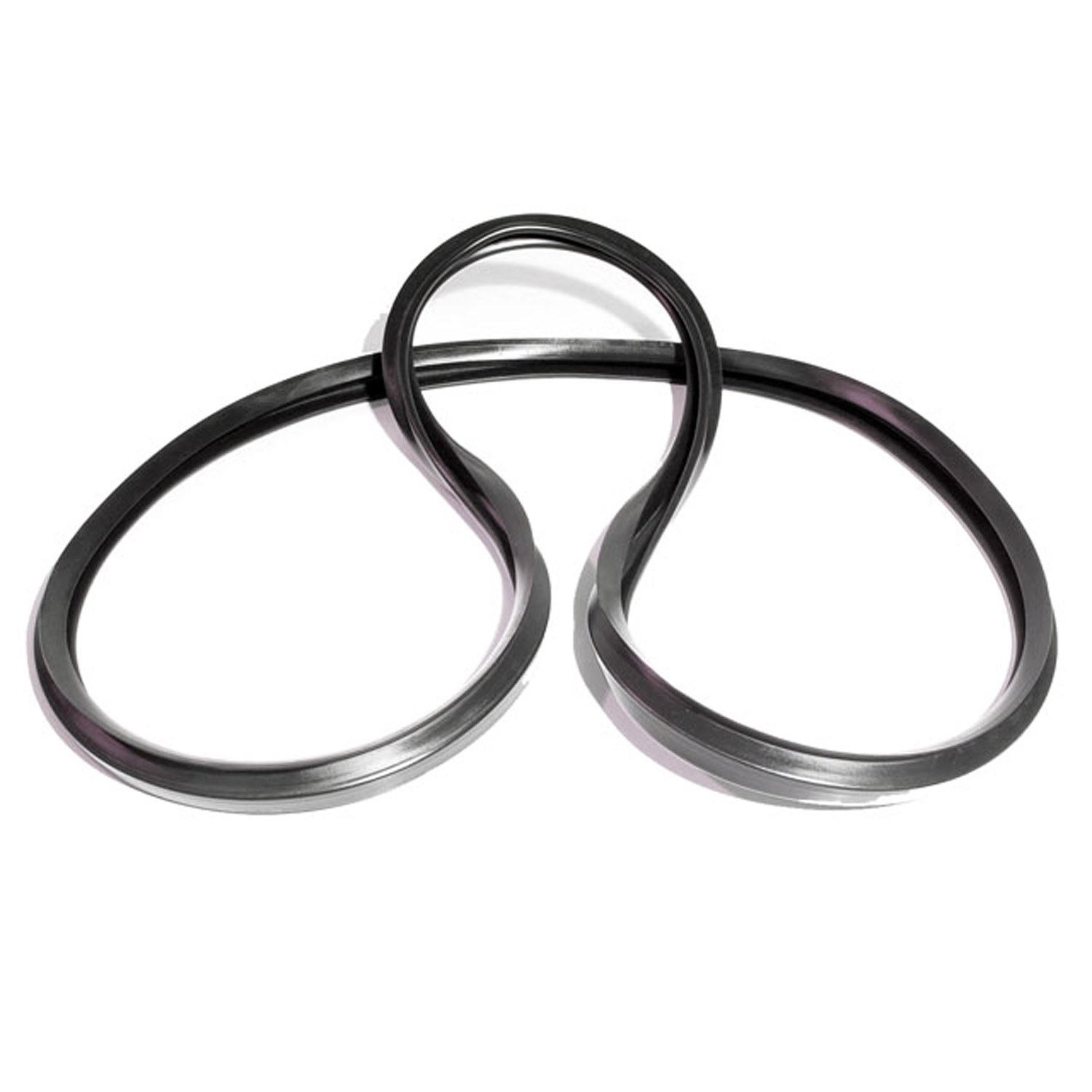 1956 Willys Station Wagon Vulcanized Side Front-Rear Sliding Window Seal-VQT 9600Vulcanized Side Front-Rear Sliding Window Seal. Made into one piece for easy installation. Order 2 to do both sides. Replaces OEM #671419. Each
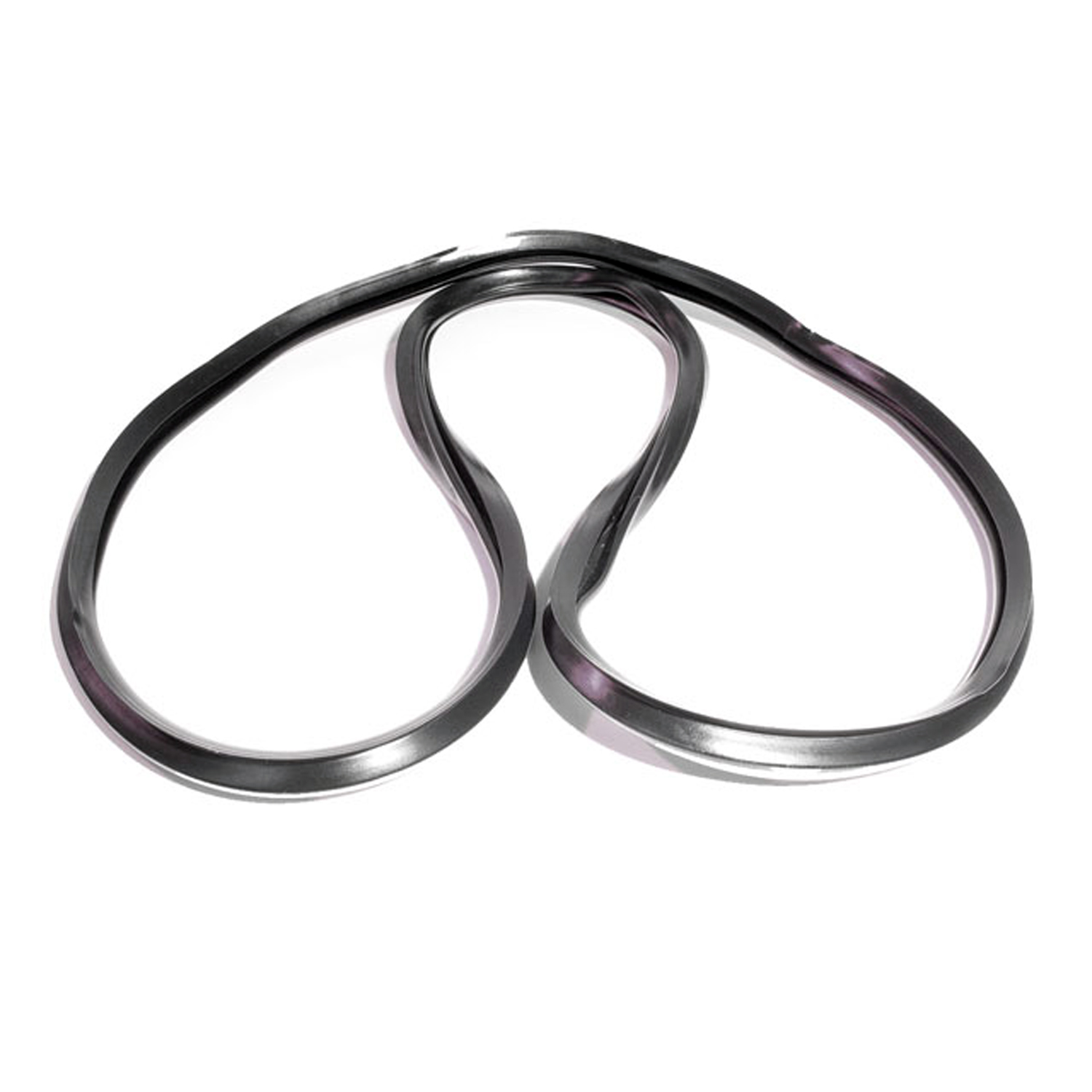 1956 Willys Station Wagon Vulcanized Side Rear-Rear Sliding Window Seal-VQT 9601Vulcanized Side Rear-Rear Sliding Window Seal. Made into one piece for easy installation. Order 2 to do both sides. Replaces OEM #664257. Each
Why Choose Metro?
For over 100 years, Metro Moulded Parts has been the pinnacle of quality in classic car restoration parts. Our commitment to precision and authenticity in every component ensures a perfect fit and an OEM-level appearance.
- Expert Craftsmanship & Quality: Each part is a testament to our dedication to reliability and perfection, crafted from original designs and thoroughly tested.
- Advanced Technology: We use cutting-edge techniques to create flawless, long-lasting parts that surpass others in performance.
- SuperSoft Sponge – The Ultimate Door Seal: Not only are our door seals 30% softer than competitors', but they're also guaranteed to never leak. They effectively reduce wind and road noise, enhancing your classic car's comfort and driving experience.
- Proudly American: Our parts are a product of American craftsmanship, made in the USA with a spirit of excellence and heritage.
- Unrivaled Warranty: We back our products with a 30-year industry-leading warranty, a testament to our confidence in their quality.
Join us in preserving the legacy of classic cars with parts that are crafted for perfection, not just made.